

Mustangs Rule
Well-known member
- Joined
- Feb 4, 2021
- Messages
- 1,215
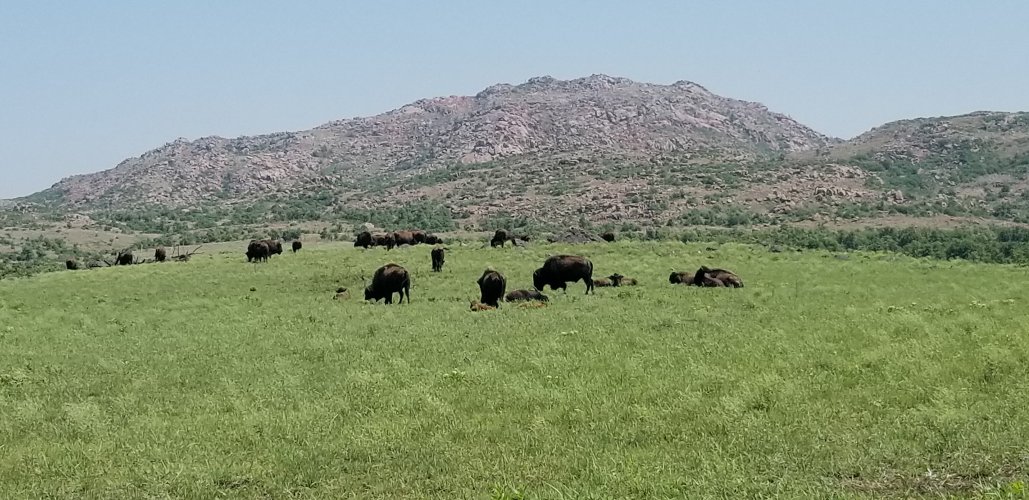
Once again, I live on the Prairie, where the Buffalo roamed!
My first time doing so was north of Cheyenne, Wyoming 40 years ago.
To the east in Nebraska the land got flat quick and surrendered to an army of plows. The prairie around Cheyenne, still had enough “Rocks and Rolls” left to beat the plows.
I bought a piece of pure grassland prairie there in 1986, before I had any gray hair on my head or in my beard. I drew up plans for a modest but tasteful three-bedroom home that I would build, planning it to be my home.
This was antelope, mule deer and elk country. Antelope were bolder. When I was inside doing the finish woodwork, I would look out and see them checking out my “Little House on the Prairie”. Actually, it was just not huge.
In a convenient drive there were snowcapped mountains peaking at 11,000’.
Some small creeks draining the mountains flowed onto the prairie. Beaver built dams that formed riparian zones filled with ducks, geese, white tailed deer, grouse, trout and even a few moose.
One day I drove into Cheyenne with purpose.
I walked into a pawn shop just as an elderly woman was leaving. The owner was still holding the totally original deep pre-64 Model 70 .270 she just put up for consignment. She was a widow; it was her late cowboy husband’s only ever rifle.
I came to Wyoming in a brand new ¾ ton Dodge van loaded heavy with tools for construction. All my other worldly possessions, guns included, were left a 1,000 miles away. Only gun I brought was a S &W six-gun.
I wanted a rifle that matched the land where I was building my new home and planned to live. Nothing could fit the SE Wyoming Prairie better than that .270 model 70 pre-64.
At my request, the owner handed it to me. A few other potential customers had come in and took noticed of it. I kept it cradled in the crook of my left arm, while I filled out the simple paperwork and paid for it.
I did not hunt that fall. Winters are hard in Wyoming. There was too much work to do. About when the days were getting shorter, and geese were flying south a car drove up to my new home with a real estate agent sign on it.
There was a house buying boom there then such that the contractors could not keep up with. The hardest part was getting carpenters for a crew. In planning this project, I knew this would be my bottleneck.
Way ahead, I had called the local penal systems to see if two physically fit non-violent offenders had a release date that matched my coming building schedule.
I would put them up in a trailer I rented on my building site for free. Would pay them fair wages, buy them trade books to study, would really invest time training them. When my project was done, would give them a fat bonus and actively try to get them work with another builder.
Ex-cons can be such excellent workers.
The real estate agent got out of his car and asked if this home was for sale.?
Cash powers economic systems. Calories power Biological systems.
I was really beginning to like it on the prairie. All the calories for wildlife were right on the ground, enough to once fuel great herds of bison. The hunter and wildlife lover in me was feeling filled up. I was even getting used to the summer tornadoes, windstorms and unimaginable lightning.
Orchids are the most highly evolved plants. Next comes the grasses. They seem so simple and there is the trick they play on us.
Grasses operate at the absolute highest level of photosynthesis, named C-4. Same name for the highest grade of military plastic explosives. But unlike the C-4 explosives which blow things up, the C-4 in plants build things up; like the high energy grains wheat, rye, oats, barley and rice that humankind lives on.
I was really turning on to the Prairie and said: “No, not for sale !!! Then added; “Unless you just dazzle me with an offer”!
“Can it be finished so buyers could move in before Christmas”? He asked.
Then he DAZZLED me with his offer!
I said: “Sure, by Christmas, with grace”!
Before the “Jingle Bells” were ringing, I was leaving in my tidy van with a huge amount of money and a late season doe antelope tag to fill !
“I really like the Prairie and will come back soon”. I said to myself.
“In youth we sell off parts of ourselves in a heartbeat, thinking we can buy them back at will, but only through the heartbreak of long loss do we appreciate the real value of what we let go of.”
The next time I bought a piece of the prairie to build my little house on, my hair and beard were mostly gray. I was 70 years old and wise enough to not let work get in the way of hunting.
Wandering the lower elevation grass country during my first pre-season scouting, I forded a fast cold river wearing LL Bean insulated rubber canoe shoes and insulated leggings cut off from a dive suit I got for $10 at a garage sale. Just in case I took a dunking, under my jacket I wore a light dive vest to protect me from hypothermia.
I found a high hidden grass basin behind a HUGE round hill. The basin had extra moisture caused by natural drainage. There were well watered wild plants, sweet, highly nutritious and in abundance. I knew this was where my tag would get filled, year after year but not till near the end of the hunting season. Patience was required. I wanted three cold nights to put the rattlers into hibernation.
The much higher prairie where my home was did not have rattlesnakes. Too close to mountains 10,000 feet, the cold falling thermals caused summer nightly freezes. No rattlesnakes, and poor microclimate for gardens.
To get to the top of that hill overlooking that green area, I had to walk across the river in the darkness then through all the tall grass. Rattlesnakes are very active just before hibernation. The cold came.
I got there and waited till first shooting light. I still had that same model 70 270,. My “Prairie Rifle” with a fixed power weaver scope
Fixed power scopes are sturdier, lighter and brighter having one less lens than variables.
Before legal shooting light I could see that natural garden was thick with mule deer. Right when it was time, I chose a meat buck and left the big boys with their genetic treasure chest alone.
My first winter back on the prairie was bitter cold, 15-20 below zero, with lots of snow. I did not yet have a heating system in my home, but with a new super efficient wood stove in my house and a smaller one in my garage/shop I was fine.
That coming spring was really wet
The grasses grew to an easy 4-5 feet tall and flowered. I did not have horses yet, so my land went un-grazed. The rich seed heads dropped some of their seeds while many stayed right on the head. Great feed.
Wind and weight compressed this tall grass down some.
One frigid morning, steam was rising from the grass in a dozen different places. Next I saw noses, ears and some antlers wiggling around in the bright morning sun. A herd of white-tailed deer were feeding on my mixed grass hay crop. They spent the winter and never once did I consider shooting any.
It took two years to really finish my “Little House on the Prairie”. That first winter I “slumbered with lumber”. I got a load of fresh cut pine boards from the local sawmill. Stacked them high in my living room not too close to the wood stove. Those boards would become my doors, moldings and cabinets.
Each fall I shot a mule deer meat buck in the basin I mentioned above. ( I hate the word “harvested” Deer are not carrots.)
During the hard of winter, I snow-shoe hunted upland birds but was always mind full of sudden changes of weather. The winter Prairie can be as cold and mean as a witch wearing a brass bra.
In my third year having finished my home, I built a horse/hay barn and got my fencing done for horses. With rotating temp-fencing there was always an area un-grazed for winter deer and to naturally re-seed my land.
Prairie fires must be considered.
Once I got my grazing patterns down, I did a mixture of controlled burns and I cut the hay down for a firebreak around my house with any one of my four Brush and Wheat Scythes. One made in Oakland, Maine was purchased by my grandfather during the Great Depression. I grew up using it and had it forever. To cut my firebreak I filled a medium sized stock trailer four times with my hand cut hay.
My hardest winter so far got down to 22 below zero. I made a warm wet grain mash for my horses. This ferments, makes heat in their guts which are designed to transfer heat into their entire bodies. No heat is wasted except for hot farts.
The elk hunting game for me here has been on and off. Not cause the elk are not here or tags are hard to get. Covid and old knees have so limited my elk hunting.
There are 7,100 people in my huge county and 15,500 elk and 21,000 dear. And not a lick of either CWD or Elk hoof rot.
There is not one disease producing winter elk feeding ground and we have bear, lions and un-hunted wolves.
Diseases are the big predators.
In the winter of 22-23, 45% of the elk caves died in the Horse Creek Feeding grounds from Elk hoof rot bacterial infections.
The open prairie is a clean place, and predators help keep it that way
I am going to have my second knee replaced soon, and this fall I hope to be able to again hunt elk by myself but with horses.
There is this near perfect breast shape butte about a ¾ hour drive from my place. It is 700 feet above ideal rolling prairie; all still covered with native grasses. Never saw a plow.
From the top, it is impossible not to see elk somewhere. I hope to be sitting, waiting there next fall, at 79 years old, with that Model 70, 270 in the crook of my left arm.
MR
My first time doing so was north of Cheyenne, Wyoming 40 years ago.
To the east in Nebraska the land got flat quick and surrendered to an army of plows. The prairie around Cheyenne, still had enough “Rocks and Rolls” left to beat the plows.
I bought a piece of pure grassland prairie there in 1986, before I had any gray hair on my head or in my beard. I drew up plans for a modest but tasteful three-bedroom home that I would build, planning it to be my home.
This was antelope, mule deer and elk country. Antelope were bolder. When I was inside doing the finish woodwork, I would look out and see them checking out my “Little House on the Prairie”. Actually, it was just not huge.
In a convenient drive there were snowcapped mountains peaking at 11,000’.
Some small creeks draining the mountains flowed onto the prairie. Beaver built dams that formed riparian zones filled with ducks, geese, white tailed deer, grouse, trout and even a few moose.
One day I drove into Cheyenne with purpose.
I walked into a pawn shop just as an elderly woman was leaving. The owner was still holding the totally original deep pre-64 Model 70 .270 she just put up for consignment. She was a widow; it was her late cowboy husband’s only ever rifle.
I came to Wyoming in a brand new ¾ ton Dodge van loaded heavy with tools for construction. All my other worldly possessions, guns included, were left a 1,000 miles away. Only gun I brought was a S &W six-gun.
I wanted a rifle that matched the land where I was building my new home and planned to live. Nothing could fit the SE Wyoming Prairie better than that .270 model 70 pre-64.
At my request, the owner handed it to me. A few other potential customers had come in and took noticed of it. I kept it cradled in the crook of my left arm, while I filled out the simple paperwork and paid for it.
I did not hunt that fall. Winters are hard in Wyoming. There was too much work to do. About when the days were getting shorter, and geese were flying south a car drove up to my new home with a real estate agent sign on it.
There was a house buying boom there then such that the contractors could not keep up with. The hardest part was getting carpenters for a crew. In planning this project, I knew this would be my bottleneck.
Way ahead, I had called the local penal systems to see if two physically fit non-violent offenders had a release date that matched my coming building schedule.
I would put them up in a trailer I rented on my building site for free. Would pay them fair wages, buy them trade books to study, would really invest time training them. When my project was done, would give them a fat bonus and actively try to get them work with another builder.
Ex-cons can be such excellent workers.
The real estate agent got out of his car and asked if this home was for sale.?
Cash powers economic systems. Calories power Biological systems.
I was really beginning to like it on the prairie. All the calories for wildlife were right on the ground, enough to once fuel great herds of bison. The hunter and wildlife lover in me was feeling filled up. I was even getting used to the summer tornadoes, windstorms and unimaginable lightning.
Orchids are the most highly evolved plants. Next comes the grasses. They seem so simple and there is the trick they play on us.
Grasses operate at the absolute highest level of photosynthesis, named C-4. Same name for the highest grade of military plastic explosives. But unlike the C-4 explosives which blow things up, the C-4 in plants build things up; like the high energy grains wheat, rye, oats, barley and rice that humankind lives on.
I was really turning on to the Prairie and said: “No, not for sale !!! Then added; “Unless you just dazzle me with an offer”!
“Can it be finished so buyers could move in before Christmas”? He asked.
Then he DAZZLED me with his offer!
I said: “Sure, by Christmas, with grace”!
Before the “Jingle Bells” were ringing, I was leaving in my tidy van with a huge amount of money and a late season doe antelope tag to fill !
“I really like the Prairie and will come back soon”. I said to myself.
“In youth we sell off parts of ourselves in a heartbeat, thinking we can buy them back at will, but only through the heartbreak of long loss do we appreciate the real value of what we let go of.”
The next time I bought a piece of the prairie to build my little house on, my hair and beard were mostly gray. I was 70 years old and wise enough to not let work get in the way of hunting.
Wandering the lower elevation grass country during my first pre-season scouting, I forded a fast cold river wearing LL Bean insulated rubber canoe shoes and insulated leggings cut off from a dive suit I got for $10 at a garage sale. Just in case I took a dunking, under my jacket I wore a light dive vest to protect me from hypothermia.
I found a high hidden grass basin behind a HUGE round hill. The basin had extra moisture caused by natural drainage. There were well watered wild plants, sweet, highly nutritious and in abundance. I knew this was where my tag would get filled, year after year but not till near the end of the hunting season. Patience was required. I wanted three cold nights to put the rattlers into hibernation.
The much higher prairie where my home was did not have rattlesnakes. Too close to mountains 10,000 feet, the cold falling thermals caused summer nightly freezes. No rattlesnakes, and poor microclimate for gardens.
To get to the top of that hill overlooking that green area, I had to walk across the river in the darkness then through all the tall grass. Rattlesnakes are very active just before hibernation. The cold came.
I got there and waited till first shooting light. I still had that same model 70 270,. My “Prairie Rifle” with a fixed power weaver scope
Fixed power scopes are sturdier, lighter and brighter having one less lens than variables.
Before legal shooting light I could see that natural garden was thick with mule deer. Right when it was time, I chose a meat buck and left the big boys with their genetic treasure chest alone.
My first winter back on the prairie was bitter cold, 15-20 below zero, with lots of snow. I did not yet have a heating system in my home, but with a new super efficient wood stove in my house and a smaller one in my garage/shop I was fine.
That coming spring was really wet
The grasses grew to an easy 4-5 feet tall and flowered. I did not have horses yet, so my land went un-grazed. The rich seed heads dropped some of their seeds while many stayed right on the head. Great feed.
Wind and weight compressed this tall grass down some.
One frigid morning, steam was rising from the grass in a dozen different places. Next I saw noses, ears and some antlers wiggling around in the bright morning sun. A herd of white-tailed deer were feeding on my mixed grass hay crop. They spent the winter and never once did I consider shooting any.
It took two years to really finish my “Little House on the Prairie”. That first winter I “slumbered with lumber”. I got a load of fresh cut pine boards from the local sawmill. Stacked them high in my living room not too close to the wood stove. Those boards would become my doors, moldings and cabinets.
Each fall I shot a mule deer meat buck in the basin I mentioned above. ( I hate the word “harvested” Deer are not carrots.)
During the hard of winter, I snow-shoe hunted upland birds but was always mind full of sudden changes of weather. The winter Prairie can be as cold and mean as a witch wearing a brass bra.
In my third year having finished my home, I built a horse/hay barn and got my fencing done for horses. With rotating temp-fencing there was always an area un-grazed for winter deer and to naturally re-seed my land.
Prairie fires must be considered.
Once I got my grazing patterns down, I did a mixture of controlled burns and I cut the hay down for a firebreak around my house with any one of my four Brush and Wheat Scythes. One made in Oakland, Maine was purchased by my grandfather during the Great Depression. I grew up using it and had it forever. To cut my firebreak I filled a medium sized stock trailer four times with my hand cut hay.
My hardest winter so far got down to 22 below zero. I made a warm wet grain mash for my horses. This ferments, makes heat in their guts which are designed to transfer heat into their entire bodies. No heat is wasted except for hot farts.
The elk hunting game for me here has been on and off. Not cause the elk are not here or tags are hard to get. Covid and old knees have so limited my elk hunting.
There are 7,100 people in my huge county and 15,500 elk and 21,000 dear. And not a lick of either CWD or Elk hoof rot.
There is not one disease producing winter elk feeding ground and we have bear, lions and un-hunted wolves.
Diseases are the big predators.
In the winter of 22-23, 45% of the elk caves died in the Horse Creek Feeding grounds from Elk hoof rot bacterial infections.
The open prairie is a clean place, and predators help keep it that way
I am going to have my second knee replaced soon, and this fall I hope to be able to again hunt elk by myself but with horses.
There is this near perfect breast shape butte about a ¾ hour drive from my place. It is 700 feet above ideal rolling prairie; all still covered with native grasses. Never saw a plow.
From the top, it is impossible not to see elk somewhere. I hope to be sitting, waiting there next fall, at 79 years old, with that Model 70, 270 in the crook of my left arm.
MR
Last edited: