What i actually think is. Fwp, bios useless. Fwp sells out tags. Public not managed. Private has good mule deer population. Good bucks. Because its managed. Limited entry units has good deer. Because its managed. Otc mule deer non existing. Its so bad, criminal. Montana fish wildlife a joke. Fu$$ them. It should be 2 weeks otc October. No doe killing. Then very limited draw for bucks in November. Call bull$hit on anyone that says mt great otc mule deer. They liars.



Navigation
Install the app
How to install the app on iOS
Follow along with the video below to see how to install our site as a web app on your home screen.
Note: This feature may not be available in some browsers.
More options

You are using an out of date browser. It may not display this or other websites correctly.
You should upgrade or use an alternative browser.
You should upgrade or use an alternative browser.
Montana Mule Deer Mismanagement
- Thread starter rogerthat
- Start date

sclancy27
Well-known member
- Joined
- Nov 23, 2022
- Messages
- 1,102
I don't think the bios are useless. I think, as with any company or agency that struggles, the uselessness comes from the leadership. The fact that our Director is appointed by a political entity (among other offices, commision, etc that are politically appointed) is the main problem. Wildlife management should not be led by people who have no experience in that. My personal opinion.What i actually think is. Fwp, bios useless. Fwp sells out tags. Public not managed. Private has good mule deer population. Good bucks. Because its managed. Limited entry units has good deer. Because its managed. Otc mule deer non existing. Its so bad, criminal. Montana fish wildlife a joke. Fu$$ them. It should be 2 weeks otc October. No doe killing. Then very limited draw for bucks in November. Call bull$hit on anyone that says mt great otc mule deer. They liars.

antlerradar
Well-known member
Probably not in SE MT where snow depths seldom get deep except in the worst of winters. Quality winter range is not a limiting factor for Mule deer here.But in the winter, the deer may not be as lucky. They avoided burned areas at this time, possibly because the snow is much deeper, making it harder for the ungulates to access the vegetation that they like to eat.
Wildfires change the deer-predator game
Deer may take advantage of burned forests in the summer, but they avoid burned areas with deep snow in the winter to reduce risk from the cougars that prey on them. Fires are burning bigger and hotter in many parts of the western United States. But researchers don’t fully understandwildlife.org
May or may not be relevant.
Politics has nothing to do with it. Democratic or republican. Last 20 yrs it has only got worse. Regardless of who in office. With todays weapons and everyone trying to kill a big one. But everyone killing one and posting meat buck but its there best buck. Or killing 2 to 6 does. And freezer full. Is bull$hit. Kill cow elk or whiteys. Alot of hunters very serious compared to 20 yrs ago. Ego, technology, bragging rights.
antlerradar
Well-known member
Only works this way if there are does to be had. Bucks will travel as far as necessary to find does. Priority number one should be to keep as may deer on public during the season as possible. Not shooting public land does would be a good start.
"Biologists tracking radio-
collared deer found that one-third stay in
survey areas during the fall, while the other
two-thirds move away from the wintering
areas only three miles on average. “Where
we see the deer in the winter is pretty much
where they will be next fall,” says Gude.
Another way FWP takes the pulse of
mule deer populations is by monitoring
hunter harvest at check stations and with
winter phone surveys. “That harvest infor-
mation almost always tracks with what we
saw in the aerial surveys,” says Gude. “If our
winter and early spring surveys show an up-
ward trend in deer numbers, we usually see
more hunters with deer in the back of their
pickups the following fall.”
Another way biologists assess deer num-
bers is by regularly talking with landowners
about wildlife populations they see on their
property and by monitoring and addressing
game damage complaints. What’s more,
over the past several years FWP has radio-
collared and tracked 1,134 mule deer to see
how well the animals survive and where
they go. “All that information, added to the
harvest data and aerial surveys, gives us con-
fidence that we know what’s going on with
the mule deer population,” says Vore."

Point Creep
Well-known member
But in the winter, the deer may not be as lucky. They avoided burned areas at this time, possibly because the snow is much deeper, making it harder for the ungulates to access the vegetation that they like to eat.Wildfires change the deer-predator game
Deer may take advantage of burned forests in the summer, but they avoid burned areas with deep snow in the winter to reduce risk from the cougars that prey on them. Fires are burning bigger and hotter in many parts of the western United States. But researchers don’t fully understand
May or may not be relevant.
Understand this is about deer, but the comment in the article, "Wolves prefer more open areas when they hunt." That seems completely untrue with what I've seen with respect to wolves and elk, in places I frequent.
brocksw
Well-known member
Sure, I'm just sharing the FWP's comments on some of the focal points of this thread.Only works this way if there are does to be had. Bucks will travel as far as necessary to find does. Priority number one should be to keep as may deer on public during the season as possible. Not shooting public land does would be a good start.

Irrelevant
Well-known member
@Hopzone Freak I have no idea, but they certainly have a shitton of data on that project.
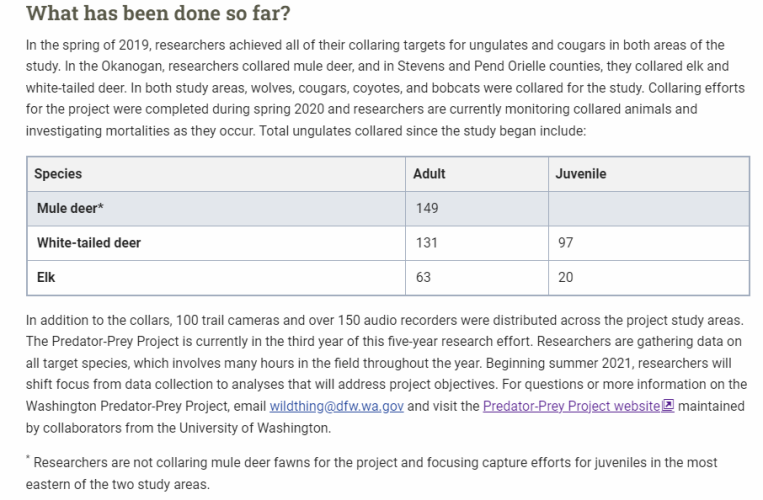
I couldn't find a link, but have previously read they tried to have most adult wolves collared, and I think they shoot for 5-15 added cougar collars per year.
I couldn't find a link, but have previously read they tried to have most adult wolves collared, and I think they shoot for 5-15 added cougar collars per year.
SAJ-99
Well-known member

ShootsManyBullets
Well-known member
So when do we storm the capital, go through the quad and into the gymnasium?
Similar threads


- Replies
- 12
- Views
- 857

- Replies
- 602
- Views
- 40K