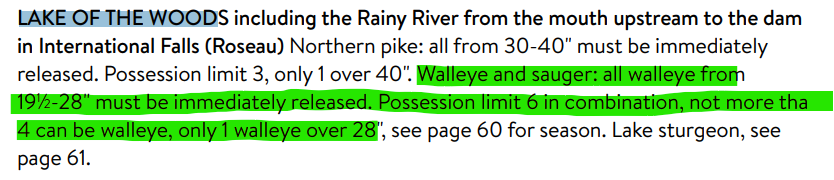
Winni, LOTW (4 walleye, 2 sauger), Red has a 10 fish limit for most of the lake, Ottertail, etc.
It's almost like the DNR is managing lakes that the fish are naturally reproducing in appropriately. Those aren't the lakes that get affected by the rule change though.
Harvesting higher numbers of fish from non-natural reproducing lakes doesn't hurt their future like it would natural reproduction lakes. It makes room for the yearly or bi-yearly stocking that occurs. Young fish have to eat too.
If all the fish in lake X are stocked, what good would it do to leave them in there vs harvest them?
This same thing happened a few years ago with panfish. They changed the limit to 5 on certain lakes for bluegills and crappies. Most of those lakes went from high producing lakes to small stunted populations of bluegills & crappies. It's a little different when you're the one dealing with it in real time and have experience with these changes vs just reading about it on the internet.
95% was an arbitrary number. I don't know if it's 99% or 75%. It's high though. This is regarding smaller lakes where fish are stocked. People don't realize stocked walleye act differently than natural walleye like you find in the rainy lake, leech lake, mille lacs lake, etc. They relate to weeds when they're stocked fish. Natural fish relate more to rock, sand, and gravel flats. Stocked fish relate less to wind like natural fish do. The average angler hasn't figured that out yet, or is too stuck in their ways. The average angler is stuck in their ways of what used to be. Lindy rigging a sucker minnow isn't effective many places now. The water has become crystal clear in the past 10-20 years with the zebra mussels.
It's not as simple as lower limits = more walleye.
Mille lacs is a great example. They lowered the limits, and the fish began starving. There was too many walleye and not enough baitfish to feed the immense amounts of predators in the lake.