



rjthehunter
Well-known member
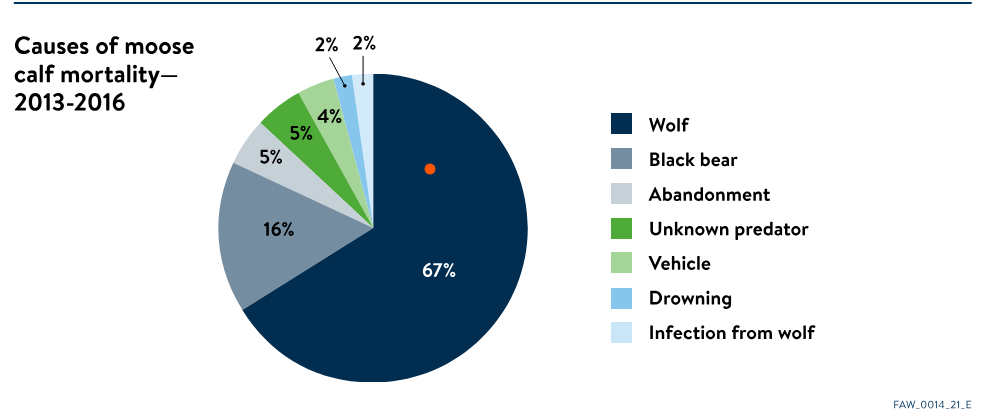
What did I misrepresent? You quoted the same DNR findings I referenced. Wolves accounted for 65% of documented moose calf mortality during the first two years of the study and 69% during the following two years.This is from the citation you listed. You substantially misrepresented the conclusions.
- Predation was consistently the leading cause of calf mortality during the study.
- During 2013−14 and 2014−15, wolf and black bear predation accounted for 65 percent and 16 percent of calf mortality, respectively.
- During 2015−16 and 2016−17, 69 percent and 15 percent of the calf mortality was attributable to wolves and bears.
Not all hunting opportunities are created equal. I see no justification in amoose season in particular.
Here's another DNR publication worth reading.
https://files.dnr.state.mn.us/fish_wildlife/wildlife/wolves/wolves_moose_deer_sheet.pdf
On page 2, the DNR writes "Wolf predation is limiting the recruitment of new moose into the population."
I'm not claiming wolves are the only factor affecting moose populations. Disease, parasites, and habitat are obviously factors as well.
My point is simple... Minnesota's moose population has stabilized considerably since 2013. We issue limited elk tags for herds numbering only a few hundred animals, yet won't even consider a limited bulls-only moose season with an estimated population of 4,470.
I'm not suggesting we hand out hundreds of permits. I'm suggesting we manage wildlife using current population data and evaluate whether a small, controlled harvest is sustainable.
You say there's no justification for a moose season. I'm asking why you think a limited harvest would be unsustainable, especially if wolves were managed.