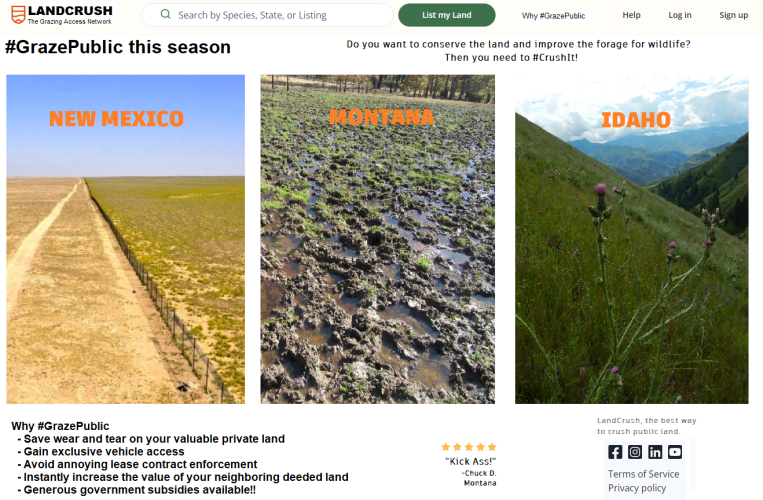
Just returned from another southern AZ winter where I wandered the Coronado NF for two months with bow or shotgun in hand nearly every day. The poor monsoon season meant little forage production but the cows were out in force. Overgrazing was the worst I have seen in my 24 winters there. My hunting buddies were also appalled. In addition to no residual cover, introduced lovegrass and overgrazing of desirable forage grasses has greatly diminished capacity over huge acreages. Unfortunately the predictions for the future are that good monsoons will be less frequent and the southwest landscapes will be hotter. The biggest ranches are being bought by billionaires, but they are still able to feed at the public trough. Past and ongoing efforts by dedicated hunter to better balance grazing with other resources has not been fruitful.
Here in Montana public land grazing is certainly a mixed bag, but it is far too common to see riparian areas along with streambanks badly damaged. Don't need a map to identify State land as it is usually recognizable by the slicked off lands.
In Idaho where I hunt upland birds, inappropriate public land grazing has fostered the enormous expansion of cheatgrass, medusahead rye, and other invasives that harm both livestock grazing capacity as well as wildlife habitat. Some of these changes are largely irreversible.
The reality is that the livestock industry is firmly in political power at both the State and Federal levels across the West. Last figures I saw were about 3X more public grazing expenditures than revenue, and that seems too low. Public land range management is poorly funded. With their power at the State level (eg legislatures), fish and wildlife agencies tread very lightly or don't touch the subject. Status quo management by agencies is much easier than change. Even mainstream conservation/wildlife groups are hesitant to be involved. Many outfitters benefit from their relationships with ranchers and won't get involved. So IMO, the public's wildlife and fish will just have to suck it up for the foreseeable future.