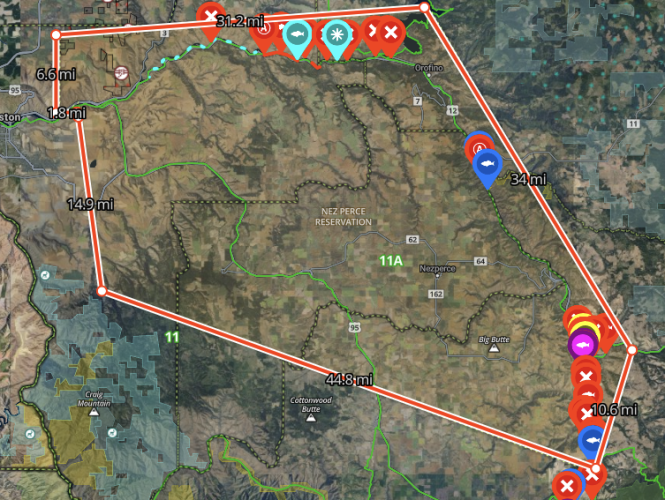
There’s some truly inspiring conservation work being done on the Crow reservation by nature’s top predator, the humble .22 lr and spotlight combo. I guess they’re keeping CWD in check, because you can’t have CWD if you don’t have any living deer or elk.
What you describe above among Native Americans happens for sure. At age 48 I got bored with what I was doing, dusted off an old science degree I earned almost 30 years earlier from a fully accredited university, went back to school for years, brought my science up to date, earned a science education credential,
For next almost twenty years, I taught school and for a period chose to teach Native American teenagers. In all I taught 5 very different tribes.
One student came in one morning all proud that he had taken his first elk "last night".
In other situations,/tribes beginning hunters were given such a wonderful tradition filled education. It was a pleasure to watch. It went down them making their bows and arrows and hunting on land where their people had been for 15,000 years.
In the geographical area where I live the elk have always been here, for 15,000 + years plus, since they crossed the land bridge from Asia. They were never transplanted.
At least half the elk here have a genetic "speed bump" of resistance to CWD, slowing it down. Next, exactly where I live the elk have always had predators cleaning them. "Mt. Lions and Bears and Wolves Oh My" The elk herd's periods without wolves was relatively short.
There are 15,500 healthy elk, with no hoof rot or CWD or wintering contaminating feed lots, plus 21,000 deer with no CDW.
The human population is 7,500.
The big crisis in the natural system here right now in the high west is climate change. We have "snow drought". A warm angry northern Pacific Ocean, where heat is collecting at never before experienced levels, is sending over atmospheric rivers of warm snow melting rain. We have very little if any snowpack in the high country, which is becoming the "High- Bone Dry" country. Way too soon in the summer, w/o being naturally irrigated by melting snow, the high meadows are offering far less nutrition for elk.
The ecological norms that have been relatively consistent for over a 120,000
years are in complete choas.