Cartridge pressure signs

17remhunter

Active member
Joined
Nov 12, 2025
Messages
216
When working up a load are there other pressures signs to look for other than primer cratering or flattening primers

 
IME, pressure is pretty easy to identify. I don't worry about getting every last ounce of velocity I can out of any given cartridge. Seems to be popular these days to make, say a .308 into a 300 WM, etc. by pushing the envelope.
 
#1 - Velocity. Also pay attention to ejector marks on case head, stiff bolt lift, and primers flatness/cratering.

The big downside i've experienced with suppressors is they seem to induce stiff bolt lift in more circumstances. Can cause condensation or fouling in a chamber from holding that gas in the barrel and can cause cases to not grip chamber walls as well so you get more bolt thrust and in turn stickier bolt lift. Seems to get bad primarily for me in MN winters shooting into the wind.
 
#1 - Velocity. Also pay attention to ejector marks on case head, stiff bolt lift, and primers flatness/cratering.

The big downside i've experienced with suppressors is they seem to induce stiff bolt lift in more circumstances. Can cause condensation or fouling in a chamber from holding that gas in the barrel and can cause cases to not grip chamber walls as well so you get more bolt thrust and in turn stickier bolt lift. Seems to get bad primarily for me in MN winters shooting into the wind.
Feel like ejector marks can be a little tricky based on brass hardness. I'm not surprised to see full moons on Norma brass; I get spooked when I see them on ADG.

Sticky bolt and loose primer pockets are my two big tells.
 
Feel like ejector marks can be a little tricky based on brass hardness. I'm not surprised to see full moons on Norma brass; I get spooked when I see them on ADG.

Sticky bolt and loose primer pockets are my two big tells.

Good point. Norma or hornady brass, i dont think twice about some ejector stamps/swipes. If I get it on ADG, i probably had a stiff bolt lift too so the two together mean i had excessive bolt thrust if nothing else.
 
Feel like ejector marks can be a little tricky based on brass hardness. I'm not surprised to see full moons on Norma brass; I get spooked when I see them on ADG.

Sticky bolt and loose primer pockets are my two big tells.
What is ADG brass? Ive only worked up a load for two rifles
 
A pressure sign that is often overlooked is velocity itself. Spikes or drops in velocity are usually a warning sign.

The condition of the primer can be a little hard to read, they're not all designed the same. I use F210's almost exclusively (since the pandemic), and they just about always come back cratered a little. Flattened primers are definitely a sign your pressure is getting up there. Especially if you also have ejector marks on the base.
 
Velocity - If the chrono shows excessive speeds for the charge, shes hot. Example, a 3006 shooting a 180 grain bullet at 2900 out of a 22" barrel, that brass will not hold together long.

Bolt lift - Learn what your bolt lift feels like when cocking (opening) on a normal fired round. If too hot it will get slightly stiffer. If you need a rubber mallet or a block of wood to get the bolt open, shes hot.

Ejector stamp - Have to be familiar with your rifle and brass, because some actions can stamp the brass slightly at all pressures depending on machining, tolerances, and all that stuff. If you have to look under a magnifying glass to find the slightest marking, and the above two conditions are good then its less of a concern. If you eject a piece of brass and the ejector has obviously smashed it, shes hot.

Primers - Primers are tough, I've had some brands that flatten easier in certain rifles at even very mild charges. This can also be due to poor sizing (I've had this issue, too much head space). Good to check primers, but be aware of the above as well. If the primer is so flat you have zero visible edge between the pocket and the primer, shes hot. If your blowing gas back past the primer, and leaving a tattoo of carbon residue with your brass head stamp on the bolt face, shes hot.
 
ADG? You mean like Lapua?

ADG is a brand that manufactures brass, like Lapua and Nosler and any other brass manufacturer. ADG brass typically has harder case heads than most. Because of that it takes more pressure/bolt thrust to show ejector marks on the case head than brass that typically has softer case heads like norma, federal, and hornady.
 
#1 - Velocity. Also pay attention to ejector marks on case head, stiff bolt lift, and primers flatness/cratering.

The big downside i've experienced with suppressors is they seem to induce stiff bolt lift in more circumstances. Can cause condensation or fouling in a chamber from holding that gas in the barrel and can cause cases to not grip chamber walls as well so you get more bolt thrust and in turn stickier bolt lift. Seems to get bad primarily for me in MN winters shooting into the wind.
Interesting and I agree. I recently came across the Seekins Gas Block. What are your thoughts with this?

Does anyone have experience with this? I am curious if it has merit for rifles or is it just a semi-auto thing.
 
I tend to be pretty conservative, but in actual practice, the sign that I've found most helpful and most clear, is a sticky bolt. I've definitely seen some flattened primers, but I've also seen those from factory ammo.
 
Interesting and I agree. I recently came across the Seekins Gas Block. What are your thoughts with this?

Does anyone have experience with this? I am curious if it has merit for rifles or is it just a semi-auto thing.

A gas block is the link between barrel and gas tube that gets gas from the ports in a barrel into a gas tube back to the bolt carrier group to cycle the action on an auto when fired.

Not applicable to bolt actions.
 
Last edited:
Using a micrometer to measure the case head is another way. My preference is velocity tho
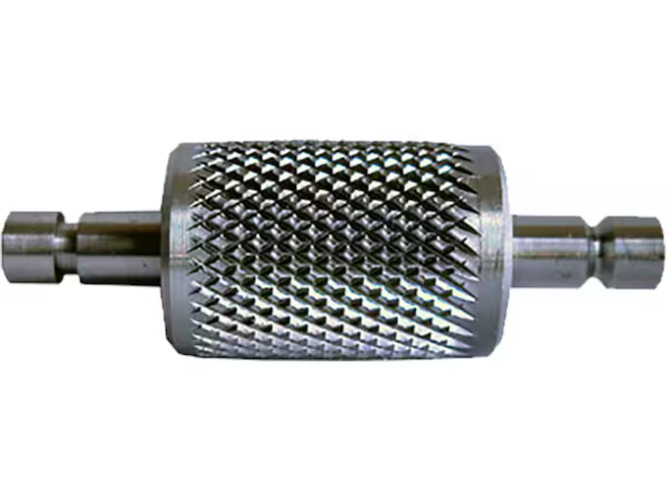
BT Primer Pocket Go-NoGo gage. I love these things. Get one for small and one for large. It should go in all the way in on one end and not at on the other. 1768660752536.png
 
Last edited:
A pressure sign that is often overlooked is velocity itself. Spikes or drops in velocity are usually a warning sign.

The condition of the primer can be a little hard to read, they're not all designed the same. I use F210's almost exclusively (since the pandemic), and they just about always come back cratered a little. Flattened primers are definitely a sign your pressure is getting up there. Especially if you also have ejector marks on the base.
This.

You need a chronometer. OP said they have a MagnetoSpeed IIRC?
I always see the powder/velocity graph flatten on the top end. Not a lot of reason to push past this.

You also need to understand the primer signs for each different rifle. My 6.5 WBY RPM craters primers. The factory tech told they all do. Go figure. They say reading primers isn't all that reliable for this cartridge in a Mark V. It definitely will leave ejector swipes. Their factory brass was made by different vendors. Some of it is Peterson. Good stuff. IMHO, the Mark V has a pathetic extractor. You will leave a case in the chamber before the bolt gets stiff. A light tap with a rod and it falls right out. Case reloads fine. My Mark V will not tolerate any kind of carbon ring in the throat. These are not your father's long-throated Roy.
 

Forum statistics

Threads
118,101
Messages
2,179,845
Members
38,440
Latest member
TAK
Back
Top