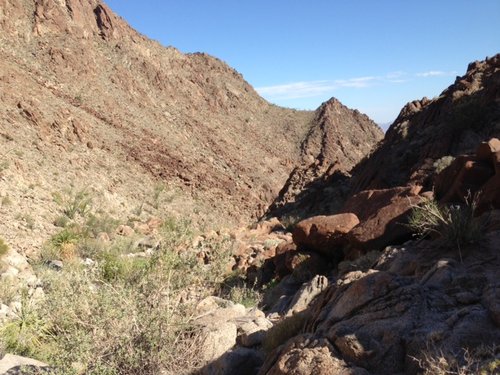
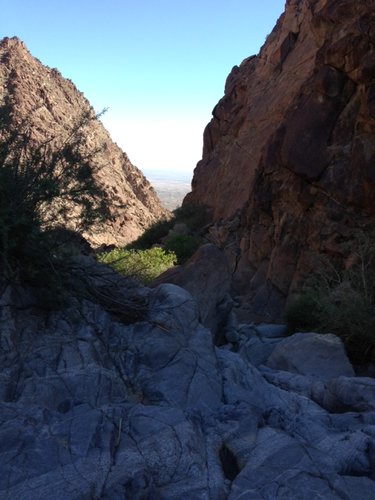
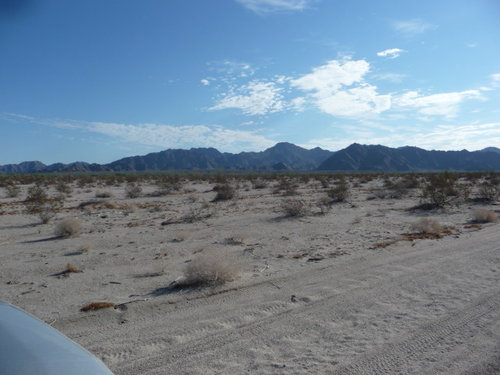
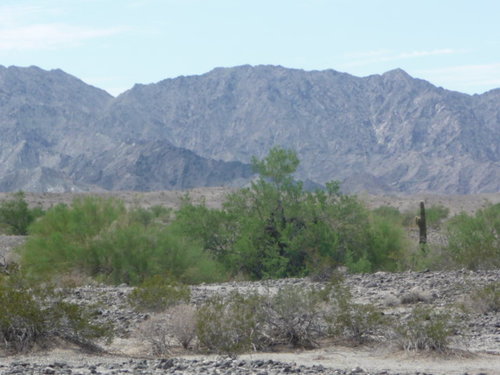
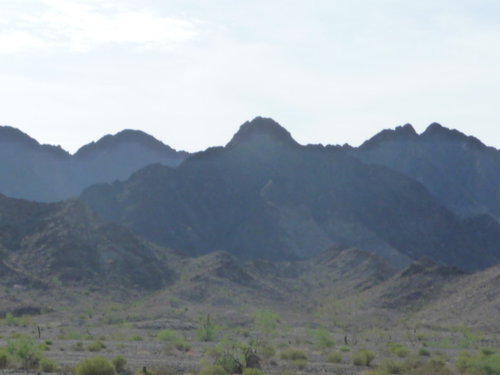
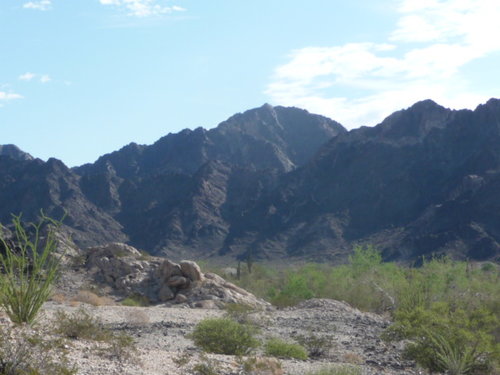
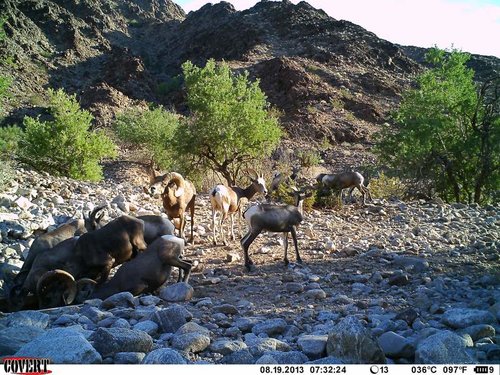
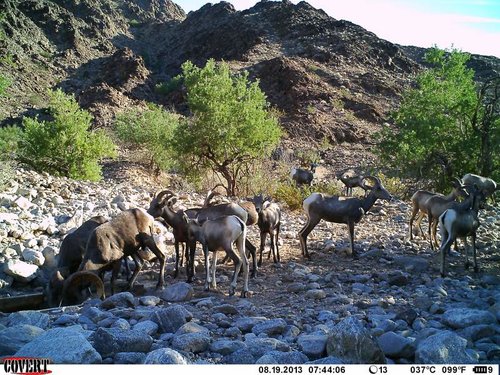
Well, I spent a couple days this past week over in my hunt unit. Definitely see why it's called a desert bighorn sheep hunt

. FYI, the very southern tip of my hunt unit is only about 9 miles from the U.S./Mexico border. Since my unit is composed largely by the Barry Goldwater Gunnery Range (there's a Marine air base not too far away), access is restricted to those acquiring passes. Even though I now have my pass, I'm required to call in my intended visitation each time prior to arrival. And there is some of the range that is definitely off-limits --- safety first!
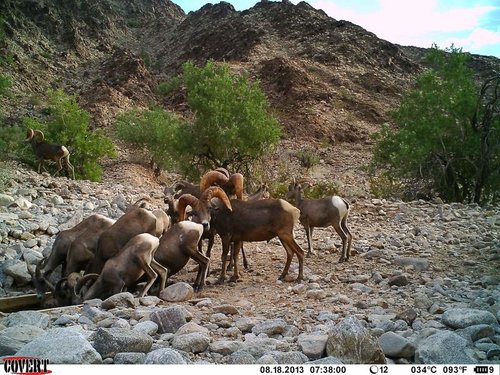
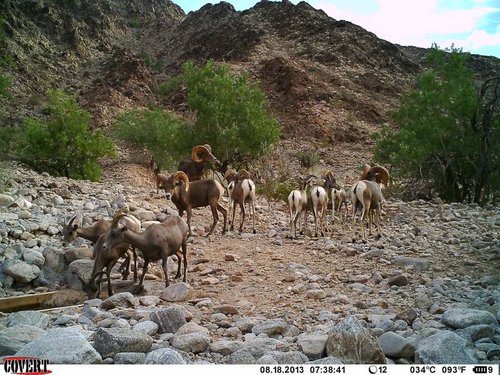
Never having owned trail cameras before, I set out a few on water catchments to see what rams might be in the area --- I'll be back to check them over Labor Day. Though come my hunt in December, they won't be frequenting this water since they'll be getting their fluid needs then from the plants they'll be eating. That could be high or low on the mountain --- they'll follow the available feed.
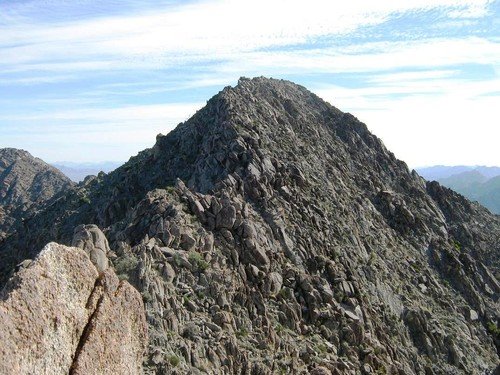
The mountain range angles NW-to-SE, about 16 miles north-south & 9 miles west-east. The highest peak sits about 2,500 feet above the desert floor (NO CHANCE, I'll be scrambling up that STEEP sucker!).
There are just a handful of functioning water catchments that are found in these mountains, all fed by water runoff from the INFREQUENT rainfall. The mountains' topography significantly affects where rainfall is dispersed across them. And the catchments (either 5,000 or 10,000 gallon underground holding tanks) do NOT get the same amount of runoff. The sheep get access to the water via drinkers fed from the underground tanks.
I didn't plan on spending time glassing my 1st trip, just wanted to get acquainted with the mountains. I did bump 3 ewes (my 1st wild sheep spotted!) out of a drainage mid-morning that were bedded not too far from one of the catchments. I'll spend time with butt in the spotting chair on my next trip!
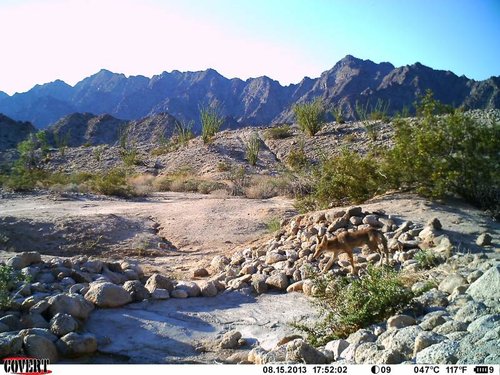
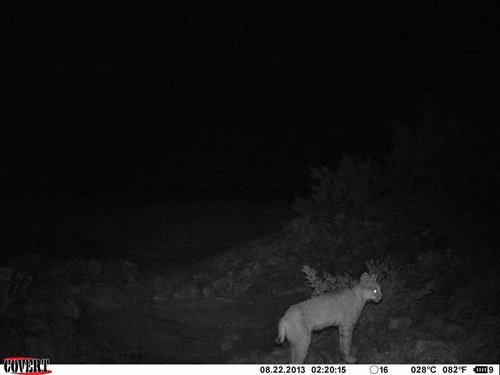
No deer live in this mountain range, so no lions (can I get a hallelujah?!). My cameras will probably captures pics of (mostly) birds, rodents, foxes, coyotes, and an occasional bobcat or badger. There are a few mountain ranges not too far away that support a SMALL amount of deer and sometimes see a wandering mountain lion.
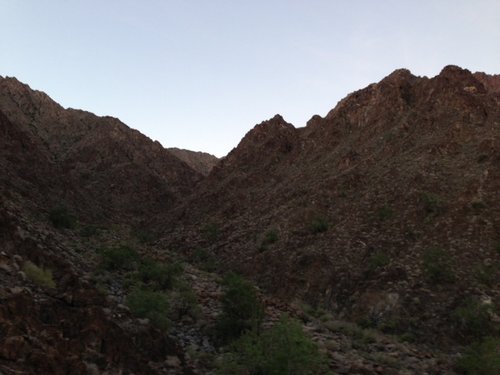
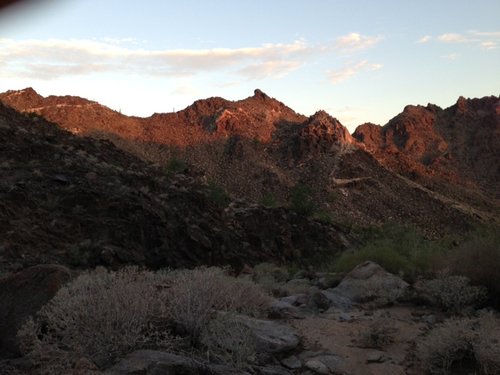
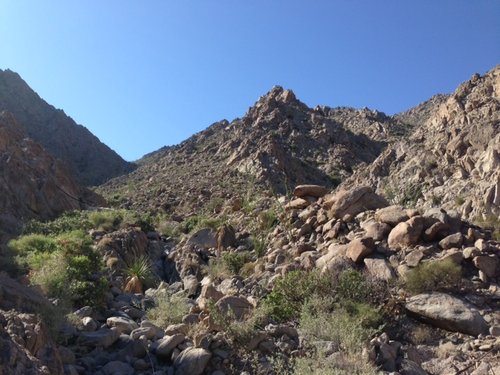
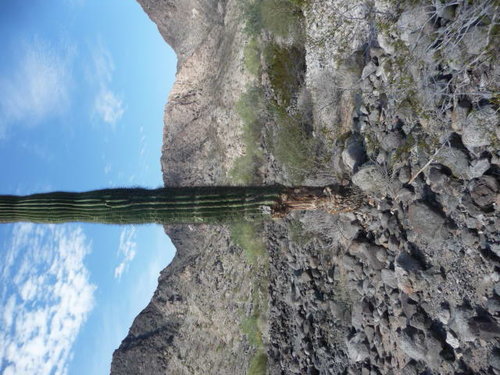
I'll attach a few pics showing what I get to play around in. No intentions to hike into the hills until it's actually time to go after the ram that I finally pick out (no need to spook sheep into more inaccessible "verticality!"). Scouting will be done mostly from the desert floor with 15s and spotting scope, from distances up to a couple miles away.
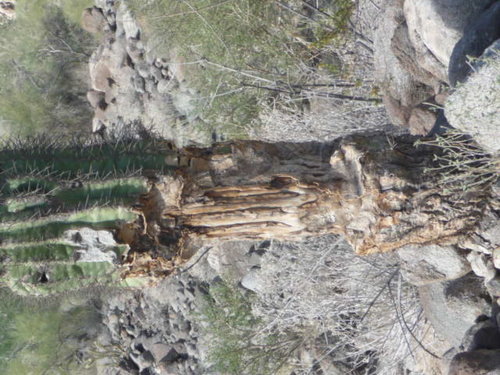
Even though Arizona is known for the iconic saguaro cactus, there are actually not that many where I'm hunting (a lot of ocotillo, though!). I did include pics of one saguaro that shows the result of rams butting it repeatedly (not an uncommon occurrence). Pretty amazing that saguaros survive that punishment! BTW, if anyone can rotate the saguaro pics I posted, have at it!
I did have a bite to eat with the other tag holder for the unit, a long-time area resident. We're both Arizona natives, and had a good time sharing stories about growing up in our state. I feel like I've got a new friend, not a competitor --- we're both pulling for each other. We're both doing this hunt without guides, though will have extra eyes helping out with the scouting.
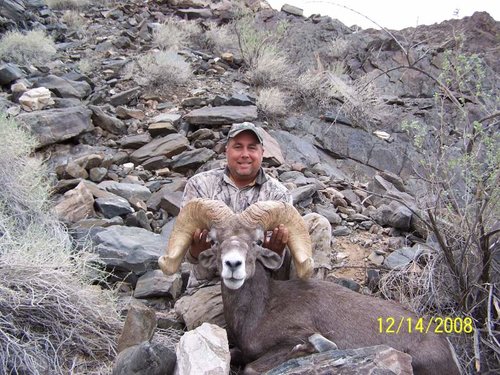
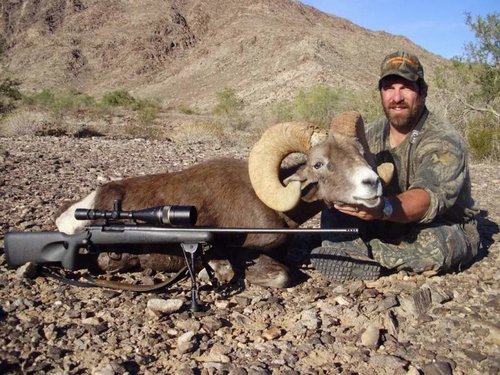
This unit is not known for super-big rams score-wise. In fact, the sheep here are smaller in body than elsewhere in Arizona. The population is made up mostly of the Mexicana type, with rams carrying the blockier, broomed-off horns, which I LIKE!!! My goal, as it were, is to tag a 165-in. ram, 'though I wouldn't turn down a shot opportunity at something larger

. When it's all said and done, though, I'd be very happy putting my hands on a pretty 160-in. sheep.
More to come in a few weeks ...