


Woodworking Hunt Talkers?

Very nice, what are you using to seal it after turning?

Also I saw a cool thing where old timers would take green wood and bore a hole through the middle and then put a dried circle cut piece on one side and when the wet wood would dry it would create a perfect shrink seal on it.
I use food grade epoxy both inside and out. On the outside, I heat the wood as much as I dare, apply the epoxy for a while with more heat and then wipe off. The inside gets a thicker, glossy coat.

I wonder how the old guys prevented splitting? Must really have known what they were doing.
 
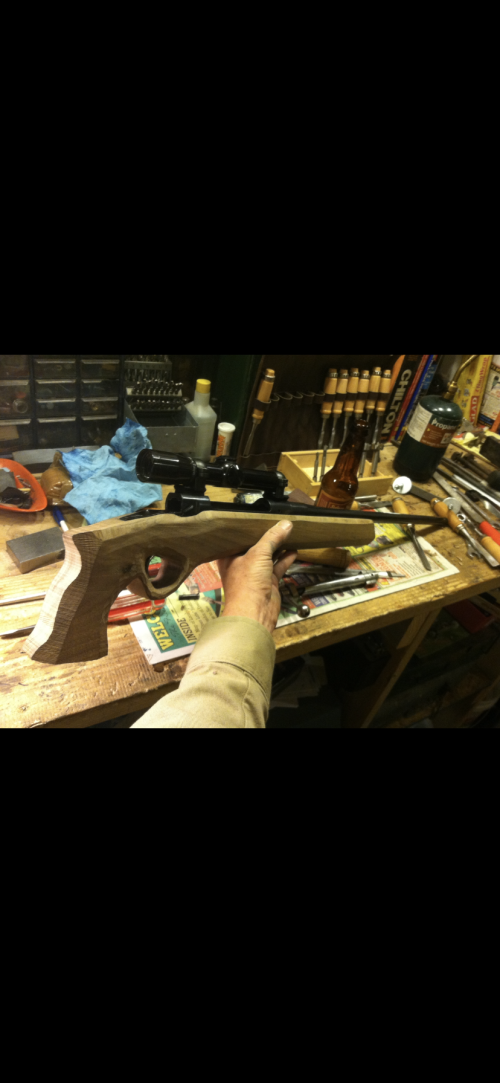
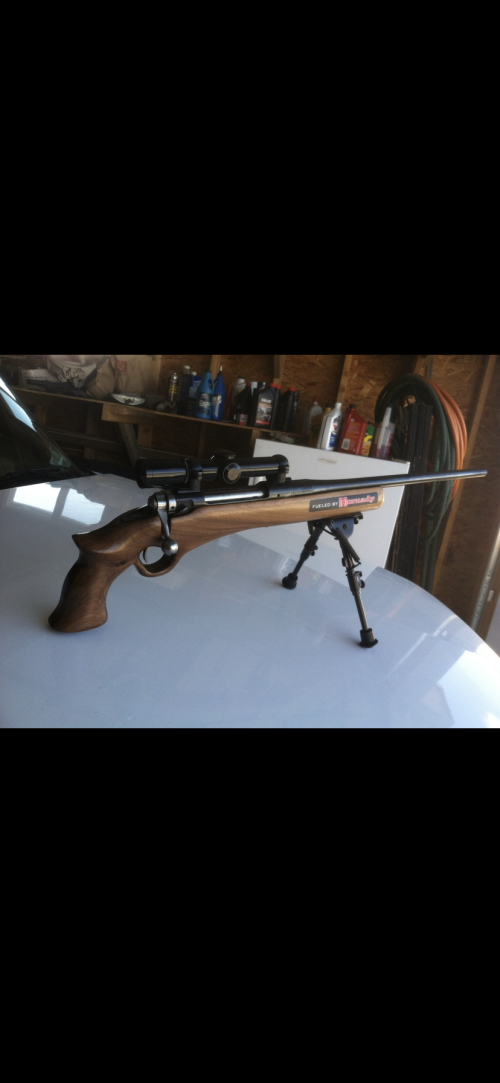
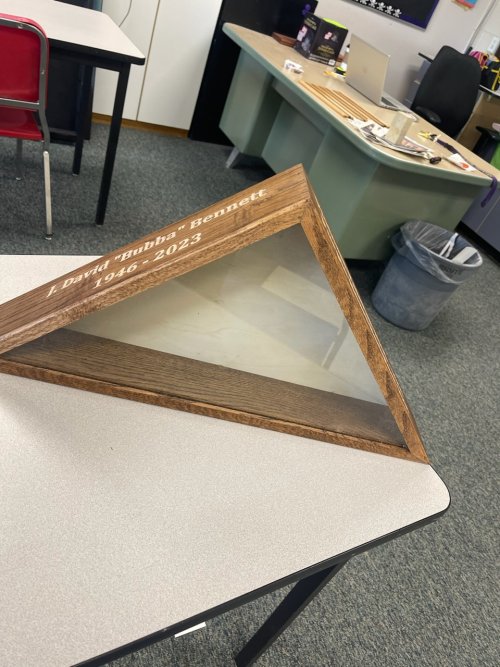
I Glued 3 pieces of 1” walnut together and carved a neat stock for my old clunky custom 110 savage in 6.5x55 . Makes for a good conversation piece at the gun range.
 

Attachments

  • IMG_5142.png
    IMG_5142.png
    2.3 MB · Views: 19
  • IMG_5143.png
    IMG_5143.png
    1.3 MB · Views: 19
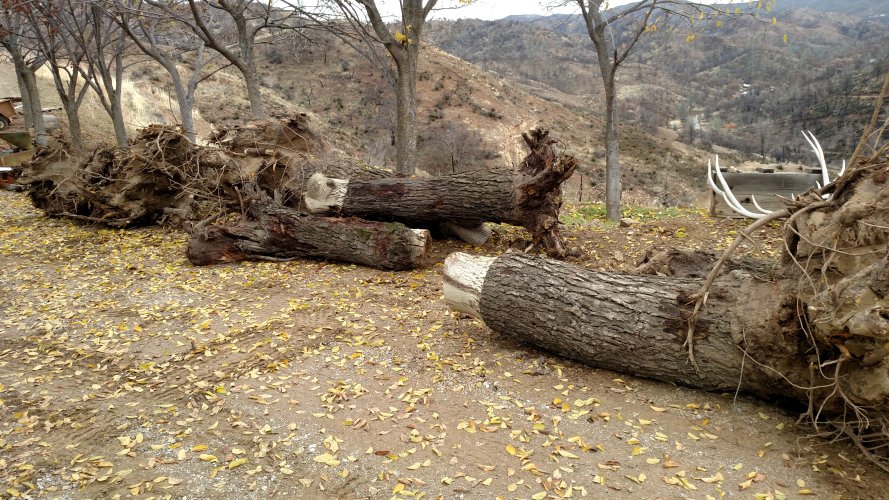
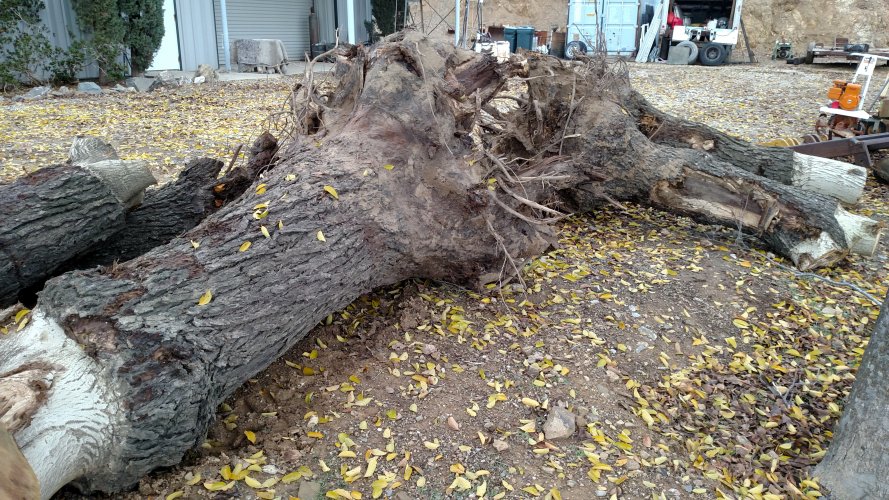
I have a butt load of black walnut. I'm going to start running it through the mill in the next few weeks. I'm not sure how much of it to cut or in what dimensions. Any suggestions as to what could be marketable?View attachment 280765View attachment 280766
I would go 5/4 or 8/4, as long and as wide as you can make it. Gives whomever is buying it the most flexibility with the material. Rough cut black walnut brings $7-8 a board foot around here.
 
I need some opinions here.
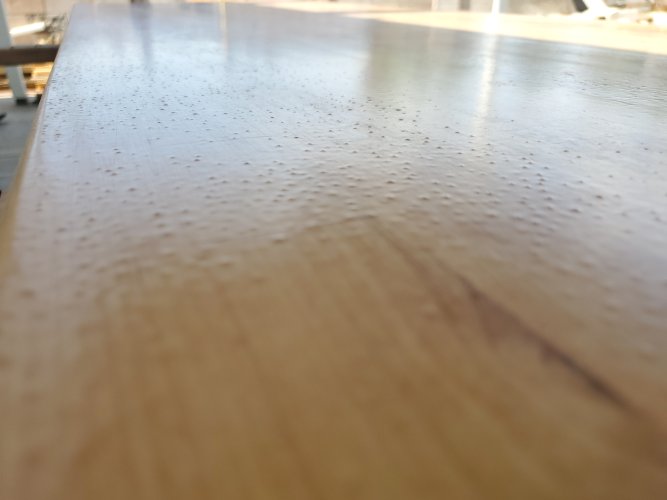
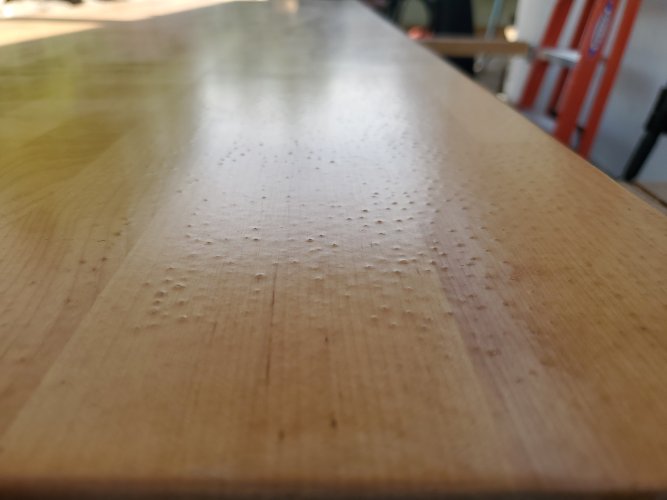
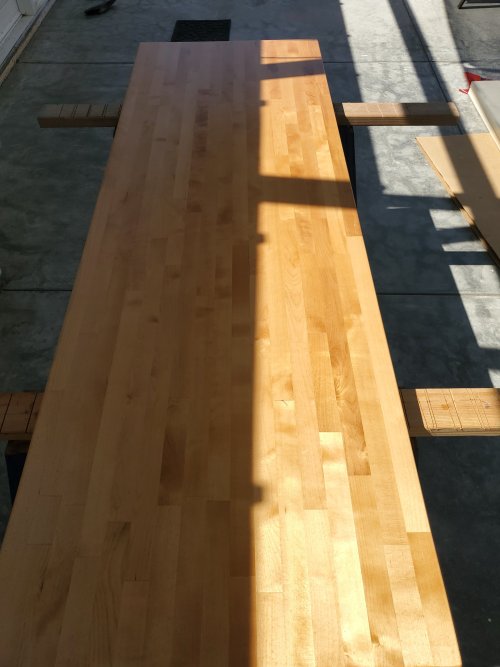
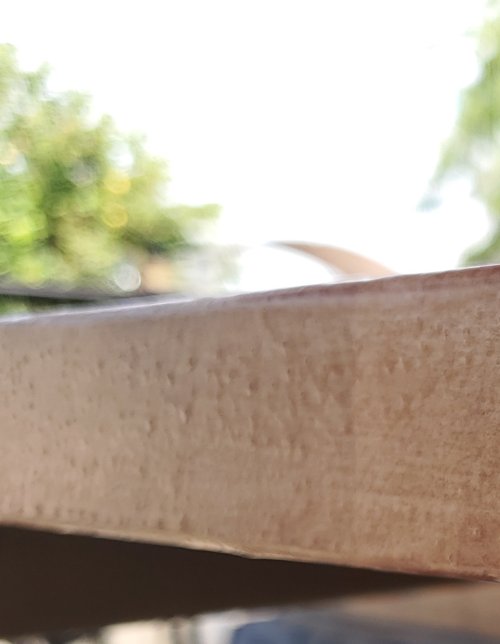
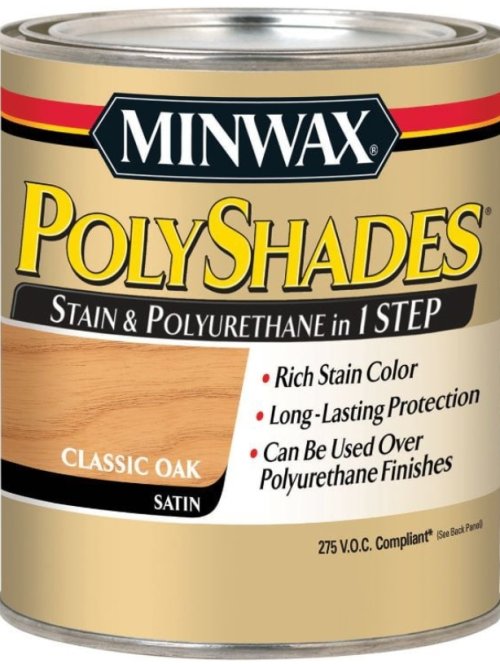
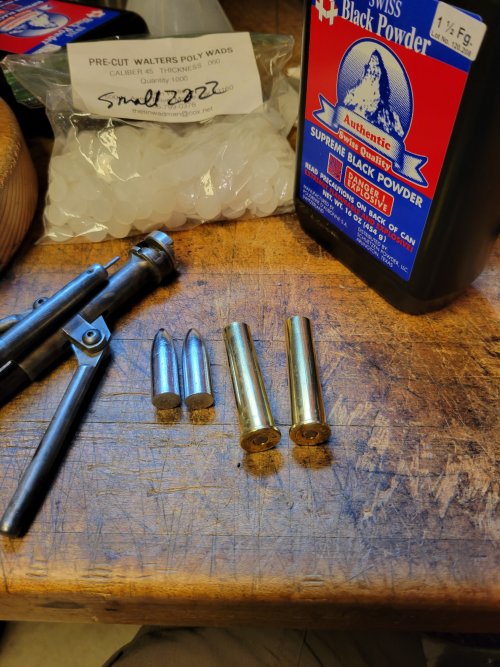
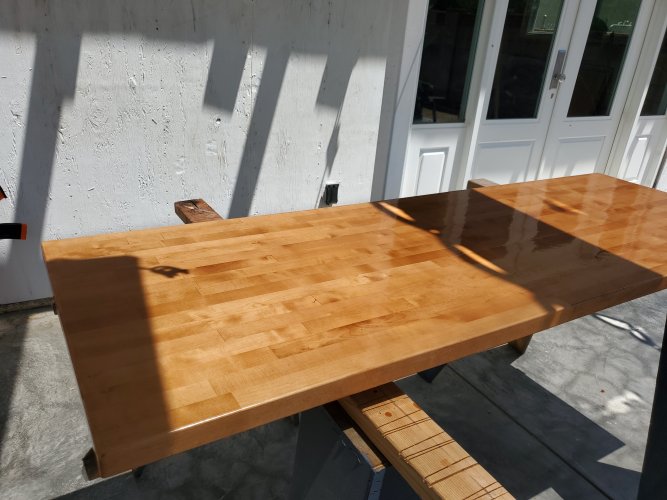
I'm going to be using a piece of butcher block for a work/ reloading bench. I wanted to somewhat protect the surface from gun cleaning chemicals, stains, etc so I picked up some Minwax Polyshades. Surface was sanded and cleaned before applications and product stirred thoroughly but I keep ending up with air bubbles trapped under the coat. I've tried using a brush,foam brush,low nap roller, and a foam roller . Foam roller was the worst, low nap roller produced the least offensive finish. At this point I'm three coats into it and regretting not leaving it unfinished. Any suggestions on applying a smoother finish?

-I'm not interested in spraying it at this point, but that's how I should have approached it from the get go. 20230624_101046.jpg20230624_101111.jpg20230624_101153.jpg20230624_101123.jpgScreenshot_20230624_102701.jpg
 
Maybe sand it down and start from scratch and try what the epoxy guys do? Add the finish and then use a blowtorch over the surface to pop any bubbles? I have no experience in this Arena but first thing that came to my mind LOL
 
Is it leaching up contamination from the old surface?
I dont think so. I went and picked up another quart and it went on pretty nice . The first can had the consistency of warm molasses, the second can was much thinner and spread much easier. First can was probably old stock that had been on the shelf for too long.
Going to let it dry and router in the slots for
T-track
 
I need some opinions here.
I'm going to be using a piece of butcher block for a work/ reloading bench. I wanted to somewhat protect the surface from gun cleaning chemicals, stains, etc so I picked up some Minwax Polyshades. Surface was sanded and cleaned before applications and product stirred thoroughly but I keep ending up with air bubbles trapped under the coat. I've tried using a brush,foam brush,low nap roller, and a foam roller . Foam roller was the worst, low nap roller produced the least offensive finish. At this point I'm three coats into it and regretting not leaving it unfinished. Any suggestions on applying a smoother finish?

-I'm not interested in spraying it at this point, but that's how I should have approached it from the get go. View attachment 281180View attachment 281181View attachment 281183View attachment 281185View attachment 281186
Too thick of application.
Thin coats. I never use the foam.
Brushes or synthetic wool pads, thinned finish. Think wiping varnish.
Now it has to be rubbed down with 0000 steel wool to remove bubbles and add thin coats of wiping varnish to float it out.
Kitchen butcher blocks need mineral oil finish.
 
Too thick of application.
Thin coats. I never use the foam.
Brushes or synthetic wool pads, thinned finish. Think wiping varnish.
Now it has to be rubbed down with 0000 steel wool to remove bubbles and add thin coats of wiping varnish to float it out.
Kitchen butcher blocks need mineral oil finish.
It's for a temporary "non food" work surface. And, I learned the hard way that foam is less than ideal for application.
I'm satisfied with the final coat after sanding all the herpes bumps off from previous attempts.
20230624_135313.jpg
 
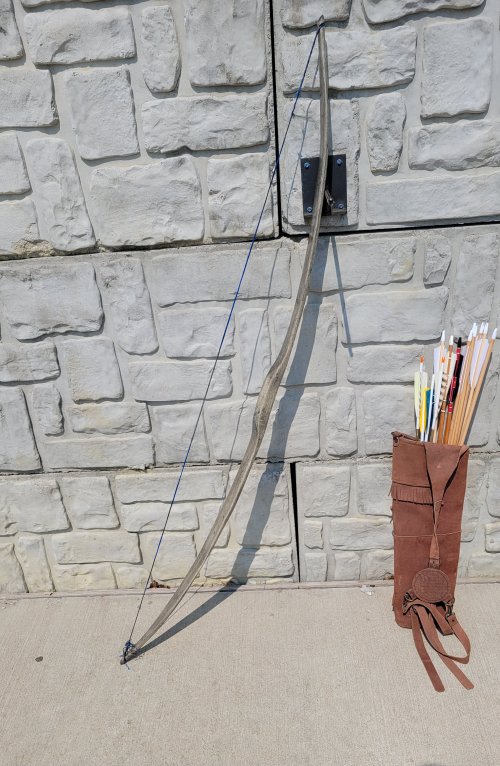
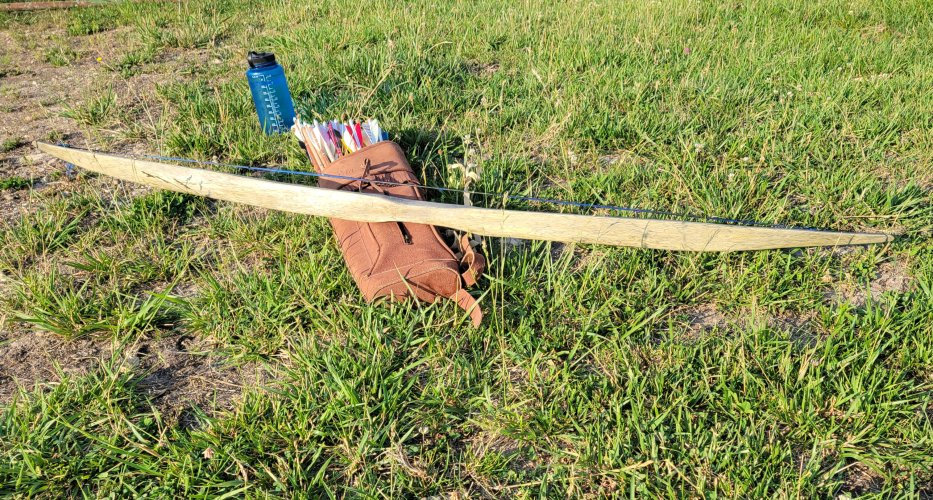
Here's a hackberry self bow I just finished. I'm no woodworker but I've been enjoying this process. About 100 things I wish I could have done better/differently, but it shoots! Now I just need to find somebody who will let me cut some osage and I'll be setView attachment 281188View attachment 281189
Osage is great bow-wood, but it's a pain in the ass to work with. You'd have a blast working with some straight grained ash, hickory, oak, etc. And, that stuff is probably all around you.
 
Osage is great bow-wood, but it's a pain in the ass to work with. You'd have a blast working with some straight grained ash, hickory, oak, etc. And, that stuff is probably all around you.
Yeah, I mostly get bow wood from my brother's property and there's hickory all over the place. That's next on the list, but I do still want osage because eventually I'd like to try some pretty aggressive designs that would hold up better with osage I think. Plus I'm already not a fan of how much moisture the white woods suck up. I'll keep working with a variety of wood species though, I already have a bunch of white mulberry drying and I'm excited to see how that will work out too.
 
Yeah, I mostly get bow wood from my brother's property and there's hickory all over the place. That's next on the list, but I do still want osage because eventually I'd like to try some pretty aggressive designs that would hold up better with osage I think. Plus I'm already not a fan of how much moisture the white woods suck up. I'll keep working with a variety of wood species though, I already have a bunch of white mulberry drying and I'm excited to see how that will work out too.
Osage is awesome stuff, no doubt. Just tough to find a clean stave, so it can be demanding of your skills, working around all the knots and bends. I've never worked with mulberry or hackberry. I've made a bunch out of ash and hickory, one maple, one osage. Fun stuff!
 

Forum statistics

Threads
119,026
Messages
2,214,399
Members
38,733
Latest member
donpownell
Back
Top