atlas
Well-known member
- Joined
- Feb 15, 2022
- Messages
- 515
32 million Sacramento fall run smolts are released every year.



Follow along with the video below to see how to install our site as a web app on your home screen.
Note: This feature may not be available in some browsers.

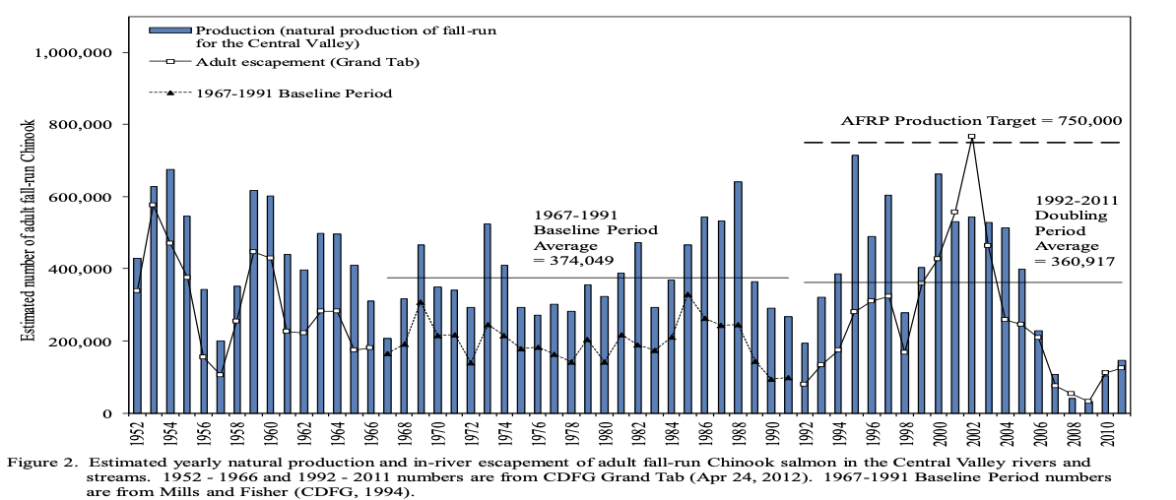

That's a problem.
You have massive meta data analysis like that usgs study I linked that very explicitly concludes that despite the hundreds of millions of dollars spent on fresh water habitat it hasn't equated to ANY additional wild fish, yet no one changes their minds.
Habitat restoration is akin to a religion for some people.
Mostly hatchery strays attracted by pulse flows. Some natural reproduction. California releases smolts at the Golden Gate and a variety of other places which results in high ocean abundance, while having relatively low hatchery return rates. This is because these fish stray like crazy.
Another thing about king salmon in California is that they don't go up to Alaska and the BC coast. Meaning that there is a lot more control in who is actually commercially fishing these fish... recently it's been closed entirely with a limited recreational fishery and a quota.
This is different than fish in say Washington, which can get caught in Washington, BC and Alaska. They also encounter trawlers which Sacramento river fish do not.


I'll have to read up on him. Thanks for sharingHabitat restoration is akin to religion for some people, just like SE Alaska harvest can be for others, and others believe more hatchery fish is all we need. That doesn't mean habitat, harvest, and hatcheries aren't part of the answer in various ways, or vice versa. The tribes have re-established a lot of new runs with hatchery fish, and had failures. Cutting harvest has improved some runs, done nothing to others. Allowing fish to access habitat, or fixing identified pinchpoints in habitat, have improved some runs, done nothing to others.
I've seen those papers and I wouldn't say nobody changes their minds. There's a difference between being more critical of habitat projects, or placing less weight on the importance of habitat in particular systems and outright dismissing habitat altogether, everywhere. You might be referencing the Columbia river paper that talked about spending 9 billion over decades on salmon habitat restoration? The truth is only something like 25% went to actual salmon habitat restoration (Still a large amount), most of it went to the agency bloat / monitoring / etc. Other papers include foregone revenue as part of the costs (value of electricity not generated due to dam spills).
The Columbia watershed is really impacted by ocean harvest, predation, dams, and fragmented habitat. So if you have a watershed which has been so altered, and resembles almost nothing of its former self, it's fair to say there are a lot of different pinchpoints. We might increase smolt production with a habitat project, but if the birds pick them off, is it still a success? Maybe not. But if you remove all the birds and the smolt still get torn up at the dams, fried from hot water, poisoned with polluted water...was the bird removal project a success? So on and so forth. Need to work on all of the problems.
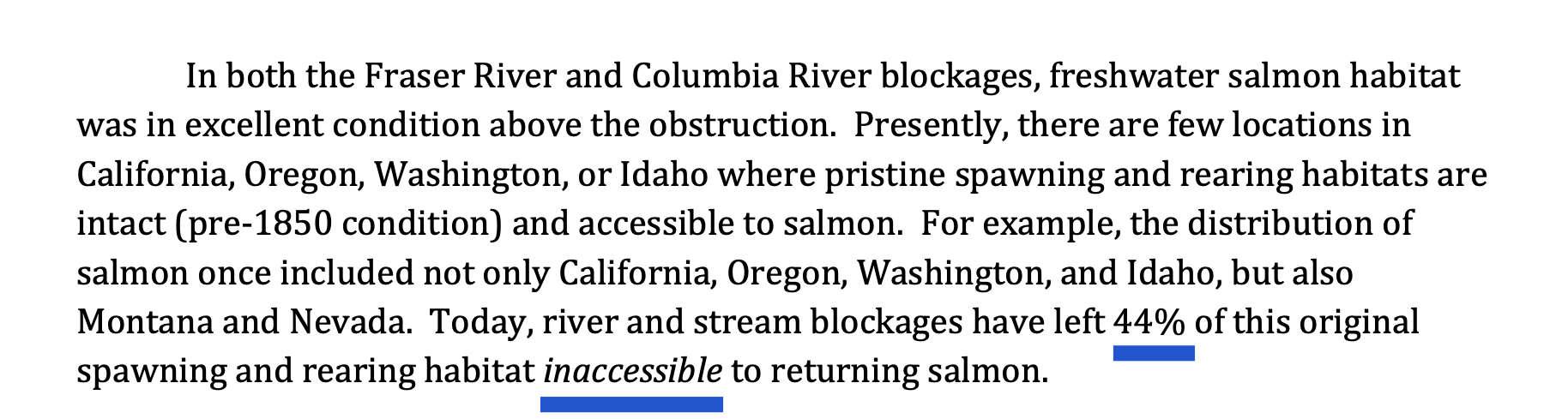
One of the salmon biologists I like, albeit I find his takes generally more negative, is Robert Lackey. He regularly writes about religious ecology and normative science. He comes off a bit pessimistic and critical of how much money we've spent trying to recover salmon. He seems to take the position that no scientist knows the answer or which issue is the most important to address. And he's probably right. That doesn't mean habitat is not an issue altogether, to varying degrees the tribes, feds, even the fisheries biologists who focus on the ocean still acknowledge habitat as an issue. And to be clear - I believe habitat, harvest, hatcheries, ocean conditions, climate change, and predation are all issues, I am very much not just a habitat guy.
From one of his 2025 papers (Six Policy Realities Revealed by Analyzing the
200-Year Salmon Decline on the Pacific Coast)
View attachment 404046
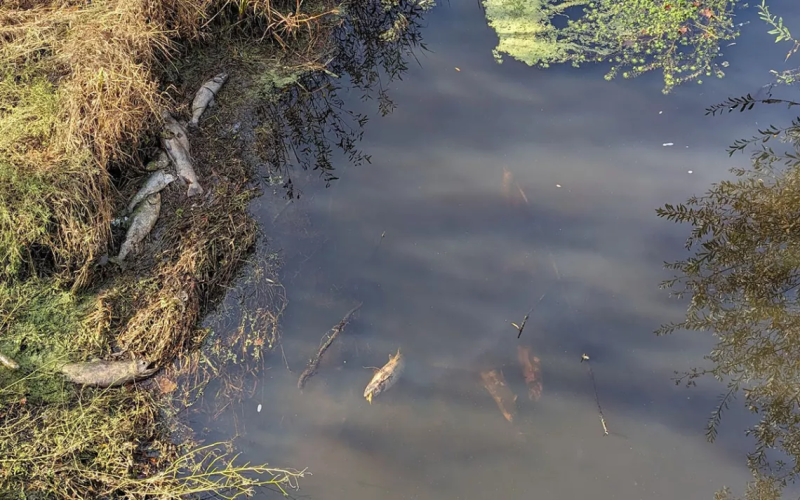
Right I agree that it is a good thing to see hundreds of chinook running up Putah creek but it is fully artificial. These same practices have resulted in chinook salmon swimming through a tidal ditch to Lake Merritt in Oakland almost every year, some years people even catch them while fishing for striped bass or poach themThat is exactly right.
There is nothing wrong with hatchery fish straying and recolonizing spawning habitat, I'd call that a goal in different scenarios, especially if the hatcheries are well run and with good genetics.
The tribes have done this a lot. There are various self sustaining wild runs all over the west coast which were started this way - that information can be tracked down. A good non tribal example is Coho on the upper willamette river, which was not within their reach previously. In 2024 they counted over 50,000 - wild and self sustaining, pretty remarkable.
It seems like there's a bit of motivation here to be overly critical of any habitat project. There are others but I digress, not really my intent to change minds, just a salmon lover hoping for the best.
I’m not quite following on the thought that pinks and chums don’t eat the same feed. Pinks and Chums eat smaller fish just like Kings and steelhead and Coho. It is sockeye that are plankton and krill eaters. The article is looking at the total numbers of formerly river fertilizer fish being released (over 5 billion Per year) between Japan, Korea, Russia and Alaska. I think they are onto something.I wasted one of my free ST reads on this this morning.
It's a tribal op-ed arguing foreign hatchery releases are to blame by causing over competition (i.e. tragedy of the commons). I find that exceptionally hard to believe as the vast majority of releases into the Pacific are pink and chum, two species that are still returning in strong numbers. They also do not feed on the same food or in the same habitats in the ocean as chinook and coho, the two species suffering the most (and steelies).
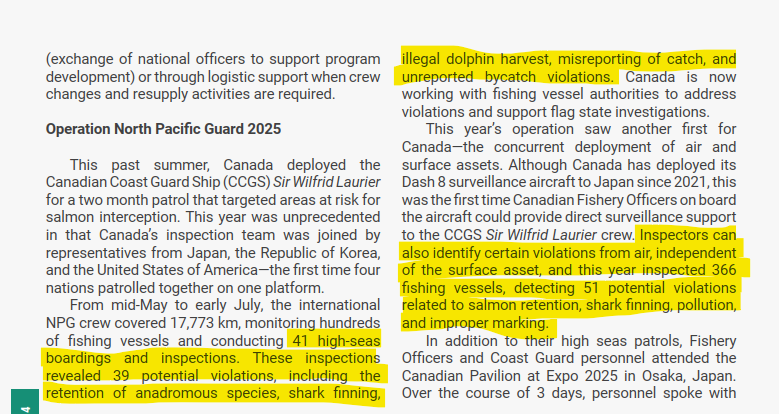
However, within it was a reference to the North Pacific Andomondous Fish Commission, an entity I didn't know existed, and whose goal is to bring the 5 salmon countries together to share research and management. Their recent newsletter has some good info
View attachment 405738
The diets with the strongest separation (difference) were between either piscivorous salmon (Chinook or coho) and any planktivorous salmon (chum, sockeye or pink).I’m not quite following on the thought that pinks and chums don’t eat the same feed. Pinks and Chums eat smaller fish just like Kings and steelhead and Coho. It is sockeye that are plankton and krill eaters. The article is looking at the total numbers of formerly river fertilizer fish being released (over 5 billion Per year) between Japan, Korea, Russia and Alaska. I think they are onto something.

Seems like there is a lot of variability in this, might be related to some of what atlas is mentioning (from Ruggerone et al. 2023)The diets with the strongest separation (difference) were between either piscivorous salmon (Chinook or coho) and any planktivorous salmon (chum, sockeye or pink).

I've read stuff on the opinion that changing climatic conditions are favoring pinks in general so I suppose that would make sense that wild and hatchery releases are both doing great. Pink salmon are certainly doing a great job of colonizing the North sea and North Atlantic via hatchery releases that first occurred in Russia in the 1970s (I believe). Only recently have they colonized Norway and have showed up in Scotland and Ireland even more recently. It's interesting that they didn't spread right away when they first became established in Russia. Two different oceans but seems like a switch flipped there tooTrue, there's a lot we still don't know.
Spatio-temporal variation in vertical distributions of Pacific salmon in the ocean
The vertical distribution of Pacific salmon (Oncorhynchus spp.) is of interest to biologists and the fishing industry. An understanding of the normal vertical distribution and movement of salmon facilitates better management of both directed andwww.academia.edu
And maybe it is overcompetition with pinks, but it would seem odd that our native pinks are still thriving in a landscape of "over competition" from pinks.