West coast salmon recovery

You’re exactly right, that’s a huge one. Not just commercial fishing, also regulatory capture by corporate interests which can, and does, result in habitat destruction, pollution, unenforced regulations, hot water, no water, no fish passage, etc etc.
I guess my point was is we know how to fix a lot of the problems, just don't want to pay what it takes to do it.
 
I guess my point was is we know how to fix a lot of the problems, just don't want to pay what it takes to do it.

Yep. One of many examples of that is Idaho refusing fish passage at Hells canyon.

https://species.idaho.gov/wp-conten... Policy,licensing (2019 Settlement Agreement).

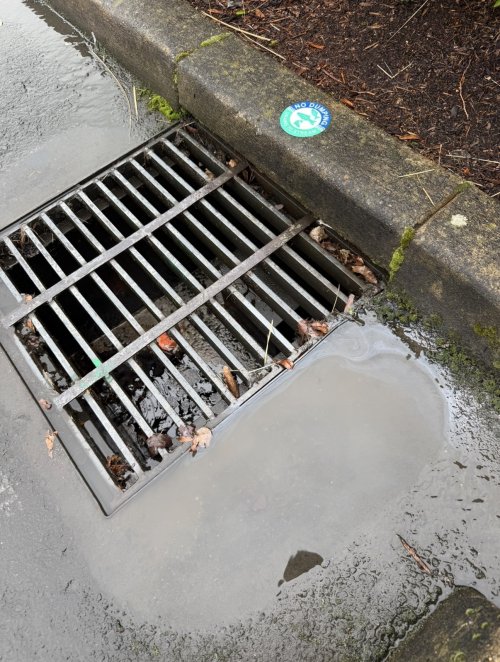
I really admired what Mike Simpson was trying to with the snake river dams. Heck, I really admire anyone who tries to do anything to help. I called this in the other week, big gas leak into this drain.

IMG_4732.jpeg
 
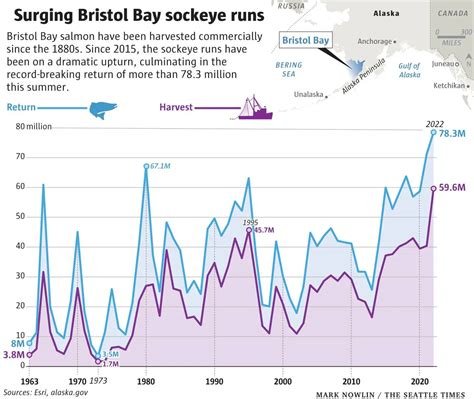
I don't think fresh water habitat is even a blip on the problem. It's out in the salt. We need more (some?) enforcement out there
Problem is, the fishery advisory board for Alaska is appointed, and the majority of the seats represent factory trawlers. And trawling is the biggest problem.

Sure, there’s foreign vessels that operate there illegally, but the majority are owned and docked in Seattle. This problem could be solved rather quickly, but nobody really wants to deal with it.

This is leaving out the salmon flu issues in Fraser River/ BC from salmon farming adjacent to salmon staging areas, causing upwards of 90% pre-spawn wild fish mortality in some years.
 
I don't think fresh water habitat is even a blip on the problem. It's out in the salt. We need more (some?) enforcement out there

Respectfully, that’s not correct.

Thousands of miles of habitat all over the west are currently impeded by non passable dams and culverts.

Lab proven Salmon killing chemicals from runoff such as 6QQP degrades stream habitat and are lethal for salmon.

Low hot water in numerous spawning tribs due to ag withdrawals limits carrying capacity

Etc

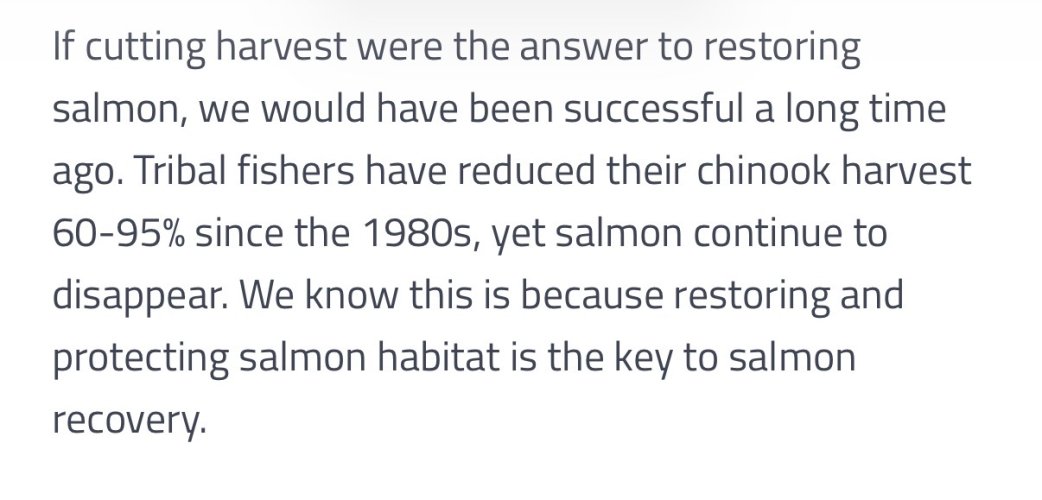
The ocean and harvest absolutely matter. So do predation bottlenecks and other things we haven’t figured out yet. So does habitat. You can find systems where harvest has decreased and runs have still decreased. You can also find systems where millions have been wasted on habitat restoration projects with nothing to show for it. Look at the Coquille estuary restoration project and the chinook have only nosedived since. It’s believed the smallmouth bass have caused the declines, although I haven’t looked to see what kind of data they are looking at or if they are blaming.

You can find systems where habitat access has been restored and runs have demonstrably increased.

Each river has different problems and it’s incorrect to generalize by saying habitat loss isn’t a blip of the problem. I believe it’s death by 1000 cuts until the best available information tells us otherwise.


IMG_4733.jpeg
 
Respectfully, that’s not correct.

You can find systems where habitat access has been restored and runs have demonstrably increased.
I would love to read about these, because I've never seen one.
I believe it’s death by 1000 cuts until the best available information tells us otherwise.
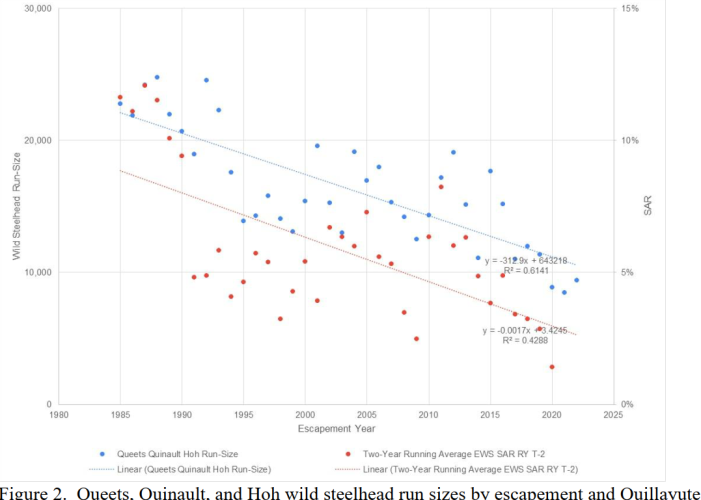
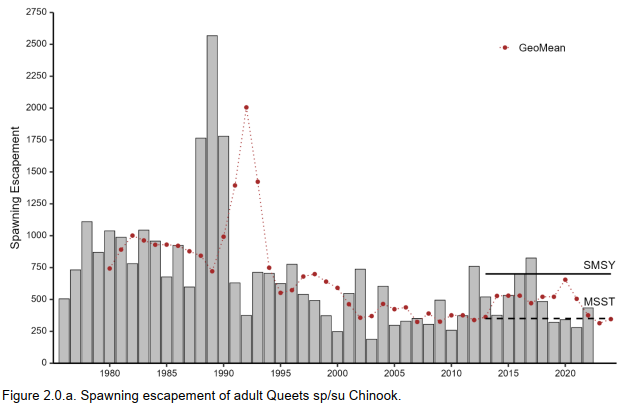
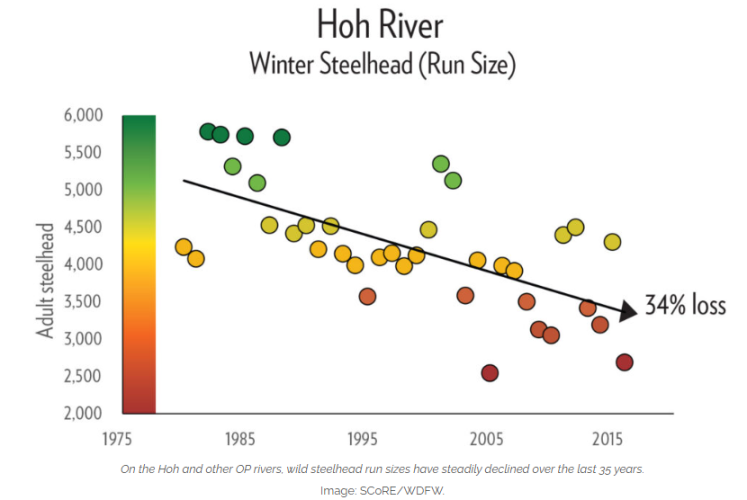
I should have said correctable freshwater. Yes, some freshwater habitat is impacted. But we have the Olympic Peninsula as a great test case that there are large ocean based impacts limiting salmon populations. It is prestine habitat, almost entirely within a NP, and yet we see sharp declines in salmonids.
1773263254635.png
1773263296517.png
1773263336119.png
I could go on. I have become rather hardened that freshwater salmon habitat "restoration" is the very definition of green washing. The industrial "restoration" complex cannot admit that tens of millions (hundreds of millions) of dollars of freshwater restoration projects have equated to didly squat. How has the restoration of the White Salmon or Elwha gone? How about all the millions of tons of large woody debris we've installed?

The greatest remaining wild steelhead runs in the Columbia are in rivers literally overflowing with predatory bass.

The USGS found similar results: https://journals.plos.org/plosone/article?id=10.1371/journal.pone.0289246

The aim of our study has been to look for evidence of the return on investment for the $9 billion restoration spending in the CRB over the past four decades. That return or impact would be expected in the form of increased “returns” of wild adult salmon and steelhead at Bonneville Dam. Our study does find evidence of changes in adult returns positively associated with contemporaneous changes in spending (lagged to reflect species life cycles), but these impacts also reflect commingling of restoration spending with spending on hatchery releases, the impacts of spending on hatchery fish survival, and the density dependence effects of hatchery releases. As a result, evidence of benefits to wild fish alone requires indirect approaches. To accomplish this, the model’s predicted adult returns (both hatchery and wild fish) attributed to both spending and hatchery releases are compared to independent estimates of returning hatchery fish based on hatchery survival estimates (smolt-to-adult ratios). The comparison finds the model-predicted levels of adult returns due to spending and hatchery releases do not exceed the survival-rate based estimates for hatcheries alone; this means we find no empirical evidence of an increase in wild fish abundance associated with restoration spending.

IMO the only two reasons we are still funding freshwater habitat projects are because the existing practitioners/implementers are financially benefited in doing so, and we don't know what else to do, it's pressing the easy button and saying "we're trying" without being held accountable for the results.
 
Salmon habitat restoration can definitely be green washing and pointless. That doesn’t therefore mean habitat isn’t important. You can not believe in salmon habitat restoration and still believe habitat is important. Because it is. Fish need cold clean water and spawning habitat. Fish need to get to spawning habitat. And that is still a major focus of tribes and conservation groups. Let’s ax the expensive estuary remodels and tree placement projects for now unless they can show us solid quantifiable data proving they have a positive impact.

Likewise, referencing the Olympic peninsula as if it’s a holy grail reference point for habitat not mattering for all west coast salmon, is a bit unfair and not representative of the unique challenges each watershed faces.

A lot of tribes and fisheries biologists say habitat, harvest, and climate change are the biggest known factors impeding salmon recovery. I agree with them until we have better data suggesting something else.
 
Back
Top