


USFS bid to salvage log windfall in Idaho and Montana

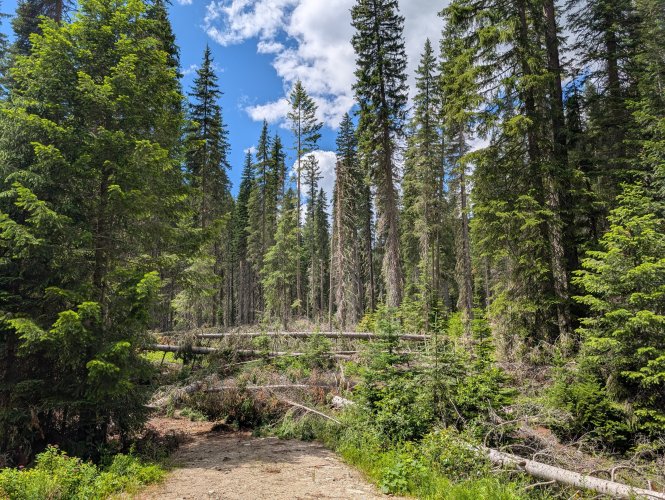
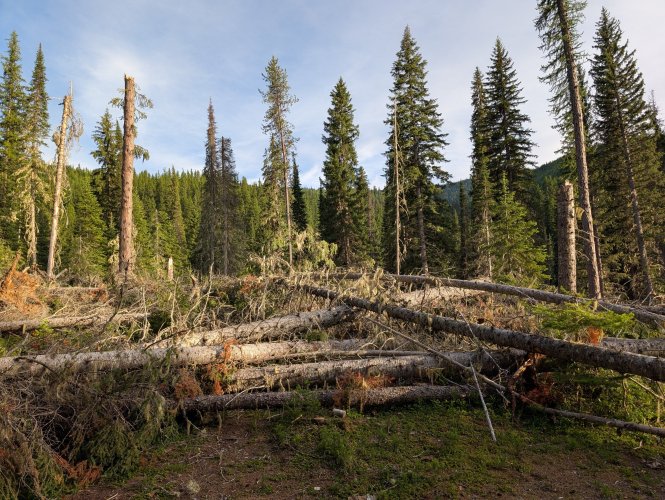
The wind storm this winter was a once in a lifetime event IMO. I can’t access most of my hunting areas on N Idaho. Green timber giants uprooted in large swaths like someone dropped a nuke. The USFS local employee said don’t expect this mess to be cleared in the next decade basically. I’ve spent several days sawing my way into remote areas and it’s going to take many more days if ever. I’m actually considering hunting southern Idaho for the first time for elk.

I don’t see how any logging operation would tackle the areas I’m talking about, especially foot only trail systems. The sheer mass of trees it would take every logger on deck and a few years work in this area.

After getting out to a couple "easy" to access spots in May I was not looking forward to hunting Panhandle A tag this year. Fortunately got lucky in the draw. This weekend I am going camping in a more remote area and it will be interesting to see how things look.
 
I have seen very good...really better for habitat than if it had been traditionally logged...and very bad salvage operations.

On average...dealt with a lot of them over my years...Id say hopes they will "clean up" all the damage never are accurate. For one, it can be very difficult to get at let alone remove much of the down timber. Part of that is logistical, part due to legitimate safety concerns for operators.

Ideally they take some of the damaged timber, clear paths through it where needed, and take some healthy timber (typically some is needed to entice loggers to do the work) in a manner that creates good habitat.

Worst case they take way too much live timber, including large areas with no or minimal damage, and ignore past required habitat considerations while doing so.

I've seen both happen. The key is whether folks looking out for habitat have any say or not in how, where, and what timber is taken.

And thats my concern...it is no secret that the current administration is not allowing foresters and biologists they allowed to remain to consider requirements that detract from top dollar maximum resource extraction.

Its also no secret that some in the timber industry, and administration friendly politicians want to turn forests over to the industry and allow unrestricted logging. To achieve that they continually blame the lack of logging as the cause and solution to forest problems.

So...I suggest not blindly jumping for joy at salvage plans and encourage doing so responsibly, with habitat considerations in mind.

I get the hesitation but it is needed in a lot of the Panhandle and Clearwater National Forests where I spend time. But the remote areas will probably still not be targeted due to it not being economical to harvest. I like @TheTone's idea of a roman candle party that was mentioned in this thread.
 
A lot of blowdowns in NW Montana. Some of the worst damage was to areas that were logged last year, areas where they left a lot of big trees, but now a lot of those trees are down. Some of the worst was on state owned land - I'm puzzled why they didn't get back in already and get those valuable big downed trees.
 
A lot of blowdowns in NW Montana. Some of the worst damage was to areas that were logged last year, areas where they left a lot of big trees, but now a lot of those trees are down. Some of the worst was on state owned land - I'm puzzled why they didn't get back in already and get those valuable big downed trees.
Quick Google search, they are at the public notice stage.

2026_SmileyFacedToddBlowdownSalvageTimberPermit_PublicNotice_TLMD_FMB.pdf https://share.google/jlg9N6eIirHoVaNUH

2026_DernDrawBlowdownTimberPermitPublicNotice_TLMD_FMB.pdf https://share.google/Y4LLPO67rs0rMO1WM
 
A lot of blowdowns in NW Montana. Some of the worst damage was to areas that were logged last year, areas where they left a lot of big trees, but now a lot of those trees are down. Some of the worst was on state owned land - I'm puzzled why they didn't get back in already and get those valuable big downed trees.
A laundry list of reasons I'm sure. Tons of excuses also. mtmuley
 
The wind storm this winter was a once in a lifetime event IMO. I can’t access most of my hunting areas on N Idaho. Green timber giants uprooted in large swaths like someone dropped a nuke. The USFS local employee said don’t expect this mess to be cleared in the next decade basically. I’ve spent several days sawing my way into remote areas and it’s going to take many more days if ever. I’m actually considering hunting southern Idaho for the first time for elk.

I don’t see how any logging operation would tackle the areas I’m talking about, especially foot only trail systems. The sheer mass of trees it would take every logger on deck and a few years work in this area.
They were saying a 50-yr event in our area.
 
A lot of blowdowns in NW Montana. Some of the worst damage was to areas that were logged last year, areas where they left a lot of big trees, but now a lot of those trees are down. Some of the worst was on state owned land - I'm puzzled why they didn't get back in already and get those valuable big downed trees.
A laundry list of reasons I'm sure. Tons of excuses also. mtmuley
Yes. Weather, litigation, red tape, and capacity.

Whether people believe it or not, we actually want to do a good job out there. It's been a wet spring. Salvage has been happening where soil conditions allow on existing contracts. Other places are just too wet.

There are big projects in the Star Meadows area outside of Whitefish that are under litigation. Some of the sales from those projects had been logged or were currently being logged during the wind event. Some volume was salvaged before the ruling when the judge remanded the Roundstar project back to the FS. After the ruling, operations ceased and the blowdown sits.

Blowdown on sales under contract that aren't affected by the litigation and private lands have been getting cleaned up. Recent sales that are no longer under contract or areas that weren't logged and have blown down now have to go through more complicated processes, which could mean the entire NEPA process. The DNRC has been good about getting things sorted out on Trust Land and GNA where they can. The FS is trying.

There is also economics. Salvage, whether blowdown or fire, is generally a lower value proposition. Up against the clock for both as far as quality degradation goes. Blowdown is extremely expensive to log. Significantly lower production and lots of breakage in the wood to sort through. It costs the same to move a mechanical logging side to an area with 200 loads or 2 loads. Then add on road maintenance, slash work, haul costs, etc. Takes time to sort out the viability.

Unfortunately there isn't the timber infrastructure that there used to be in Montana. Less loggers means it takes more time to get through it.

It gets complicated and frustrating quick.
 
I get the hesitation but it is needed in a lot of the Panhandle and Clearwater National Forests where I spend time. But the remote areas will probably still not be targeted due to it not being economical to harvest. I like @TheTone's idea of a roman candle party that was mentioned in this thread.
I agree
 
Yes. Weather, litigation, red tape, and capacity.

Whether people believe it or not, we actually want to do a good job out there. It's been a wet spring. Salvage has been happening where soil conditions allow on existing contracts. Other places are just too wet.

There are big projects in the Star Meadows area outside of Whitefish that are under litigation. Some of the sales from those projects had been logged or were currently being logged during the wind event. Some volume was salvaged before the ruling when the judge remanded the Roundstar project back to the FS. After the ruling, operations ceased and the blowdown sits.

Blowdown on sales under contract that aren't affected by the litigation and private lands have been getting cleaned up. Recent sales that are no longer under contract or areas that weren't logged and have blown down now have to go through more complicated processes, which could mean the entire NEPA process. The DNRC has been good about getting things sorted out on Trust Land and GNA where they can. The FS is trying.

There is also economics. Salvage, whether blowdown or fire, is generally a lower value proposition. Up against the clock for both as far as quality degradation goes. Blowdown is extremely expensive to log. Significantly lower production and lots of breakage in the wood to sort through. It costs the same to move a mechanical logging side to an area with 200 loads or 2 loads. Then add on road maintenance, slash work, haul costs, etc. Takes time to sort out the viability.

Unfortunately there isn't the timber infrastructure that there used to be in Montana. Less loggers means it takes more time to get through it.

It gets complicated and frustrating quick.
I would like to see an accelerated salvage process on federal lands. On the lands I helped with our timeline was measured in weeks. Goal to get in a month or so after the damage, less in some cases.

Having to run through full NEPA is insanity.

Not sure an attempt to do that in this administration could be trusted to avoid negative impacts mentioned earlier, but its needed.
 
Back
Top