The problem with the long season during the rut is it allows us to be more selective, add in the advancements in technology in recent years and quality hunters can come close to culling a deer herd as effectively as I can cull cows in the corral. My father guided during the 60's and 70's, they killed some big bucks, but he will quickly tell you that they had a lot more that got away that wouldn't have today.
I would change the "hunter generally target older, bigger bucks" to hunters target bigger bucks that tend to be older. There is a difference. Not all big bucks are old and plenty of old buck have never been big. The best buck I have ever seen potential wise was 140+ as a two year old and 180 as a three year old. I have also seen bucks that lived to double digits and never grew a set of antlers better than 120. As it sits today in MT the bigger buck has almost zero chance of living past four unless he is living on private land where he is protected. The smaller buck can live on public to an older age in easten MT.
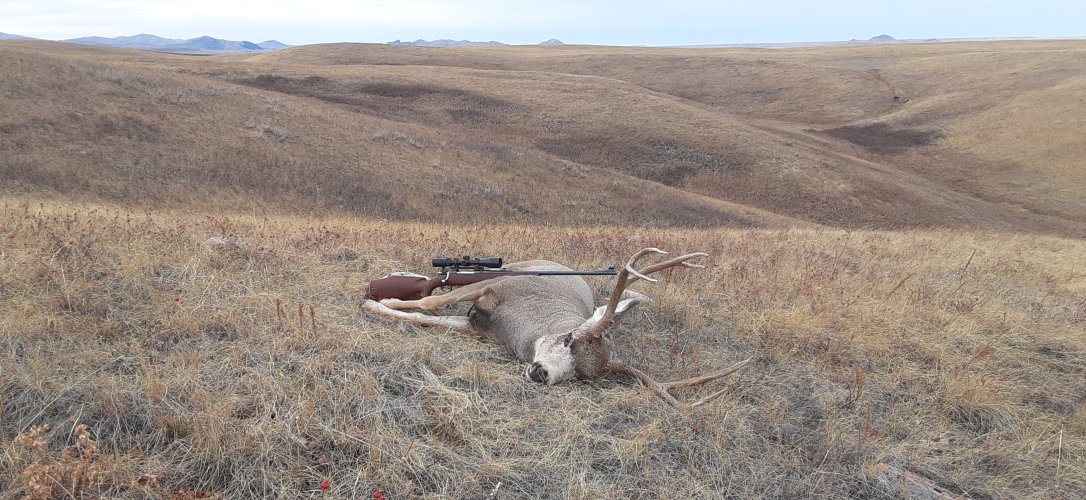
@OntarioHunter's buck this year is a good example.
Managment wise the less selective we are the better. It does no good when it comes to CWD if we reduse the avrage age of harvestof the bucks at the top side of the bell curve by a year and at the same time we add years of age to the bucks on the bottome of the bell curve. This is what is happening on private land that has limited pressure.
The key is buck are less vulnerable. I can not tell you how many bucks I have seen over the years that spent most of the fall in roadless hard to hunt juniper jungles only to see them crewsing around a hay field or standing next to a road during mid Nov. It is true that we would still kill many of the bucks and most would want to kill a big one, but it would be harder too be as selective during Oct.





 especially since does are generally going to have fewer fawns after a hard winter.

 . The vulnerability of the “large” bucks during the rut can’t be overstated with a general/otc type structure.