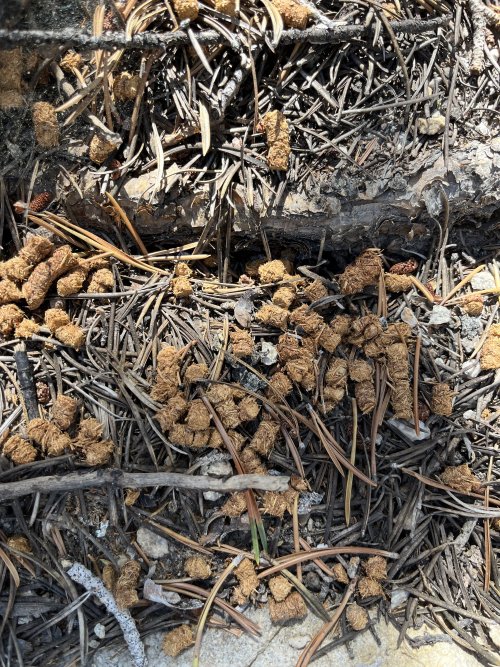
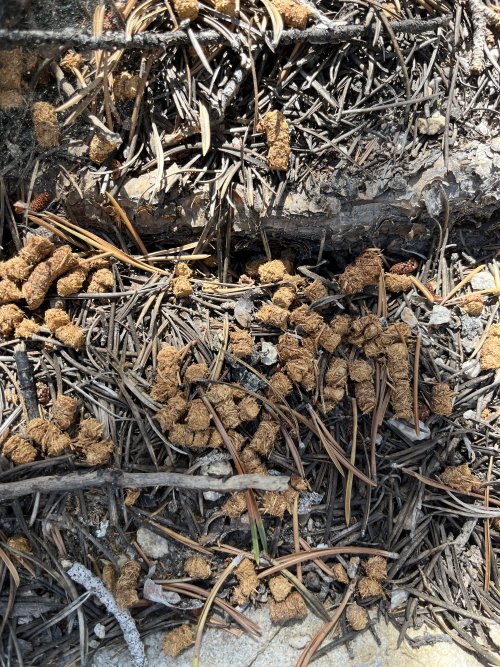
Blue grouse go uphill to spend the winter where there are fewer predators and in southeastern Wyoming they spend the winter eating buds of aspen and needles of pine, fir, and Douglas-fir. When I studied them eons ago they achieved their highest weights of the year just before spring breeding season after eating the outer two-thirds of needles all winter. They are amply insulated, so the weather doesn't have much effect on them. As with other game birds, the major impact on numbers from year to year is what happens during nesting, hatching and raising young. Rain and cold temperatures during hatching can prevent birds fresh out of an egg from drying off and beginning to regulate their body temperature. Sparse nesting cover allows nest predators like skunks, raccoons, ground and tree squirrels, and jays and crows to eat the eggs, and dry conditions mean there is likely to be a lack of insects which chicks need get protein needed for quick growth. Grouse need to be able to get into trees to avoid ground predators by 10-14 days old, and a lot of that growth is fueled by insect protein. In years with lots of grasshoppers I've killed young grouse with crops full of grasshoppers in early October.
There should be lots of plant and insect protein in brood habitats this year, and the trees providing winter food will be in good shape due to the winter and summer moisture. Grouse numbers increased last year in southeastern Wyoming, and there should be a good carryover population of grouse. Now, if there was a good hatch......