Thanks for the thoughtful response. I get it. I don’t like mandates either, and they are often counterproductive anyway. I certainly don’t have any answers.
Mostly, I just live in a Groundhog Day type scenario where we (people? Americans? Western state residents?) profess to value habitat and wildlife and biodiversity and nature. But when the time comes to either change our behaviors and reduce our consumption, or give up the thing we claim to love just to make a buck/have a nice house with a view/insert other convenience here, we give it up without much more than an “oh well”, or “everyone else is doing it”.
Then we do it all over again on the next thing.
It makes me wonder if humans have the, what- will? Intelligence? Capability? - to rein ourselves in. So far I see no evidence that we do. And I’m just as guilty, to be clear.
I read the article right after reading the mule deer thread, and the juxtaposition was a little ironic, and depressing honestly.
For all of human history, the evolutionary prizes went to the most growth-oriented cultures, until now. That depended on human resource consumption and reproduction. This is how imperialistic conquering cultures from Europe subjugated and largely eradicated the indigenous peoples of Africa and the Americas. Read Diamond's Pulitzer winning
Guns, Germs and Steel for more on why some win cultural competitions.
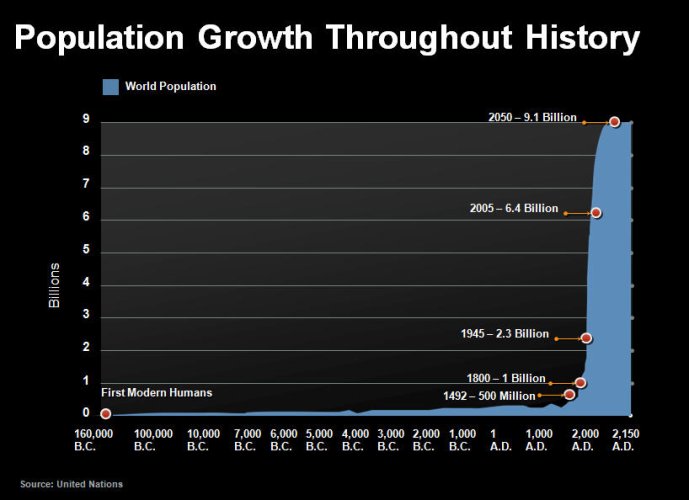
Now comes the sea change: humans have overridden the natural limits of earth, temporarily. To do that, we have accumulated unpaid debts by depleting or eliminating air and water quality, polar ice, forests, soil, oceans, frontiers altered by humans. The planet's ability to rebound from these depletions is now overcome by too many people doing what successful peoples have always done. Note, always is really only the last 500 years, not even a blink of the eye in the history of the planet, or mammals, or hominid human ancestors. Almost all of human history was in small clans, subsisting by gathering, scavenging and hunting. Agriculture led to concentrated populations that needed and created rulers focused on growth and conquest, and allowed for specialists to develop religion, science, technology, medicine, warfighting.
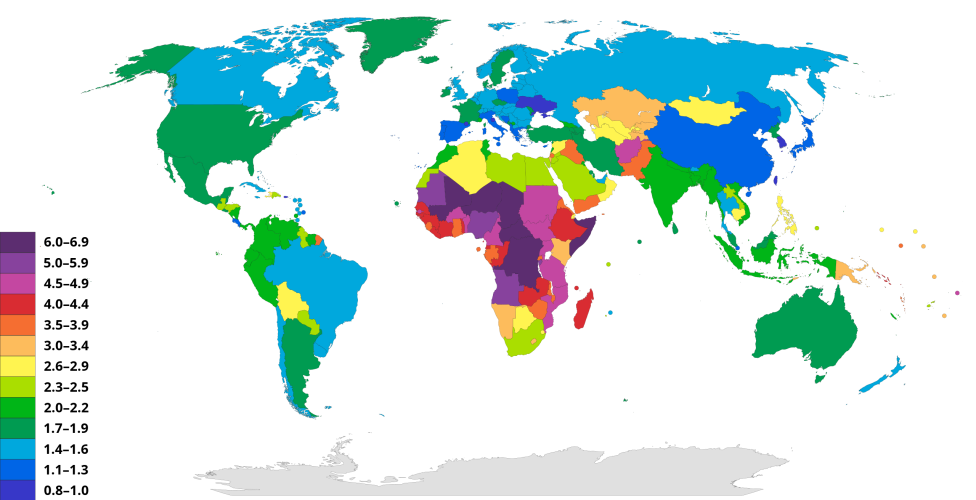
Solutions? Nurture the imperative of living within our means and nature's limits. Europe is ahead of us in this regard, they haven't been a frontier for 1500 years. They've been where we are going, at a frightening, unprecedented, exponentially accelerating pace. For modern societies this almost certainly requires legal and financial incentives. What if children beyond 2 per couple cost much more, because government tax subsidies for having over 2 children were reversed? Think carbon credits, except for children. Not pretty, not humane or ethical by current standards. Global famine- and water wars, unstoppable pandemics, nuclear conflicts are the likely alternatives. Its what we've always done in times of scarcity, when we were unable to relocate. Who is willing to live in the ocean or antarctica, or the moon, or or or. I won't be here for this unraveling, and for that I'm grateful. My progeny and yours will, though.