7mm-08?

One of the topics I have discussed at length with the ballisticians at Barnes are the velocities required for excellent bullet expansion.

I will call them soon and get back to you about this bullet at the velocity of 2650, which is just under max. The Barnes MAX Range X bullet with a BC of .439 should be just fine at 400 yards plus.

But I will go right to the horse's mouth about this.


Thank you for your post
It all depends on what Barnes considers to be “expansion”. But a 160 tsx out of a 7-08 isn’t giving anything near what I consider to be enough expansion compared to say a partition or ballistic tip.
 
It all depends on what Barnes considers to be “expansion”. But a 160 tsx out of a 7-08 isn’t giving anything near what I consider to be enough expansion compared to say a partition or ballistic tip.
I emailed one of ballisticians at Barnes. They near always get back to me in a few days. And the better 160 grain bullet would be TTSXBT. The extra "T" stands for Plastic tipped which facilitates full expansion at lower velocity, plus the BT means boattail which increases BC and helps maintain velocity for full expansion at longer range and lower velocity.

After Hear back I will get back to you.
 
Big fan of the 7mm-08, used in MN/ND for white-tail and MT for white-tail and mule deer.

140 gr Accubond, have also used 139 gr SST. Plenty of deer taken around 200-335 yards with my group.

I've also hunted with 30-06, 308 Win, 300 Win mag, and recommend the 7mm-08 for new hunters. I believe it's the best of the cartridges based on the 308 Win case.

jmho
 
I find it amusing that somehow the the 7-08 is "a whole bigger and better step up" to the 6.5 CM. The 6.5 CM runs faster than the 6.5.54 MS in its day with all bullet weights - a big game cartridges on par with the 7x57's reputation (which is the 7mm-08's slightly bigger brother). Hell, Charles Sheldon used the 6.5x54 to take 100's of head of Alaskan game, including dozens of grizzlies, but somehow the 7mm-08 is "a whole bigger and better step up."

When anyone starts quoting energy tables, I know they don't have much experience, or are lost in the mists of time. Anyone with a bit of experience knows energy doesn't kill animals... enough velocity to open an expanding bullet put in the right place is what kills game.

While mono's have the edge on penetration, I've found that lead core bullets that shrapnel (which penetrate less) do a quicker job of killing. I'll take that over pure penetration. IF that were the ultimate, we'd shoot FMJ's.

I've taken elk with all sorts of cartridges, from the 7mm-08 and 270 up through the 300 Mag's and 338 WM. Based on this conversation the 338 WM should be "a whole bigger and better step up" over the 7mm-08. But I've not found that to be the case. So how can that be true of the 6.5 CM?

Experience can be long, but narrow, and the understanding of that experience can be colored by our preconceived ideas and prejudices.

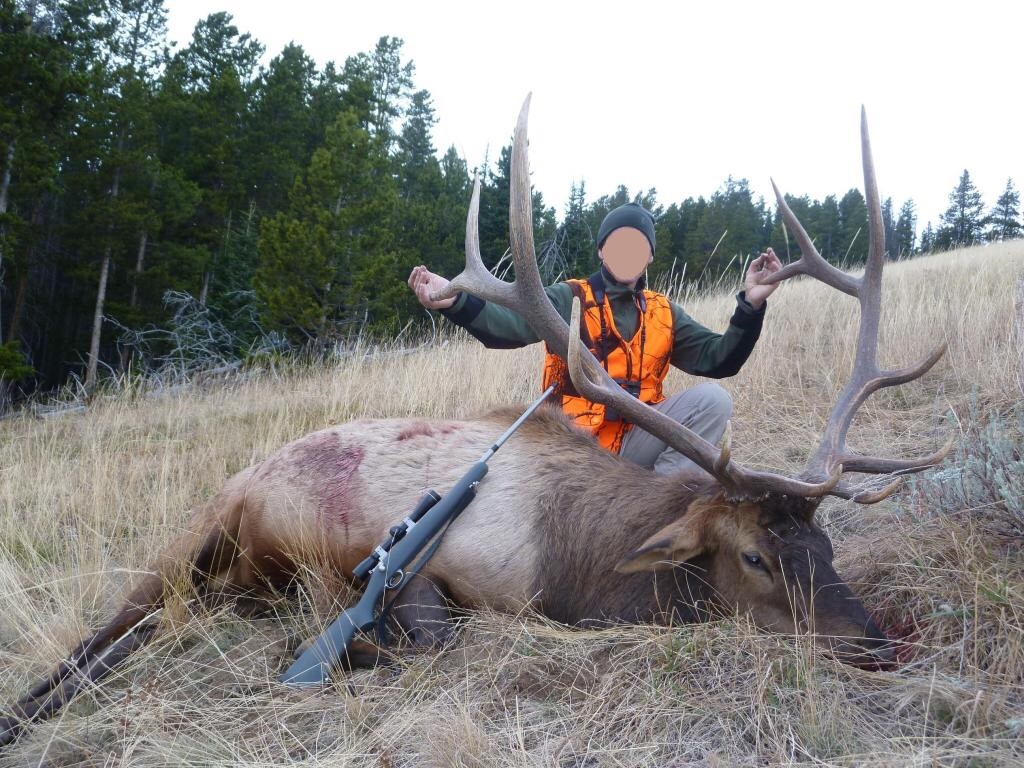
Here's a bull I took with a 7mm-08 and one 150 Ballistic Tip. It died faster than any elk I've ever shot.


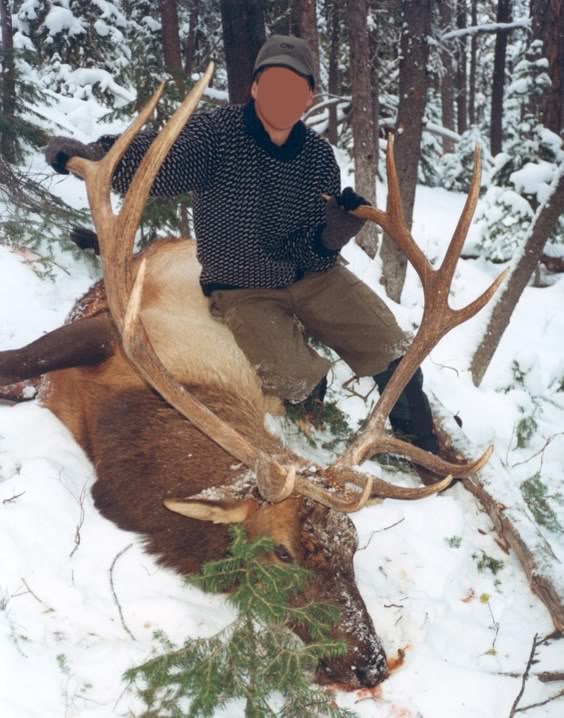
Here's a bull I shot with a 338 WM and a 210 NP... it took a finisher:


The 7-08 is "a whole bigger and better step up" than the 338 WM, right?
 
While mono's have the edge on penetration, I've found that lead core bullets that shrapnel (which penetrate less) do a quicker job of killing. I'll take that over pure penetration. IF that were the ultimate, we'd shoot FMJ's.
You can't compare today's modern mono bullets to a "FMJ" as you call it. mtmuley
 
I find it amusing that somehow the the 7-08 is "a whole bigger and better step up" to the 6.5 CM. The 6.5 CM runs faster than the 6.5.54 MS in its day with all bullet weights - a big game cartridges on par with the 7x57's reputation (which is the 7mm-08's slightly bigger brother). Hell, Charles Sheldon used the 6.5x54 to take 100's of head of Alaskan game, including dozens of grizzlies, but somehow the 7mm-08 is "a whole bigger and better step up."

When anyone starts quoting energy tables, I know they don't have much experience, or are lost in the mists of time. Anyone with a bit of experience knows energy doesn't kill animals... enough velocity to open an expanding bullet put in the right place is what kills game.

While mono's have the edge on penetration, I've found that lead core bullets that shrapnel (which penetrate less) do a quicker job of killing. I'll take that over pure penetration. IF that were the ultimate, we'd shoot FMJ's.

I've taken elk with all sorts of cartridges, from the 7mm-08 and 270 up through the 300 Mag's and 338 WM. Based on this conversation the 338 WM should be "a whole bigger and better step up" over the 7mm-08. But I've not found that to be the case. So how can that be true of the 6.5 CM?

Experience can be long, but narrow, and the understanding of that experience can be colored by our preconceived ideas and prejudices.

Here's a bull I took with a 7mm-08 and one 150 Ballistic Tip. It died faster than any elk I've ever shot.


Here's a bull I shot with a 338 WM and a 210 NP... it took a finisher:


The 7-08 is "a whole bigger and better step up" than the 338 WM, right?
The 6.5mm CM and 7mm-08 get there differently, but performance wise are close. Generally not enough real world differences to argue over (but, hey what else is a hunting forum for 😁).
For deer I'd take either one w/o a thought.

And as the old adage goes, "It's the Indian, not the arrow".
 
It all depends on what Barnes considers to be “expansion”. But a 160 tsx out of a 7-08 isn’t giving anything near what I consider to be enough expansion compared to say a partition or ballistic tip.
To Mt. Labrador,

Here is the data relative to our discussion about the 7mm-08 and Barnes 160 grain all copper bullets.

The maximum velocity I found for these bullets in a 7mm-08 was just under 2,700/sec.

I have been having great accuracy and velocity results in my 308 with Barnes bullets using AA2520, The Camp Perry Powder designed for the 308 case. I would try that powder loading for the 7mm-08 first.

So, the velocity I offered to the ballistician at Barnes was 2,650’/sec. for these two 160 grain bullets in the 7mm-08. Other factors I gave were 70 degrees temperature and one mile high for elevation.

The 160 grain 7mmTSX bullet does not have a super high BC. 392 still, starting at 2,650 it will reliably open fully at 300 yards going at 2,100’/sec. It has almost 1,600-foot pound of energy, still “Elk-Able”!

Their premium Long-Range X 160 grain Barnes bullet needs a 1/8 twist in the 7mm-08. It has a BC just over .600 and will open reliably out to 800 yards.

At 500 yards it is very “Elk-Able” delivering over 1,500-foot. pounds of energy from a truly superior bullet that loses no weight. In terms of fight, Barnes bullets are like having “Bruce Lee come out of your barrel”. All muscle, no fat, no pieces falling off.

Decades ago, I used the bullets you used and liked so much. They were the cutting edge once. On big wild boar however, and even medium sized ones, those bullets fell to pieces and did not penetrate when hitting the thick, large cartilaginous shoulder plate. These boar were not the little spud pigs guys are shooting in Texas with .223’s. I shot so many black tuskers in the 300-to-400-pound range.

Over 35 years ago Mountain Lion hunting was banned in California and as their population skyrocketed. My experience has been that those latent true Russian big mean Wild Boar genes began expressing themselves again under heavy mt. lion predation. True wild boar co-evolved with tigers. Hunting them by the truckloads has set my minimum bullet performance baseline. That was 20 years ago, and I have long moved far away, but the importance of having potent bullets has never left me.

Next, I lived in Wyoming and was near exclusively hunting antelope in the high mountain meadows of the Grizzly thick Wind River Range. I began using Barnes Originals then for my 7x57 and for my 270. Those 195-grain RN bullets for 7mm and 180 grain RN .277 Barnes Original bullets with a SD over .300 are TUFF. The 180.277 bullet allowed my 270 step up to a minimum round I felt comfortable being with in grizzly country before I was carrying bear spray.

That bullet was an armored beast itself. It never fell apart even on the shoulder plate of huge mature Wild Boar. Honest, I have experienced lesser bullets fall apart and glance off that natural shoulder body armor on angled shots.

No American bullet and ammunition manufacturer has done more research and development than Barnes. They have not merely improved upon the old copper cup and core model, they have taken bullet design and production into an entirely new universe.

Before going further let me offer Barnes a compliment by way of comparison.

Barnes is to bullets, what Sturm-Ruger was to firearms.

I grew up in Connecticut, our country’s signature firearms manufacturing state. Colt, Winchester, Marlin, Mossberg, Charter Arms, and then along came Sturm-Ruger.

In 1949 S-R came out with their revolutionary ,22 auto loading pistol and after 75 years of stellar service, this has led to the Mark IV .22 which sets the gold standard for accuracy.

Next, Sturm-Ruger really got investment casting nailed down and the rest was firearms history, with one innovation after another producing many firearms that became legends.

S-R really has been upright, and so the same for Barnes. They pioneered monolithic all copper bullets.

There was no road map, Barnes blazed the trail then refined it.

Barnes is committed to innovation and is constantly improving their products. Often, they have changed bullet ogives, which means findingz new COAL, otherwise pinpoint accuracy can suffer greatly.

So many hunters seem to have a case of “Barnes Ancient History” and are stuck on past issues, real or not, about how well Barnes bullets performed. Long ago I heard of Barnes over-penetration issues and bullets not opening up. I have never had any of these problems, but I do my homework and rely heavily on Barnes experts and their cheerfully given advice. They have near identical bullets designed to open at different speeds for magnum and non-magnum loadings. No other bullet manufacturer offered, offers and will continues to offer so many variations to meet the needs of hunters.

Also reloading Barnes bullets requires a new learning curve, but again the team at Barnes is so knowledgeable and so willing to help. I found that to be true personally as a hunter and also as former licensed guide. There are no mis-fires with Barnes.

Bottom line, read the great reviews from African Professional Hunters about Barnes bullets. Why would any hunter want bullets that fall to pieces, large or small. And all those, dozens even a hundred or more tiny easily digested pieces of lead go into the meat and get eaten. Yuchh

I’ll stick with what I have come to think of as “Barnes Bruce Lee bullets”; all muscle, no fat, clean and lean with no toxic pieces falling off upon impact.

Thank you for your post.

Mustangs Rule

 
Last edited:
To Mt. Labrador,

Here is the data relative to our discussion about the 7mm-08 and Barnes 160 grain all copper bullets.

The maximum velocity I found for these bullets in a 7mm-08 was just under 2,700/sec.

I have been having great accuracy and velocity results in my 308 with Barnes bullets using AA2520, The Camp Perry Powder designed for the 308 case. I would try that powder loading for the 7mm-08 first.

So, the velocity I offered to the ballistician at Barnes was 2,650’/sec. for these two 160 grain bullets in the 7mm-08. Other factors I gave were 70 degrees temperature and one mile high for elevation.

The 160 grain 7mmTSX bullet does not have a super high BC. 392 still, starting at 2,650 it will reliably open fully at 300 yards going at 2,100’/sec. It has almost 1,600-foot pound of energy, still “Elk-Able”!

Their premium Long-Range X 160 grain Barnes bullet needs a 1/8 twist in the 7mm-08. It has a BC just over .600 and will open reliably out to 800 yards.

At 500 yards it is very “Elk-Able” delivering over 1,500-foot. pounds of energy from a truly superior bullet that loses no weight. In terms of fight, Barnes bullets are like having “Bruce Lee come out of your barrel”. All muscle, no fat, no pieces falling off.

Decades ago, I used the bullets you used and liked so much. They were the cutting edge once. On big wild boar however, and even medium sized ones, those bullets fell to pieces and did not penetrate when hitting the thick, large cartilaginous shoulder plate. These boar were not the little spud pigs guys are shooting in Texas with .223’s. I shot so many black tuskers in the 300-to-400-pound range.

Over 35 years ago Mountain Lion hunting was banned in California and as their population skyrocketed. My experience has been that those latent true Russian big mean Wild Boar genes began expressing themselves again under heavy mt. lion predation. True wild boar co-evolved with tigers. Hunting them by the truckloads has set my minimum bullet performance baseline. That was 20 years ago, and I have long moved far away, but the importance of having potent bullets has never left me.

Next, I lived in Wyoming and was near exclusively hunting antelope in the high mountain meadows of the Grizzly thick Wind River Range. I began using Barnes Originals then for my 7x57 and for my 270. Those 195-grain RN bullets for 7mm and 180 grain RN .277 Barnes Original bullets with a SD over .300 are TUFF. The 180.277 bullet allowed my 270 step up to a minimum round I felt comfortable being with in grizzly country before I was carrying bear spray.

That bullet was an armored beast itself. It never fell apart even on the shoulder plate of huge mature Wild Boar. Honest, I have experienced lesser bullets fall apart and glance off that natural shoulder body armor on angled shots.

No American bullet and ammunition manufacturer has done more research and development than Barnes. They have not merely improved upon the old copper cup and core model, they have taken bullet design and production into an entirely new universe.

Before going further let me offer Barnes a compliment by way of comparison.

Barnes is to bullets, what Sturm-Ruger was to firearms.

I grew up in Connecticut, our country’s signature firearms manufacturing state. Colt, Winchester, Marlin, Mossberg, Charter Arms, and then along came Sturm-Ruger.

In 1949 S-R came out with their revolutionary ,22 auto loading pistol and after 75 years of stellar service, this has led to the Mark IV .22 which sets the gold standard for accuracy.

Next, Sturm-Ruger really got investment casting nailed down and the rest was firearms history, with one innovation after another producing many firearms that became legends.

S-R really has been upright, and so the same for Barnes. They pioneered monolithic all copper bullets.

There was no road map, Barnes blazed the trail then refined it.

Barnes is committed to innovation and is constantly improving their products. Often, they have changed bullet ogives, which means findingz new COAL, otherwise pinpoint accuracy can suffer greatly.

So many hunters seem to have a case of “Barnes Ancient History” and are stuck on past issues, real or not, about how well Barnes bullets performed. Long ago I heard of Barnes over-penetration issues and bullets not opening up. I have never had any of these problems, but I do my homework and rely heavily on Barnes experts and their cheerfully given advice. They have near identical bullets designed to open at different speeds for magnum and non-magnum loadings. No other bullet manufacturer offered, offers and will continues to offer so many variations to meet the needs of hunters.

Also reloading Barnes bullets requires a new learning curve, but again the team at Barnes is so knowledgeable and so willing to help. I found that to be true personally as a hunter and also as former licensed guide. There are no mis-fires with Barnes.

Bottom line, read the great reviews from African Professional Hunters about Barnes bullets. Why would any hunter want bullets that fall to pieces, large or small. And all those, dozens even a hundred or more tiny easily digested pieces of lead go into the meat and get eaten. Yuchh

I’ll stick with what I have come to think of as “Barnes Bruce Lee bullets”; all muscle, no fat, clean and lean with no toxic pieces falling off upon impact.

Thank you for your post.

Mustangs Rule

Hopefully you don’t take this as me picking on you or being an ass, because I’m not trying to be. But there’s a lot of bad information about bullets out there and I’d hate for unexperienced hunters to take it at face value and lose animals because of it.

Heavy conventional monos (TSX, E-Tip, GMX/CX, etc.) at anything other than very high velocity simply do not create a wound channel like a cup and core bullet. A 160 TSX out of a 7-08 will make a barely larger than caliber wound at anything other than contact distance. I’m not saying that this won’t kill, but it won’t kill anywhere near as well as a 140gr partition. Counting on a TSX to “expand” at 2000 fps is asking for problems. Specifically narrow wound channels and long blood trails.

There’s also no hog shoulder on the planet that will stop a 140 grain cup and core 7-08 bullet, a 165 grain .308, a 140 grain .270, etc. I helped butcher a moose that was shot with a 130 grain cup and core bullet from a .270 (Winchester power point). It was shot at a sharp quartering to angle through the shoulder knuckle and was found behind the diaphragm. I’ve taken the same shot on elk with .270 Accubonds with the exact same result. There is absolutely NO shot on a hog, elk, moose, or grizzly that will stop that bullet from reaching the vitals if you place it appropriately.

I’m not saying I’m anti copper bullet. I have used them a lot, but I also recognize their limitations. A 168 TTSX pushing 31-3200 fps in a .300 win mag kills very well. A 168 E-tip at 2700 fps in a .308 will not have the same results. Neither make the kind of wound channel that a cup and core bullet will. The Hammers also bridge the gap pretty well between conventional monos and a lead bullet.

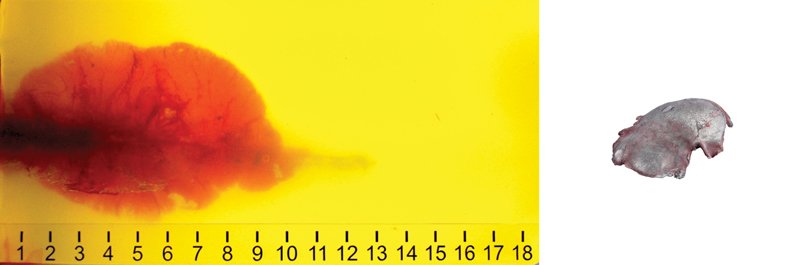
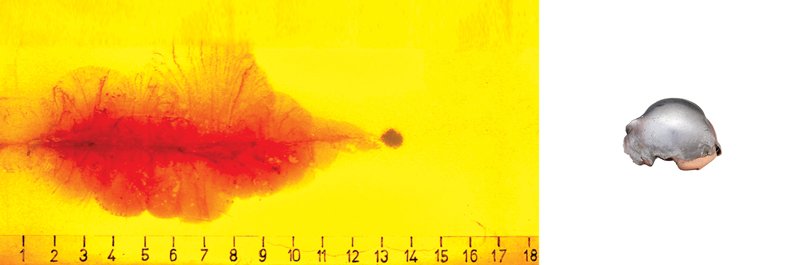
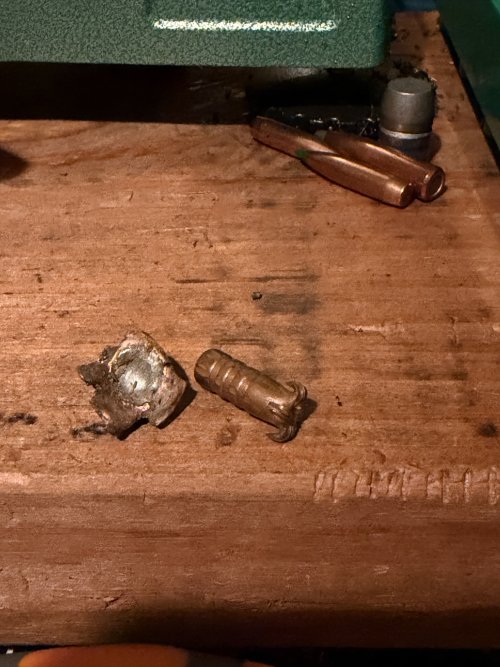
Not sure if you’ve ever shot through it, but angled auto glass is some really tough stuff, tougher than any shoulder bone. This is a .308 168 grain Amax after going through it. A hog shoulder isn’t stopping that.

IMG_5453.jpeg

Compared to bare gelatin.

IMG_5455.jpeg
 
OIh good heavens yes, 7mm bullets like Lapua all copper Naturalis 156 gran (140 gr max naturails for 6.5) then 7mm 175 grain Hornady interlocks (160 max for 6.5) Barnes originals for 7mm were 190 or 195 grain. I forget.

There were many years when I guided for big wild boar. The difference between 6.5 and 7mm was monumental with much heavier 7mm bullets with super high BC.

I still have boxes of 180 grain Barnes originals for the 277 (270) and what a killer they were. The 6.5 Swede or 6.5 creed can't come close to 7mm ( or 270) when it comes to bigger and tougher game using these heavier bullets


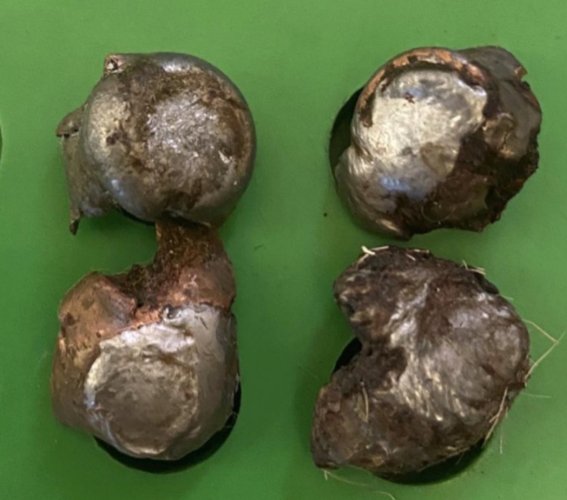
Here’s two 7mm bullets pulled from two elk and two 6.5mm bullets pulled from two elk. Which is which
IMG_8347.jpeg
 
When they work well and in the right velocity window, the Barnes can be great. The problem is when you get them looking like the one on the right. I bet you can guess which one was a quicker kill between the TSX and the Hornady interlock on the left.

IMG_5457.jpeg
 
Highly recommend the 7mm-08 besides 3 fatal flaws. 1 hard to find ammo 2 ammo will be a bit more expensive or more limited if you dont reload your own. 3 the rifles are expensive unless you dive into a savage axis or a cheaper rifle under 700 bucks which for me and I feel like alot of other guys here wouldnt mind especially if your just trying to fill the freezer. My 7mm-08 has never let me down in the 3 or 4 deer ive shot with it and I dont wanna deep dive into the rifle cause your asking about the caliber so with that being said every scene that ive put the caliber in its performed to its fullest. What I dont like about the 7mm-08 is a few things but yet this is my personal opinion on my first actual deer round but its very loud even with ear pro I still find myself shooting a mag then stopping and waiting before another mag. It will cut through most deer and if your hunting tight woods keep that in mind but do not worry as it does perform excellent in tighter woods and if your making shots from just 2 feet in front of you to 700 yards this round will do it. The 7mm-08 i feel is over slept on and wont ever get to truly be brought out to shine when you have the 30 30, 30 06, 270, 308, 6.5, 243, around cause all those are more available and used then the 7 so in my final conclusion of my 3 years of hunting im glad I picked the 7mm-08 over the 243 and 300 win mag that was at the pawn shop that I bought it from and anyone who buys a 7mm-08 will be more then glad to. (Just talking about it makes me wanna burn a box or 2 through it due to how much I like it)
 
Grumpy old man complaint .....
I wish the rifle makers would quit putting all their efforts into coming up with new calibers and spend a little more time making good looking, nice, wood / blued hunting rifles instead of all this black plastic crap that looks like a Lego set. :p
 
Grumpy old man complaint .....
I wish the rifle makers would quit putting all their efforts into coming up with new calibers and spend a little more time making good looking, nice, wood / blued hunting rifles instead of all this black plastic crap that looks like a Lego set. :p

I wish every rifle maker had a stainless rifle with synthetic stock. I don’t always hunt in nice weather and rifle maintenance sucks. Talking to you Howa
 
Hopefully you don’t take this as me picking on you or being an ass, because I’m not trying to be. But there’s a lot of bad information about bullets out there and I’d hate for unexperienced hunters to take it at face value and lose animals because of it.

Heavy conventional monos (TSX, E-Tip, GMX/CX, etc.) at anything other than very high velocity simply do not create a wound channel like a cup and core bullet. A 160 TSX out of a 7-08 will make a barely larger than caliber wound at anything other than contact distance. I’m not saying that this won’t kill, but it won’t kill anywhere near as well as a 140gr partition. Counting on a TSX to “expand” at 2000 fps is asking for problems. Specifically narrow wound channels and long blood trails.

There’s also no hog shoulder on the planet that will stop a 140 grain cup and core 7-08 bullet, a 165 grain .308, a 140 grain .270, etc. I helped butcher a moose that was shot with a 130 grain cup and core bullet from a .270 (Winchester power point). It was shot at a sharp quartering to angle through the shoulder knuckle and was found behind the diaphragm. I’ve taken the same shot on elk with .270 Accubonds with the exact same result. There is absolutely NO shot on a hog, elk, moose, or grizzly that will stop that bullet from reaching the vitals if you place it appropriately.

I’m not saying I’m anti copper bullet. I have used them a lot, but I also recognize their limitations. A 168 TTSX pushing 31-3200 fps in a .300 win mag kills very well. A 168 E-tip at 2700 fps in a .308 will not have the same results. Neither make the kind of wound channel that a cup and core bullet will. The Hammers also bridge the gap pretty well between conventional monos and a lead bullet.

Not sure if you’ve ever shot through it, but angled auto glass is some really tough stuff, tougher than any shoulder bone. This is a .308 168 grain Amax after going through it. A hog shoulder isn’t stopping that.

View attachment 410727

Compared to bare gelatin.

View attachment 410728
I am assuming that you might well be feeding your family the meat from your hunting; kids, maybe even grand kids. What I am going to suggest you arrange sometime, is to have your wife or you ask a doctor, or better yet the family pediatrician how they feel about very young children or a pregnant woman regularly eating meat which might well have many small undetectable easily digested pieces of lead in it.


The killing effect from lead bullet fragmentation about which you speak of so positively, is very well documented. Especially so from a bullet like a ballistic tip. It forms what amounts to a mini-shotgun effect. So many X rays of deer so shot, show that the fragmentation goes up to 16” in all directions from the entry hole. The shock that kills are related this fragmentaion/penetration. Most of these lead particles can never be washed out. Basically, most of a deer carcass is filled with a hundred or even way more tiny pieces of lead that have a high surface to weight ratio making them so easily digested by stomach acids of birds, mammals and us.
 
I wish every rifle maker had a stainless rifle with synthetic stock. I don’t always hunt in nice weather and rifle maintenance sucks. Talking to you Howa
In have one stainless synthetic rifle. A Sako 75 Finnlight carbine in 308. I get can 2,900'sec with 165TTSXBT Barnes using the Camp Perry powder designed around the 308. I back it off on principal to 2.850'/sec/ Also get 3,000'/sec with 150 Barnes TSX but back it off to 2,950'/sec

It is a noisy tack driver

For my Plains rifle I have a deep pre 64 standard model 70 270 24"-barrel walnut and blue. Once i have done an imperfect hole three shot group. It was bought by a Wyoming Cowboy when he came back from the Korean War. I am the second owner. It is 100% original, wonderfully worn. The hand finishing/fitting of metal and wood is a delight.

My darling which I have owned since 1970 is a Belgium made Browning Safari Grade Mauser bolt action 30-06 with a drop-dead gorgeous stock made of French Walnut and a graceful double stepped down barrel. Bought it used in 1970 for a whopping $180. Had to make 6 monthly payments.

Over the years I have had three 7x57'S, a 280 Rem. a 280AI tack driver in a Kimber. All sold.

Just because I could not say no I bought s J C Higgens Sears 270 from the 1960's They were made by FN of Belgium. It is a Plain Jane, but the wood to metal fit is another delight.

Making wood stocks take an enormous amount of work compared to a molded plastic stock.
 
I am assuming that you might well be feeding your family the meat from your hunting; kids, maybe even grand kids. What I am going to suggest you arrange sometime, is to have your wife or you ask a doctor, or better yet the family pediatrician how they feel about very young children or a pregnant woman regularly eating meat which might well have many small undetectable easily digested pieces of lead in it.


The killing effect from lead bullet fragmentation about which you speak of so positively, is very well documented. Especially so from a bullet like a ballistic tip. It forms what amounts to a mini-shotgun effect. So many X rays of deer so shot, show that the fragmentation goes up to 16” in all directions from the entry hole. The shock that kills are related this fragmentaion/penetration. Most of these lead particles can never be washed out. Basically, most of a deer carcass is filled with a hundred or even way more tiny pieces of lead that have a high surface to weight ratio making them so easily digested by stomach acids of birds, mammals and us.
I was more arguing from the point of view of killing the animal quickly and humanely instead of leaving a 9mm FMJ sized hole through the lungs. I’m personally not concerned about some metallic lead fragments from a human health perspective, and I also don’t believe that a deer shot through the lungs with a cup and core bullet is as toxic as you make it sound. I trim very generously around any bloodshot meat as well. If you’re really concerned about the health effects of lead, reloading and handling spent primers will expose you to significantly more lead that is easily absorbed than bullet fragments will. Compared to all the toxins and pharmaceutical chemicals in our day to day life and our water, I’m not that worried about a lead fragment that I might miss while butchering an animal.

Again, I never said I’m anti copper bullet. I’m just saying that you need to be smart about how you use them if you want to kill animals cleanly. I have hunted a lot with TTSX, LRX, and Hammers. But I’m also not blind to the fact that there are a lot of advantages to lead.

Also, she hunts, and is quite fond of cup and core bullets in her .270 and .243. She shot the moose I referred to earlier.
 
I was more arguing from the point of view of killing the animal quickly and humanely instead of leaving a 9mm FMJ sized hole through the lungs. I’m personally not concerned about some metallic lead fragments from a human health perspective, and I also don’t believe that a deer shot through the lungs with a cup and core bullet is as toxic as you make it sound. I trim very generously around any bloodshot meat as well. If you’re really concerned about the health effects of lead, reloading and handling spent primers will expose you to significantly more lead that is easily absorbed than bullet fragments will. Compared to all the toxins and pharmaceutical chemicals in our day to day life and our water, I’m not that worried about a lead fragment that I might miss while butchering an animal.

Again, I never said I’m anti copper bullet. I’m just saying that you need to be smart about how you use them if you want to kill animals cleanly. I have hunted a lot with TTSX, LRX, and Hammers. But I’m also not blind to the fact that there are a lot of advantages to lead.

Also, she hunts, and is quite fond of cup and core bullets in her .270 and .243. She shot the moose I referred to earlier.
Thank you for your response
 
Grumpy old man complaint .....
I wish the rifle makers would quit putting all their efforts into coming up with new calibers and spend a little more time making good looking, nice, wood / blued hunting rifles instead of all this black plastic crap that looks like a Lego set. :p
Just buy the gun you want and slap a Woox stock on it. Problem solved.
 
When they work well and in the right velocity window, the Barnes can be great. The problem is when you get them looking like the one on the right. I bet you can guess which one was a quicker kill between the TSX and the Hornady interlock on the left.

View attachment 410742
This was my big concern with copper and ultimately why I ended up with using Hammers.

I really could not care less about eating something shot with lead but I had bought an 18 inch .308 and wanted to be able to shoot out to 500 yards and have full bullet performance. The only way I was able to do that was with a hammer bullet. I think someone on HT pointed me over there.

Since then I have been enamored with them and and have been switching all of my hunting rifles over to them. Shot a bull elk at 480 last year with the bullet going about 1900 fps and had all the petals shear off like they were supposed to.
 

Forum statistics

Threads
119,376
Messages
2,225,059
Members
38,881
Latest member
strictlyRUM
Back
Top