

South Dakota Is Losing Its Hometown Pheasant Hunters. Meanwhile, the Nonresident Business Is Booming

When the ag processes demanded less labor and the families moved to the larger cities to gain employment and the glut of empty houses in the rural communities became available, who do you think bought them cheap? NR's became part time locals. They might buy the local watering hole or motel or both, start some paid hunting lodges, etc. Its all quite logical but started the trend that continues today. A local resident in his nineties recently passed away. I asked his neighbor who ( happens to guide a few NR's on their pheasant hunts) what was happening with his house. A few of the NR's from Cali bought it as they come here and hunt every year. I'm sure they will keep it maintained and pay the property taxes. I had no interest in the house, just making conversation.
In 1910 residents could not waterfowl hunt as all the wetlands were leased up by Waterfowl clubs out east. The resident revolted and convinced the legislature to put an end to this practice so they put a limit on NR duck hunting.
Then we elected Governor NOEM. She convinced the legislature we did not need a politically balanced game commission of 4R's and 4D's. Now we have a commission that is pretty much made of landowners, outfitters, guides and tourism folks and no true representation from local Joe Shmoe hunters. Last year, against everyone's wishes and cries, the increased the NR waterfowl licenses. The "We say so show goes on" Then they approved Non resident landowner deer tags. That should help things out even more. What is ironic to me is every commission meeting is prefaced with a conflict of interest pledge. Now it's not their fault that the statue that decrees what constitutes what
a conflict of interest is so narrowly written that anyone could pass it. Really? You own an outfitter business or are economically affected by the rules you make regarding hunting and its not a conflict of interest?
No. I do not hate NR's and I treat them all with respect and visit with several every year, providing them tips and suggestions. This stuff just gets more frustrating every year. We need to put a limit on Game preserves and Outfitters. Lets not kill off all local hunting. The commercialization is not in line with the North American model of conservation.
 
Gov. Noem did more damage to resident non-land owning sportsman and women then all the Gov's before her.
Care to elaborate?
I’m by no means a fan of her, but other than the stopping the roadside bird counts I’m not following. The predator bounty program is/was stupid but it didn’t negatively impact bird numbers.
 
Step out for a weekend and this thing hits 4 pages.

I was really taken aback at the number of NR licenses sold - 85K or something along those lines to roughly 55K resident licenses sold. That's more than the next 4 western states combined for NR sales. The inequity was glaring.

It seems like SD took the issue to the farthest point possible on one end of the spectrum (even electing that perspective governor). I tend to agree w/ the sentiment that

1.) People go to areas known for quality because they lack it close to home, or because a species doesn't exist, or it is in very low numbers. The push to "be successful" when it comes to putting lead into critters is massive, especially if your local hunting is sub-par. Having success keeps you interested in continuing the sport, and after a while, easy birds can be a motivator when you've been slogging through the cattails and bogs looking for roosters.

2.) Placing your eggs in the NR basket for funding is easy, but it doesn't do much to guarantee your access programs unless they're tied to that funding (like MT on Habitat MT & Block, Upland, Wetlands). You also end up getting to a place where economics works against you when the easy political lift of raising NR licenses ends up reducing the number of applicants and purchases. There is a tipping point and balance is key to ensuring robust funding while protecting resident hunter opportunity. At a certain point, the perceived value of the product is not in alignment with the cost of the license. While this causes anti-NR folks to celebrate, it can have significant downsides if not offset with resident license fee increases for access programs and staff salaries. The short term feel-goodery of raising NR rates is offset with a worsening experience for the resident hunter.

3.) Pen raised birds are easy to market, control and pass off as wild to those who don't know much difference and you can market success rather than the experience itself. Those operations also satisfy a killing lust as well since most limits don't apply to them, and folks can kill as many as they want. For someone who is just starting out, has a new dog, or who is at the end of their career and want to get out and be successful, the draw is strong to these operations.

4.) Making a bigger pie: This is the best option to me, in terms of reducing the kind of pressure we see. The more habitat and access that is created, the better for everyone. The better the hunting on public land, and publicly accessible private land, the better for everyone. Incentives matter to landowners, who value a number of things other than just a cash payment, although those are important as well. If we want more upland species then we need to invest in state and federal level programs that help landowners manage land in a manner that is beneficial to wildlife as well as ensuring sound farming & ranching practices. NRCS, LWCF< Wetlands restoration, open fields, etc all need investment, along with the hiring of more biologists and wardens to help manage those newly opened areas. Access costs, as does wildlife management.

Regardless, the imbalance of SD was mind-blowing to me. I went down a youtube rabbit hole last night of properties for sale in SD and low & behold - the majority were pheasant bordellos. An actual cattle operation was rare to find.
This may have been mentioned before so I apologize if Im repeating a point someone else brought up. Many of the places that I see marketing in SD are specializing in corporate retreats, long weekend with 10 or 15 guys a few meetings, sporting clays and afternoon birds. I'd be curious to see statistics on what percentage of the NR license holders do not even have a resident license in their home state, but are there for the corporate outing and would not otherwise consider themself a hunter.

As we've talked about in other threads tourism, hunting, fishing, and outdoor recreation have a shifting symbiosis meaning the relationship between them are beneficial for a time but if not controlled they shift to a parasitic relationship. As tourism trends shift we are seeing developing tourist destinations that are on the cusp of the dilemma that SD is at with their NR hunting or places in CO are at with their ski resort and outdoor recreation tourism. The residents can't afford to play.
 
Can’t, or choose not to?

As certain outdoor opportunities have been democratized in modern times, so to have employment and income opportunities.

I'd wager it's both. Honestly, I'd not hunt pheasant if it cost me $200 each time. Leases, clubs, preserves etc tend to take longstanding opportunity away from working class hunters. SD is showing that pretty well. Pheasant hunting used to be pretty egalatarian. It was open for everyone to participate regardless of your economic station. A cheap single barrel shotgun and some boots were all you needed.

Preserving good opportunity for all is critical for the continuation of the sport, as well as the continuation of wildlife. When only those who can afford to purchase opportunity are in the game, the less people priced out care about open land and wild animals. England is a pretty good example of that, which has now blossomed into animal rights advocates coming after hunting altogether as it's popularity wanes.
 
Can’t, or choose not to?

As certain outdoor opportunities have been democratized in modern times, so to have employment and income opportunities.
Both. In areas where there is little to no public ground and local residents cannot get access many people choose to give up hunting for other interests rather than pay to play or fight crowding on what public there is or the land where they can get permission to hunt.
 
Can’t, or choose not to?

As certain outdoor opportunities have been democratized in modern times, so to have employment and income opportunities.
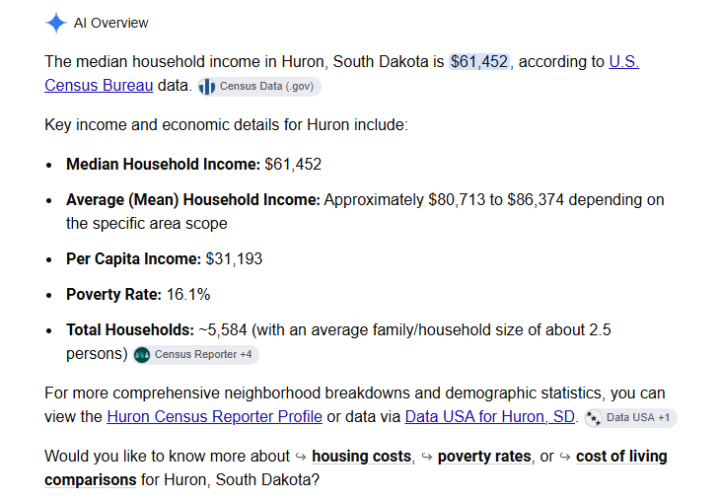
In rural areas where the household income is very low free access is paramount. I know nothing about South Dakota pheasant hunting so I relied on google for this information but is someone in Huron South Dakota with a median household income of 61,000 going to be buying or leasing ground to pheasant hunt? No, they are worried about paying for heating fuel and putting blue jeans on their kids. 1794240163841.png
 
In rural areas where the household income is very low

That is what I was referring to when I brought up modern employment opportunities being democratized recently.

Where someone lives is a choice, as is where they work (especially with remote work now) and how much they make. The expectation of free access to private land that most of the country has lost long ago won’t last much longer out west.
Interesting that we live in a world of live where you want - and yet you choose to live where you do, cry all the time about your lack of opportunity, show your seething desire to screw any working class weekend R hunter, and live in wisconsin.

Elk hunting is going great, btw.
 
Elk hunting is going great, btw.

Sweet, hope you connect! Mine went great but did not end in a punched tag- still a really good time as always. Onto the whitetail for me now.

All on public as per usual (expecting free access to land that someone else is paying for is being a mooch imo).
 
Back
Top