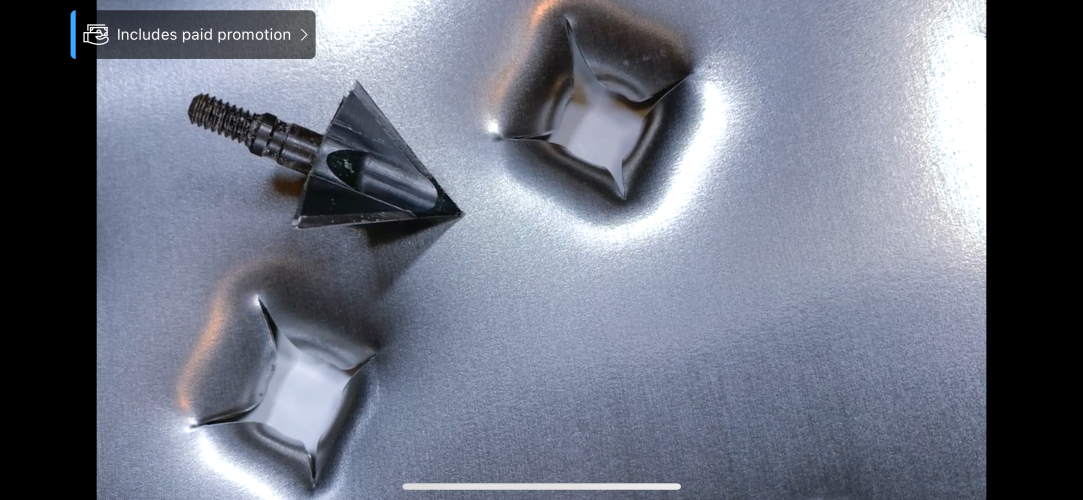
Not sure that I am. Forgive me if I get a little technical here.
1. Those nicks aren't sharp themselves, and cause drag, pick up fat, fascia, and hair, and plug up your cutting surface in general. It all results in a duller edge that doesn't penetrate nearly as well.
2. Part of the wound channel will actually bend outwards around the dull blades instead of getting cut by them as well- meat and blood vessels are pretty elastic. Meaning your wound channel ends up narrower than it could have been.
3. The uncontrolled nicks/notches cause more traumatic/jagged cuts with a higher clotting-factor release compared to a razor-edge slice. The wounds also have a higher surface area for fibrin and platelets to adhere to. All of this means you get less bleeding from your cut, and it clots off faster.
So jagged cutting edges give you a lower-quality wound channel from a "blood-loss" perspective, that also happens to be narrower and shallower, and clots up a lot faster.
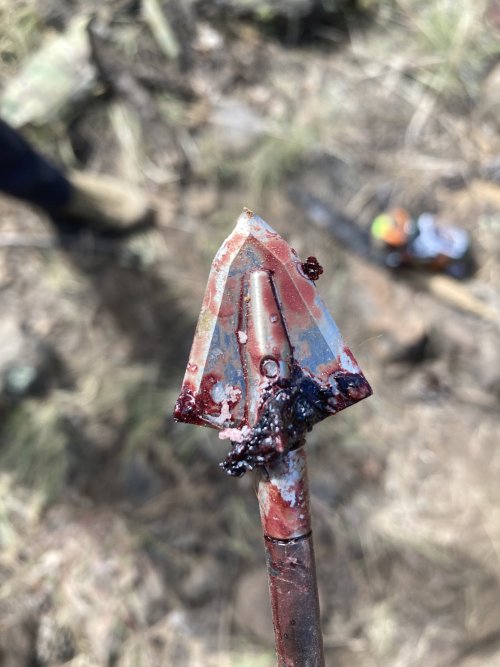
This isn't to detract from intentionally serrated broadheads (Magnus Buzzcut & Black hornet)- those are typically sharpened on ALL surfaces, even the cups, with sharp leading edges as well as cups. Everything there is designed to cut, and the serrations are slightly protected from dulling compared to the flat edge, meaning they cut better when that meat that bent around the first part of the broadhead makes it to those cups. This is a very different way of cutting compared to a jagged burr, though a lot of people consider both to be serrated.
My opinion (metallurgical engineer, biologist, hobbyist knife guy)? Get those things razor sharp. I'm talking 3 stage sharpening, then honing, and finally stropping- with and without compound. Polish that edge, make it scary sharp. You want that broadhead as sharp as it can possibly get, because it only gets duller after it leaves the bow.