

Navigation
Install the app
How to install the app on iOS
Follow along with the video below to see how to install our site as a web app on your home screen.
Note: This feature may not be available in some browsers.
More options

You are using an out of date browser. It may not display this or other websites correctly.
You should upgrade or use an alternative browser.
You should upgrade or use an alternative browser.
Nevada unit 192
- Thread starter Jtg
- Start date
ThanksSorry I’ve never hunted that unit but welcome, congrats and good luck!
PackMule21
New member
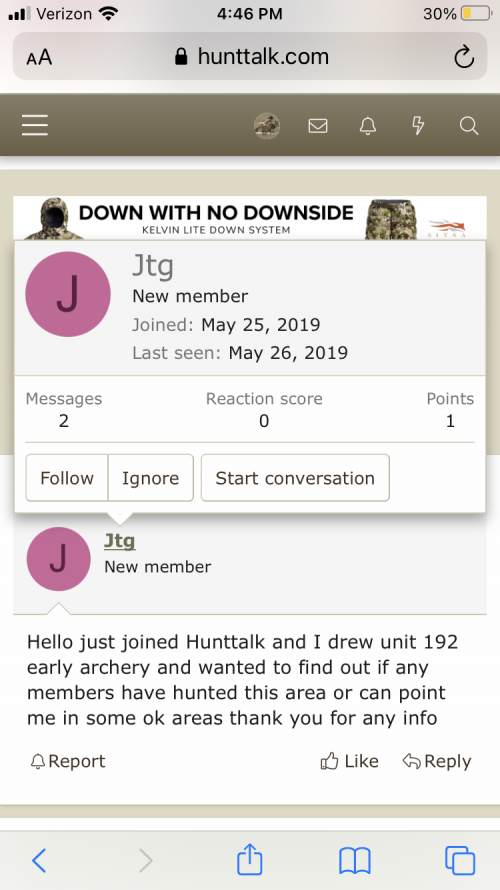
Hey bud, how did your hunt end up? I pulled the same tag this yearHello just joined Hunttalk and I drew unit 192 early archery and wanted to find out if any members have hunted this area or can point me in some ok areas thank you for any info

Hey bud, how did your hunt end up? I pulled the same tag this year
He ain’t coming back
PackMule21
New member
For sure, good call man. Ever set foot in 192?

SaskHunter
Well-known member
Rumor has it, he's still lost in Nevada unit 192!!!

RaiderRich
Well-known member
I heard he fell into Lake Tahoe while looking for the fabled Mule Bass BuckRumor has it, he's still lost in Nevada unit 192!!!

Pahoundsman
Well-known member


That never happensHe ain’t coming back
 .
.lynlan1819
Active member
- Joined
- May 27, 2019
- Messages
- 215
Tons of deer in 192 when my family hunted it in 1980.
You could say that about almost any unit in NV.Tons of deer in 192 when my family hunted it in 1980.
lynlan1819
Active member
- Joined
- May 27, 2019
- Messages
- 215
Even today Nevada has a ton of deer,lots of tags sold throughout the state.You could say that about almost any unit in NV.
I wanted to put together a detailed report on Nevada Unit 192, specifically the early archery mule deer hunt, because there isn't a lot of information available and my experience now spans three tags and eleven years.
An important disclaimer: I would not extrapolate my experience to the later hunts in Unit 192, only the early archery season.
Unit 192 is associated with the interstate Carson River mule deer herd. Deer migrate between California and Nevada, bachelor groups break apart, and bucks change behavior as the rut approaches. A November hunter may therefore be hunting a substantially different deer distribution than an August archery hunter.
2015: I first hunted Unit 192 in 2015. I hunted eight days and ultimately harvested a hard-horned 4×5 at approximately 8,500 feet in the Genoa Peak area. More significant than the buck I harvested is what I observed beforehand. There was a bachelor group of approximately 7–9 bucks using the same area every day, ranging from roughly 3-points through 5-points. The terrain allowed me to glass effectively from above, despite numerous gullies and convex rollovers, and I began recognizing a consistent pattern. In the morning, the bucks entered their bedding/security area in essentially an age hierarchy. Younger bucks tended to appear first, followed by progressively more mature animals. Evening glassing eventually revealed the largest buck. For several days I attempted spot-and-stalk hunting. The terrain and vegetation made closing the final distance extremely difficult. Eventually I stopped chasing them through their bedding country, identified their primary entry/exit route and set up an ambush. That resulted in the 4×5.
The important takeaway isn't simply that I harvested a good buck. During August there was a stable bachelor group of 7–9 bucks repeatedly using a compact piece of high-elevation habitat. That became my mental model of Unit 192. In retrospect, that may have been my biggest mistake when I returned.
2019: I drew the hunt again in 2019 and hunted nine days. I concentrated heavily on the area that produced in 2015. It didn't. Eventually I hiked into the old bedding/security area. The difference was striking. The established trails and deer sign I remembered simply weren't there. I saw only one fork-horn during the entire hunt. At the time I interpreted it as a bad hunt or a change in where the deer happened to be. Because I remained anchored to my 2015 location, I don't consider 2019 particularly good evidence about the unit as a whole.
That changed in 2026.
2026: I approached 192 very differently in 2026. I hunted 14 days, averaging approximately five miles on foot per day, often with around 1,500 feet of elevation change, roughly 70 miles total. When I wasn't moving, I was generally glassing, primarily 0600–0900 and 1700–1930.
I hunted the Genoa Peak corridor, climbed and hunted around Duane Bliss Peak, worked ridges, drainages 1,000 feet lower, benches, timber and travel corridors, and moved south into completely new country. I found deer. What I could not find were mature bucks. I passed approximately three fork-horns and one spike. Observations included a fork with a doe, two does with a fork and spike, another doe/fork combination, and two does with a spike and fork. I found beds and some heavily traveled trails. I found does and immature males. Despite physically investigating those trail systems, I never located anything resembling the mature bachelor group I routinely watched in 2015. Several areas looked excellent on a map or through binoculars, but once I walked them I found old trails, small tracks, very little fresh sign and no bedding activity. Eventually the lack of sign became as informative as the sign itself.
I wasn't the only hunter seeing it.
I communicated with four other Unit 192 early-archery hunters. All had covered some of the same general country, although none hunted as many days or penetrated as extensively into Duane Bliss. None reported finding mature bucks. In fact, none had seen as many deer as I had. One hunter who had hunted the GMU multiple times specifically commented on how poor the tracks and sign were compared with previous experience. With the limited number of tags issued, four other hunters isn't an insignificant anecdotal sample. It certainly isn't scientific, but when five hunters independently cover substantial country and describe essentially the same conditions, I think it's worth reporting. So what changed?
I don't think there is one answer. After the hunt I dug deeper into the area's history, Forest Service projects and research on the Carson River deer herd. Three things stand out: habitat modification, recreational pressure and the interstate nature of the herd.
1. Genoa fuels/forest work
One dramatic difference is the amount of vegetation treatment around Genoa Peak Road. The Forest Service identifies this as the Genoa Hazardous Fuels Reduction Project, and there is also a history of timber sales. In portions I hunted, I encountered major dual-track equipment routes and evidence consistent with heavy mechanical harvesting/thinning equipment—the type of disturbance produced by feller-bunchers, skid steers and similar machinery. Treatment extended roughly 150 yards on each side of portions of the road, and I found similar work deep into some drainages. My suspicion is that changes to forest structure, combined with other disturbance, may have changed where mature bachelor bucks spend daylight during August or how they travel from drainages into higher country.
That's my hypothesis, not something I can prove.
2. Increased non-motorized recreation
The Tahoe Rim Trail was completed as a continuous loop in 2001 after 17 years of construction, greatly increasing recreational access to this country. The pressure was noticeable during my 2026 hunt. At one point I encountered a backcountry camp containing roughly ten tents and twenty people. Hikers, mountain bikes and equestrian users can now penetrate country that previously required considerably more effort to access.
3. Motorized recreation
The growth of overlanding, side-by-sides and general OHV recreation has also made remote Forest Service roads destinations rather than simply access routes. At one location where I had been seeing a spike, I counted 16 vehicles passing in a single day. I can't prove those vehicles displaced mature bucks. But a mule deer doesn't experience a Forest Service road, mountain bike, hiker, horse and side-by-side independently. They're all components of the disturbance environment. My suspicion is that the cumulative disturbance picture is substantially different from when I hunted here eleven years ago.
The California connection
The Carson River herd isn't purely a Nevada population. GPS-collar research conducted cooperatively in California and Nevada between 2012 and 2019 documented its migration system. The USGS analysis used 110 migration sequences from 45 individual deer. The overall capture project included 84 adult females and three adult males, so the telemetry should not be interpreted as a mature-buck movement study. Nevertheless, it demonstrates something important: a significant portion of the Carson River herd summers in California's Sierra Nevada and migrates toward winter range near the California-Nevada border. Think about what that means for an August bowhunter. The USGS also reports that the Carson River herd has declined more than 70% from historical peak levels, attributing the long-term decline primarily to habitat loss and vehicle collisions, with increased development and Highway 395 traffic among contributing factors. That 70% should not be interpreted as a decline between my 2015 and 2026 hunts. It is a long-term historical comparison.
What happened to the bachelor group?
I don't believe mature bucks disappeared from Unit 192, nor does my experience prove some catastrophic decline. Instead, I think I made the mistake of assuming the bachelor-group behavior I observed in 2015 represented normal August conditions. In 2015 I located an exceptional concentration: 7–9 bucks repeatedly using a small, predictable high-elevation security area. By 2019 that pattern was gone. By 2026, after expanding my search enormously, I found deer scattered across the landscape but never another comparable concentration of mature males.
My working hypothesis is that several factors are interacting.
The Carson River herd is naturally dispersed during summer, with a significant portion summering in California. Within Nevada, substantial vegetation/fuels treatments have changed portions of the high-elevation habitat. At the same time, hiking, mountain biking, equestrian use, OHVs and overlanding have increased the frequency with which people penetrate country that historically provided security. I suspect mature bachelor bucks have responded by becoming more dispersed and/or selecting different daylight security habitat. I originally thought disturbance might simply have pushed them higher.
My 2026 hunt doesn't support that.
I went higher. I hunted Duane Bliss and other high country extensively. The mature bucks weren't waiting for me there. The better explanation may be lateral displacement into quieter pockets, different summer ranges, lower-density distribution, or some combination of all three. After 31 hunting days across three early-archery tags over eleven years, my experience with Unit 192 has changed dramatically.
I harvested a good buck there in 2015, and I don't believe the unit is devoid of good bucks today. But based on what I experienced in 2019 and especially 2026, I will not select Unit 192 for an early-season archery hunt again.
An important disclaimer: I would not extrapolate my experience to the later hunts in Unit 192, only the early archery season.
Unit 192 is associated with the interstate Carson River mule deer herd. Deer migrate between California and Nevada, bachelor groups break apart, and bucks change behavior as the rut approaches. A November hunter may therefore be hunting a substantially different deer distribution than an August archery hunter.
2015: I first hunted Unit 192 in 2015. I hunted eight days and ultimately harvested a hard-horned 4×5 at approximately 8,500 feet in the Genoa Peak area. More significant than the buck I harvested is what I observed beforehand. There was a bachelor group of approximately 7–9 bucks using the same area every day, ranging from roughly 3-points through 5-points. The terrain allowed me to glass effectively from above, despite numerous gullies and convex rollovers, and I began recognizing a consistent pattern. In the morning, the bucks entered their bedding/security area in essentially an age hierarchy. Younger bucks tended to appear first, followed by progressively more mature animals. Evening glassing eventually revealed the largest buck. For several days I attempted spot-and-stalk hunting. The terrain and vegetation made closing the final distance extremely difficult. Eventually I stopped chasing them through their bedding country, identified their primary entry/exit route and set up an ambush. That resulted in the 4×5.
The important takeaway isn't simply that I harvested a good buck. During August there was a stable bachelor group of 7–9 bucks repeatedly using a compact piece of high-elevation habitat. That became my mental model of Unit 192. In retrospect, that may have been my biggest mistake when I returned.
2019: I drew the hunt again in 2019 and hunted nine days. I concentrated heavily on the area that produced in 2015. It didn't. Eventually I hiked into the old bedding/security area. The difference was striking. The established trails and deer sign I remembered simply weren't there. I saw only one fork-horn during the entire hunt. At the time I interpreted it as a bad hunt or a change in where the deer happened to be. Because I remained anchored to my 2015 location, I don't consider 2019 particularly good evidence about the unit as a whole.
That changed in 2026.
2026: I approached 192 very differently in 2026. I hunted 14 days, averaging approximately five miles on foot per day, often with around 1,500 feet of elevation change, roughly 70 miles total. When I wasn't moving, I was generally glassing, primarily 0600–0900 and 1700–1930.
I hunted the Genoa Peak corridor, climbed and hunted around Duane Bliss Peak, worked ridges, drainages 1,000 feet lower, benches, timber and travel corridors, and moved south into completely new country. I found deer. What I could not find were mature bucks. I passed approximately three fork-horns and one spike. Observations included a fork with a doe, two does with a fork and spike, another doe/fork combination, and two does with a spike and fork. I found beds and some heavily traveled trails. I found does and immature males. Despite physically investigating those trail systems, I never located anything resembling the mature bachelor group I routinely watched in 2015. Several areas looked excellent on a map or through binoculars, but once I walked them I found old trails, small tracks, very little fresh sign and no bedding activity. Eventually the lack of sign became as informative as the sign itself.
I wasn't the only hunter seeing it.
I communicated with four other Unit 192 early-archery hunters. All had covered some of the same general country, although none hunted as many days or penetrated as extensively into Duane Bliss. None reported finding mature bucks. In fact, none had seen as many deer as I had. One hunter who had hunted the GMU multiple times specifically commented on how poor the tracks and sign were compared with previous experience. With the limited number of tags issued, four other hunters isn't an insignificant anecdotal sample. It certainly isn't scientific, but when five hunters independently cover substantial country and describe essentially the same conditions, I think it's worth reporting. So what changed?
I don't think there is one answer. After the hunt I dug deeper into the area's history, Forest Service projects and research on the Carson River deer herd. Three things stand out: habitat modification, recreational pressure and the interstate nature of the herd.
1. Genoa fuels/forest work
One dramatic difference is the amount of vegetation treatment around Genoa Peak Road. The Forest Service identifies this as the Genoa Hazardous Fuels Reduction Project, and there is also a history of timber sales. In portions I hunted, I encountered major dual-track equipment routes and evidence consistent with heavy mechanical harvesting/thinning equipment—the type of disturbance produced by feller-bunchers, skid steers and similar machinery. Treatment extended roughly 150 yards on each side of portions of the road, and I found similar work deep into some drainages. My suspicion is that changes to forest structure, combined with other disturbance, may have changed where mature bachelor bucks spend daylight during August or how they travel from drainages into higher country.
That's my hypothesis, not something I can prove.
2. Increased non-motorized recreation
The Tahoe Rim Trail was completed as a continuous loop in 2001 after 17 years of construction, greatly increasing recreational access to this country. The pressure was noticeable during my 2026 hunt. At one point I encountered a backcountry camp containing roughly ten tents and twenty people. Hikers, mountain bikes and equestrian users can now penetrate country that previously required considerably more effort to access.
3. Motorized recreation
The growth of overlanding, side-by-sides and general OHV recreation has also made remote Forest Service roads destinations rather than simply access routes. At one location where I had been seeing a spike, I counted 16 vehicles passing in a single day. I can't prove those vehicles displaced mature bucks. But a mule deer doesn't experience a Forest Service road, mountain bike, hiker, horse and side-by-side independently. They're all components of the disturbance environment. My suspicion is that the cumulative disturbance picture is substantially different from when I hunted here eleven years ago.
The California connection
The Carson River herd isn't purely a Nevada population. GPS-collar research conducted cooperatively in California and Nevada between 2012 and 2019 documented its migration system. The USGS analysis used 110 migration sequences from 45 individual deer. The overall capture project included 84 adult females and three adult males, so the telemetry should not be interpreted as a mature-buck movement study. Nevertheless, it demonstrates something important: a significant portion of the Carson River herd summers in California's Sierra Nevada and migrates toward winter range near the California-Nevada border. Think about what that means for an August bowhunter. The USGS also reports that the Carson River herd has declined more than 70% from historical peak levels, attributing the long-term decline primarily to habitat loss and vehicle collisions, with increased development and Highway 395 traffic among contributing factors. That 70% should not be interpreted as a decline between my 2015 and 2026 hunts. It is a long-term historical comparison.
What happened to the bachelor group?
I don't believe mature bucks disappeared from Unit 192, nor does my experience prove some catastrophic decline. Instead, I think I made the mistake of assuming the bachelor-group behavior I observed in 2015 represented normal August conditions. In 2015 I located an exceptional concentration: 7–9 bucks repeatedly using a small, predictable high-elevation security area. By 2019 that pattern was gone. By 2026, after expanding my search enormously, I found deer scattered across the landscape but never another comparable concentration of mature males.
My working hypothesis is that several factors are interacting.
The Carson River herd is naturally dispersed during summer, with a significant portion summering in California. Within Nevada, substantial vegetation/fuels treatments have changed portions of the high-elevation habitat. At the same time, hiking, mountain biking, equestrian use, OHVs and overlanding have increased the frequency with which people penetrate country that historically provided security. I suspect mature bachelor bucks have responded by becoming more dispersed and/or selecting different daylight security habitat. I originally thought disturbance might simply have pushed them higher.
My 2026 hunt doesn't support that.
I went higher. I hunted Duane Bliss and other high country extensively. The mature bucks weren't waiting for me there. The better explanation may be lateral displacement into quieter pockets, different summer ranges, lower-density distribution, or some combination of all three. After 31 hunting days across three early-archery tags over eleven years, my experience with Unit 192 has changed dramatically.
I harvested a good buck there in 2015, and I don't believe the unit is devoid of good bucks today. But based on what I experienced in 2019 and especially 2026, I will not select Unit 192 for an early-season archery hunt again.
No. mtmuleyI wanted to put together a detailed report on Nevada Unit 192, specifically the early archery mule deer hunt, because there isn't a lot of information available and my experience now spans three tags and eleven years.
An important disclaimer: I would not extrapolate my experience to the later hunts in Unit 192, only the early archery season.
Unit 192 is associated with the interstate Carson River mule deer herd. Deer migrate between California and Nevada, bachelor groups break apart, and bucks change behavior as the rut approaches. A November hunter may therefore be hunting a substantially different deer distribution than an August archery hunter.
2015: I first hunted Unit 192 in 2015. I hunted eight days and ultimately harvested a hard-horned 4×5 at approximately 8,500 feet in the Genoa Peak area. More significant than the buck I harvested is what I observed beforehand. There was a bachelor group of approximately 7–9 bucks using the same area every day, ranging from roughly 3-points through 5-points. The terrain allowed me to glass effectively from above, despite numerous gullies and convex rollovers, and I began recognizing a consistent pattern. In the morning, the bucks entered their bedding/security area in essentially an age hierarchy. Younger bucks tended to appear first, followed by progressively more mature animals. Evening glassing eventually revealed the largest buck. For several days I attempted spot-and-stalk hunting. The terrain and vegetation made closing the final distance extremely difficult. Eventually I stopped chasing them through their bedding country, identified their primary entry/exit route and set up an ambush. That resulted in the 4×5.
The important takeaway isn't simply that I harvested a good buck. During August there was a stable bachelor group of 7–9 bucks repeatedly using a compact piece of high-elevation habitat. That became my mental model of Unit 192. In retrospect, that may have been my biggest mistake when I returned.
2019: I drew the hunt again in 2019 and hunted nine days. I concentrated heavily on the area that produced in 2015. It didn't. Eventually I hiked into the old bedding/security area. The difference was striking. The established trails and deer sign I remembered simply weren't there. I saw only one fork-horn during the entire hunt. At the time I interpreted it as a bad hunt or a change in where the deer happened to be. Because I remained anchored to my 2015 location, I don't consider 2019 particularly good evidence about the unit as a whole.
That changed in 2026.
2026: I approached 192 very differently in 2026. I hunted 14 days, averaging approximately five miles on foot per day, often with around 1,500 feet of elevation change, roughly 70 miles total. When I wasn't moving, I was generally glassing, primarily 0600–0900 and 1700–1930.
I hunted the Genoa Peak corridor, climbed and hunted around Duane Bliss Peak, worked ridges, drainages 1,000 feet lower, benches, timber and travel corridors, and moved south into completely new country. I found deer. What I could not find were mature bucks. I passed approximately three fork-horns and one spike. Observations included a fork with a doe, two does with a fork and spike, another doe/fork combination, and two does with a spike and fork. I found beds and some heavily traveled trails. I found does and immature males. Despite physically investigating those trail systems, I never located anything resembling the mature bachelor group I routinely watched in 2015. Several areas looked excellent on a map or through binoculars, but once I walked them I found old trails, small tracks, very little fresh sign and no bedding activity. Eventually the lack of sign became as informative as the sign itself.
I wasn't the only hunter seeing it.
I communicated with four other Unit 192 early-archery hunters. All had covered some of the same general country, although none hunted as many days or penetrated as extensively into Duane Bliss. None reported finding mature bucks. In fact, none had seen as many deer as I had. One hunter who had hunted the GMU multiple times specifically commented on how poor the tracks and sign were compared with previous experience. With the limited number of tags issued, four other hunters isn't an insignificant anecdotal sample. It certainly isn't scientific, but when five hunters independently cover substantial country and describe essentially the same conditions, I think it's worth reporting. So what changed?
I don't think there is one answer. After the hunt I dug deeper into the area's history, Forest Service projects and research on the Carson River deer herd. Three things stand out: habitat modification, recreational pressure and the interstate nature of the herd.
1. Genoa fuels/forest work
One dramatic difference is the amount of vegetation treatment around Genoa Peak Road. The Forest Service identifies this as the Genoa Hazardous Fuels Reduction Project, and there is also a history of timber sales. In portions I hunted, I encountered major dual-track equipment routes and evidence consistent with heavy mechanical harvesting/thinning equipment—the type of disturbance produced by feller-bunchers, skid steers and similar machinery. Treatment extended roughly 150 yards on each side of portions of the road, and I found similar work deep into some drainages. My suspicion is that changes to forest structure, combined with other disturbance, may have changed where mature bachelor bucks spend daylight during August or how they travel from drainages into higher country.
That's my hypothesis, not something I can prove.
2. Increased non-motorized recreation
The Tahoe Rim Trail was completed as a continuous loop in 2001 after 17 years of construction, greatly increasing recreational access to this country. The pressure was noticeable during my 2026 hunt. At one point I encountered a backcountry camp containing roughly ten tents and twenty people. Hikers, mountain bikes and equestrian users can now penetrate country that previously required considerably more effort to access.
3. Motorized recreation
The growth of overlanding, side-by-sides and general OHV recreation has also made remote Forest Service roads destinations rather than simply access routes. At one location where I had been seeing a spike, I counted 16 vehicles passing in a single day. I can't prove those vehicles displaced mature bucks. But a mule deer doesn't experience a Forest Service road, mountain bike, hiker, horse and side-by-side independently. They're all components of the disturbance environment. My suspicion is that the cumulative disturbance picture is substantially different from when I hunted here eleven years ago.
The California connection
The Carson River herd isn't purely a Nevada population. GPS-collar research conducted cooperatively in California and Nevada between 2012 and 2019 documented its migration system. The USGS analysis used 110 migration sequences from 45 individual deer. The overall capture project included 84 adult females and three adult males, so the telemetry should not be interpreted as a mature-buck movement study. Nevertheless, it demonstrates something important: a significant portion of the Carson River herd summers in California's Sierra Nevada and migrates toward winter range near the California-Nevada border. Think about what that means for an August bowhunter. The USGS also reports that the Carson River herd has declined more than 70% from historical peak levels, attributing the long-term decline primarily to habitat loss and vehicle collisions, with increased development and Highway 395 traffic among contributing factors. That 70% should not be interpreted as a decline between my 2015 and 2026 hunts. It is a long-term historical comparison.
What happened to the bachelor group?
I don't believe mature bucks disappeared from Unit 192, nor does my experience prove some catastrophic decline. Instead, I think I made the mistake of assuming the bachelor-group behavior I observed in 2015 represented normal August conditions. In 2015 I located an exceptional concentration: 7–9 bucks repeatedly using a small, predictable high-elevation security area. By 2019 that pattern was gone. By 2026, after expanding my search enormously, I found deer scattered across the landscape but never another comparable concentration of mature males.
My working hypothesis is that several factors are interacting.
The Carson River herd is naturally dispersed during summer, with a significant portion summering in California. Within Nevada, substantial vegetation/fuels treatments have changed portions of the high-elevation habitat. At the same time, hiking, mountain biking, equestrian use, OHVs and overlanding have increased the frequency with which people penetrate country that historically provided security. I suspect mature bachelor bucks have responded by becoming more dispersed and/or selecting different daylight security habitat. I originally thought disturbance might simply have pushed them higher.
My 2026 hunt doesn't support that.
I went higher. I hunted Duane Bliss and other high country extensively. The mature bucks weren't waiting for me there. The better explanation may be lateral displacement into quieter pockets, different summer ranges, lower-density distribution, or some combination of all three. After 31 hunting days across three early-archery tags over eleven years, my experience with Unit 192 has changed dramatically.
I harvested a good buck there in 2015, and I don't believe the unit is devoid of good bucks today. But based on what I experienced in 2019 and especially 2026, I will not select Unit 192 for an early-season archery hunt again.
Similar threads

- Replies
- 1
- Views
- 224