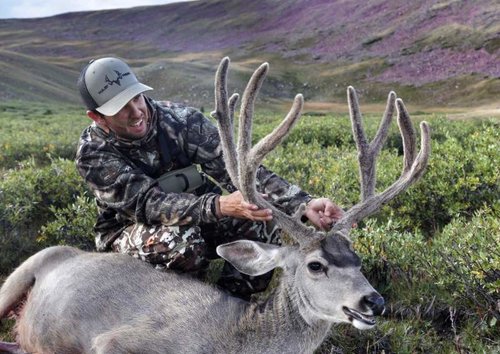
My advice to 1st timers out West for a new species is to go with someone who has successfully hunted that species in that terrain a few times. Or, bite the bullet and pay for access to private or hire a guide. Getting skunked while having a memorable adventure is not so bad. Being lost or injured or caught in rapidly falling temperatures or a white out is putting your life at risk.
Day hikes or road glassing is not that interesting to me but others might enjoy the heck out of a day of that sort of thing. The best glassing is often the first 30 minutes and last 30 minutes of light so you need to be hiking way before daybreak if start each day from a trailhead and then stay until dark so get back to your truck way after sunset. If you get a large buck down at sunset, you are spending the night on the mountain ridge. Not everywhere has grizzly bears but they should be respected and do realize if you shoot one there will be an investigation similar to if you shot a person claiming self-defense. The other 4-legged predators out West are dangerous but you are more likely to get hit by lightning or die of hypothermia than from canines. Early season temperatures might mean encounters with rattlesnakes which rarely inflict a wet bite into your flesh due to missed strikes, dry bites and wet bites that are stopped by boots or clothing.
Be prepared to deal with hypothermia, knife jabs while breaking down a carcass and twisted legs/snapped ankles if take a tumble. The impact of altitude is real and can be life-endangering so read up on altitude sickness.
Look for places with few services such as gas stations, motels, eateries and not within 100 miles of a city with over 25,000 people and you should be in for some peaceful hunting. Look into emergency beacons, have a good gps system with plenty of batteries. A good First Aid kit. Flat repair kit and portable pump for tire and jump starter. A set of chains for tires is useful for mud early and snow later.
If can't get away from the population centers and are not interested in paying to access private then invest in gear to hike in light and camp 2 - 4 miles from nearest trailhead/road. Some units with a lot of forest roads or oil/gas activity are often criss-crossed with roads so no way to get away from the road hunters. Best bet there is to figure out what the deer do when are pressured and they might get pushed to you. I do not enjoy that type of hunt as is deer behaving in non-typical ways vs. following natural patterns.
I hunted whitetails in the Midwest as a kid and upon moving to the West much of my outdoors gear was a poor match for what is needed to pack 2 - 4 miles from a trailhead with a light backload, glass big country and deal with large expansive valleys and ridges and big timber that can disorient a casual hiker traversing uneven terrain forced from time to time to take detours to get around creeks, blow downs and ledges. A person who has successfully hunted the terrain or a guide will have some gear that you benefit from as figure out what gear you should buy to make things a bit more pleasant. For example, a 12 pound rifle with sling, bipod, scope and 4 rounds loaded is not too noticeable hiking around foothills at 1000 feet elevation for a few hours. That same rifle going up from 8000 to 10000 feet of elevation in the dark while sucking thin air will feel like a sack of lead shot. The boots for the foothills may grind up your feet and jam your toes in the steep stuff. More than one new hunter to the west has lost toenails weeks after a hunt from the jamming as go down steep stuff.
Do get out West and hunt. Take care with planning and stay safe.