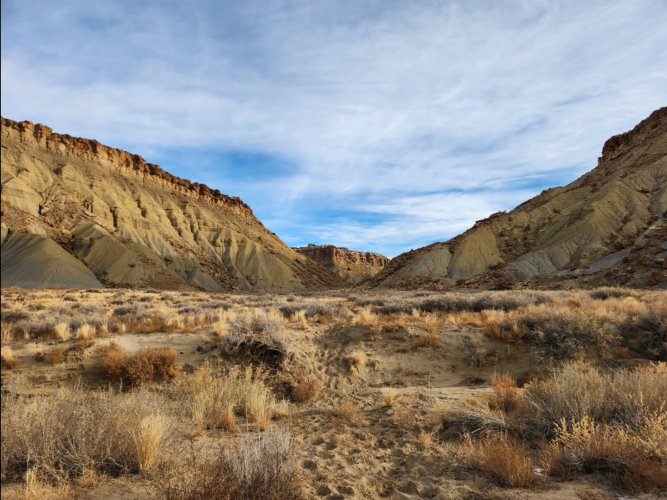
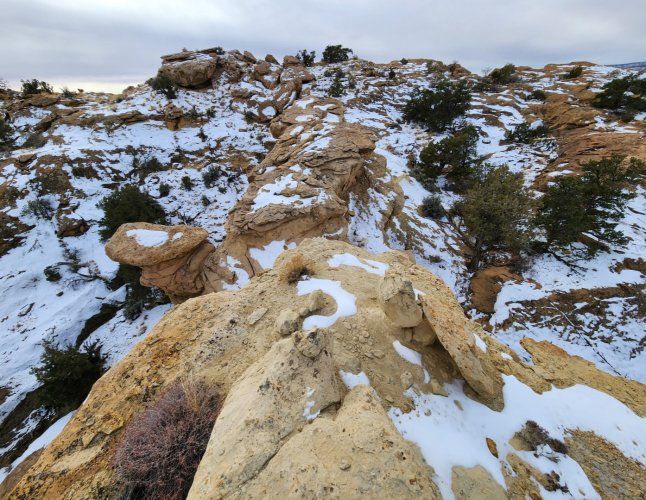
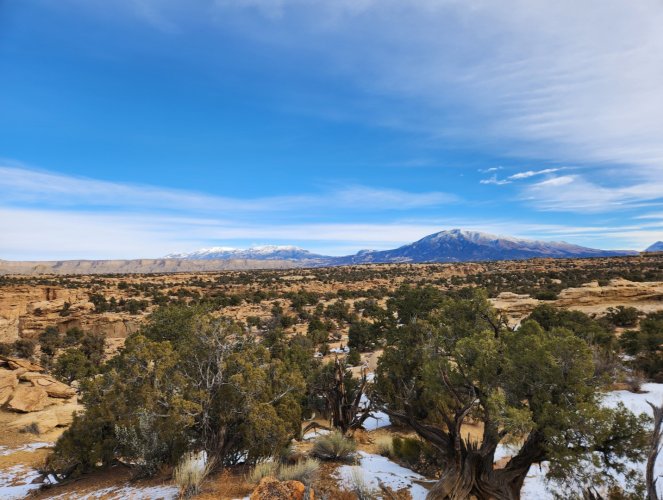
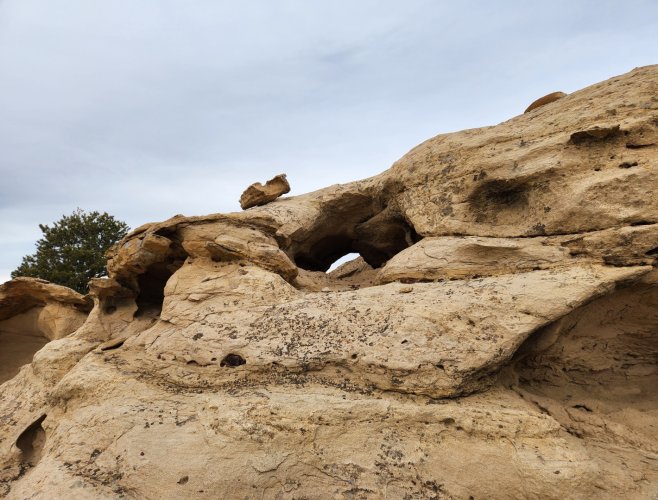
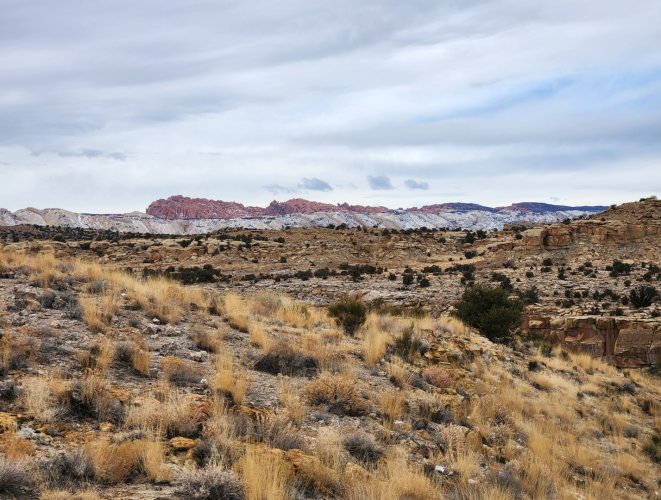
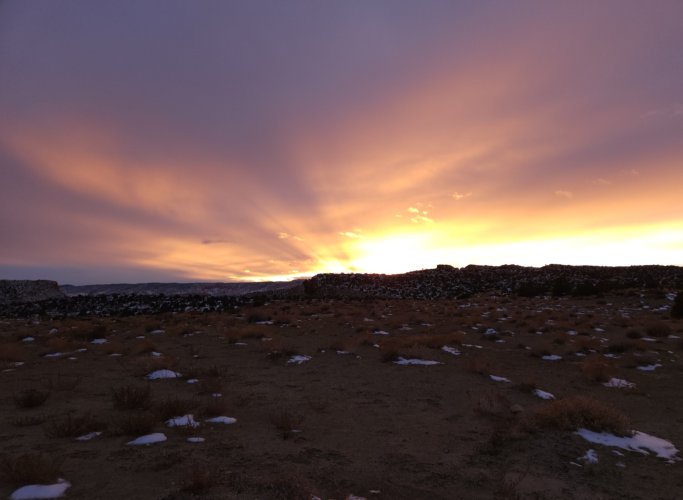
The next morning, the sunrise is one of the most spectacular I've ever witnessed. I'm in the red rocks area, and the light shines from almost every direction as the sun breaks the horizon.
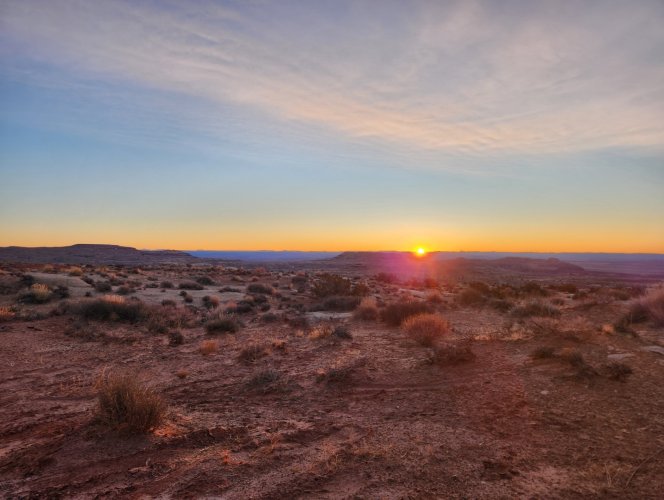
I sip some coffee in the front seat of my truck, back in my sleeping bag after a 5 minute trip to the tailgate kitchen.
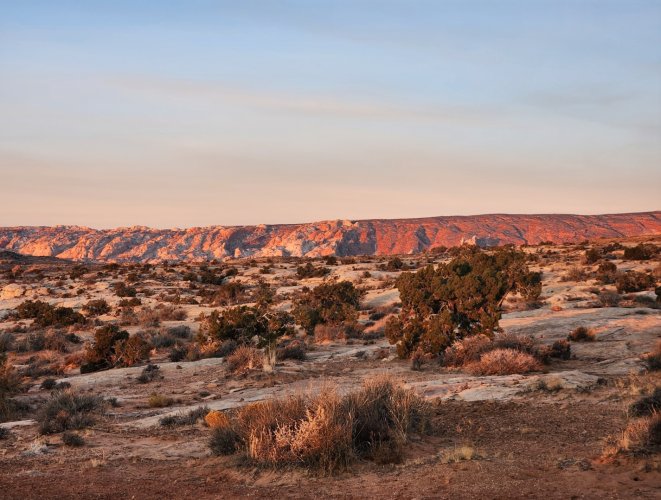
The landscape, the light, the isolation gives one perspective. Nature's basilica all around,
I allow myself some time to melt into the red rocks. It's like I'm letting go of this adventure as my hunt for an animal I respect and admire, and desire more than just a little, and beginning to see it as my chapter in the story of thousands of years of pursuit and appreciation of these beasts.
My attitude adjustment feels complete.
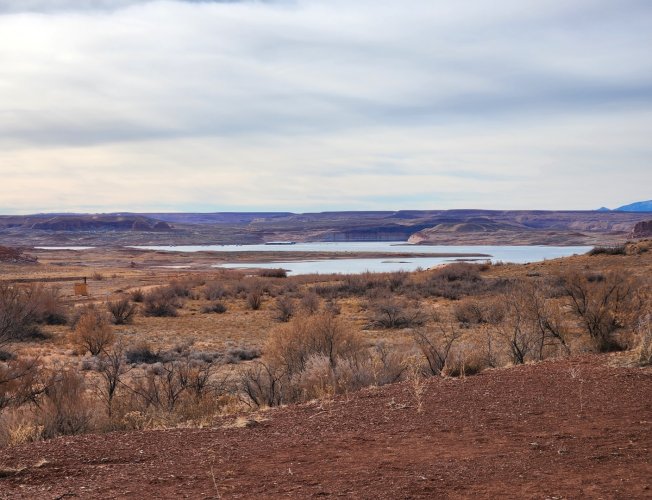
I decide I'm going to stop by the lake, and see what bullfrog is about (not too busy in the winter).
After a gas station burrito and another cup of coffee, I face off with Plan A.
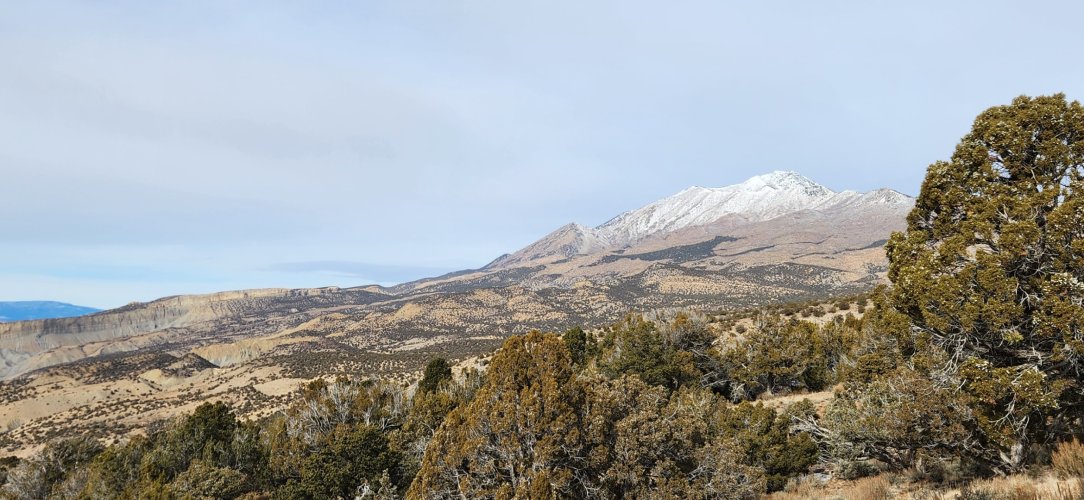
The weather forecast looks like shit the next few days. First snow, then the wind, and then the cold.
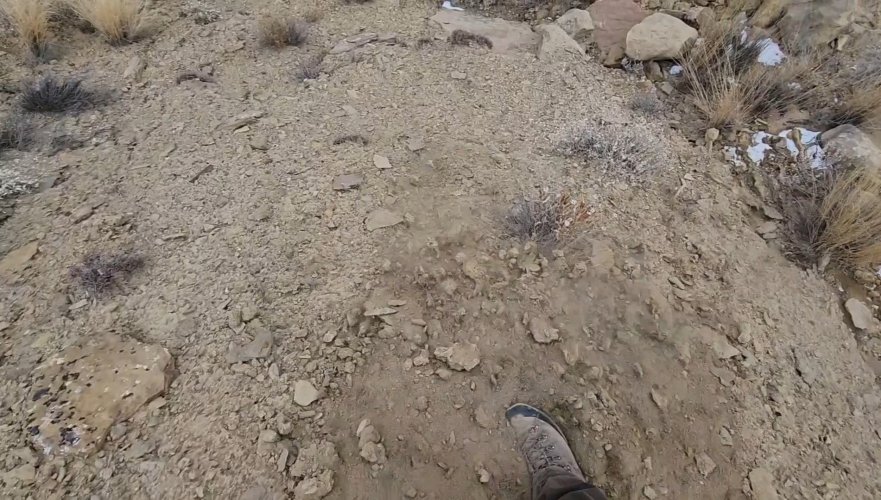
I drive as far as I dare and start walking.
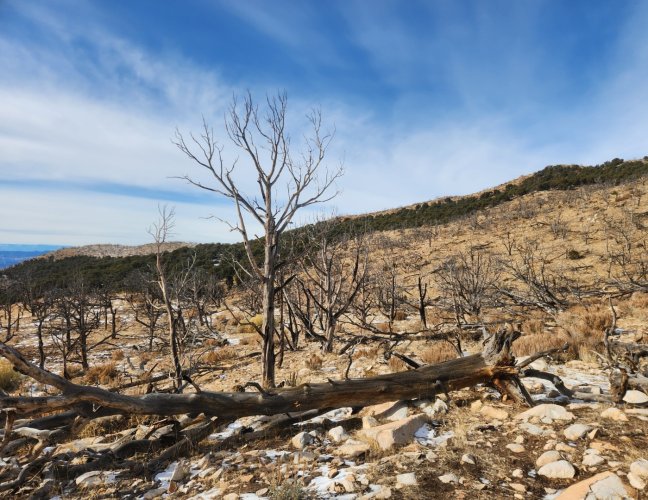
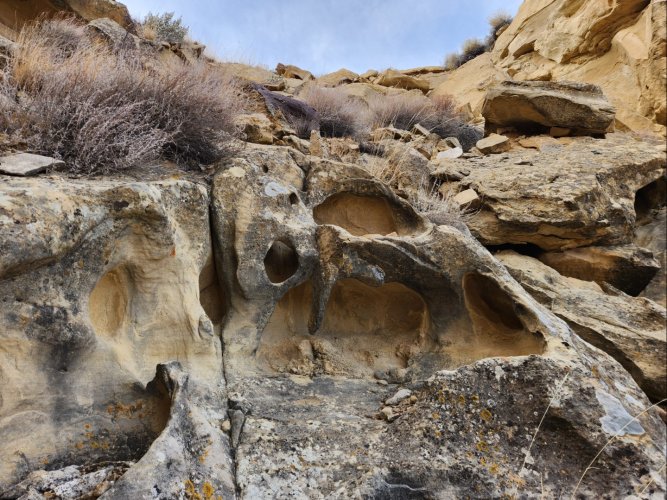
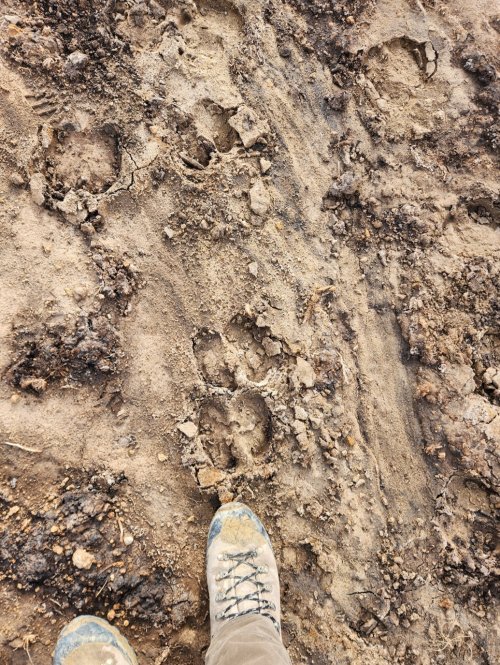
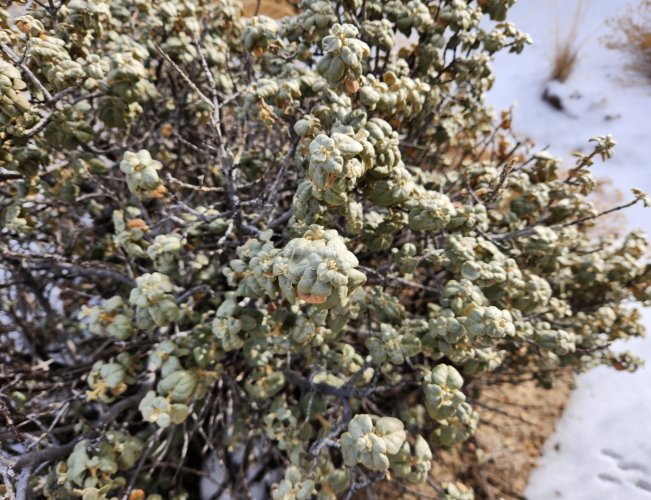
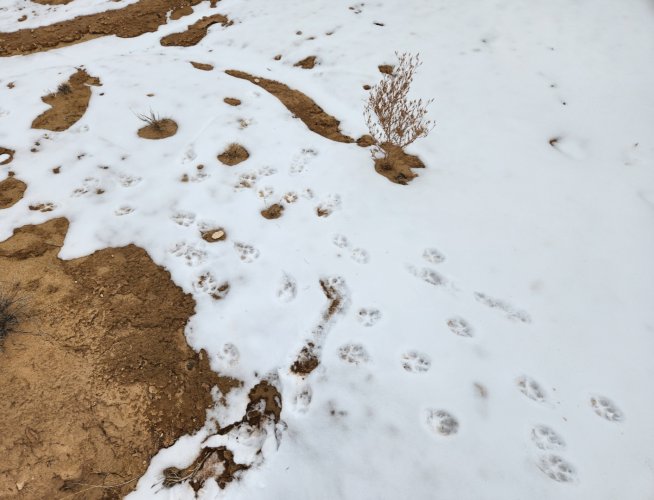
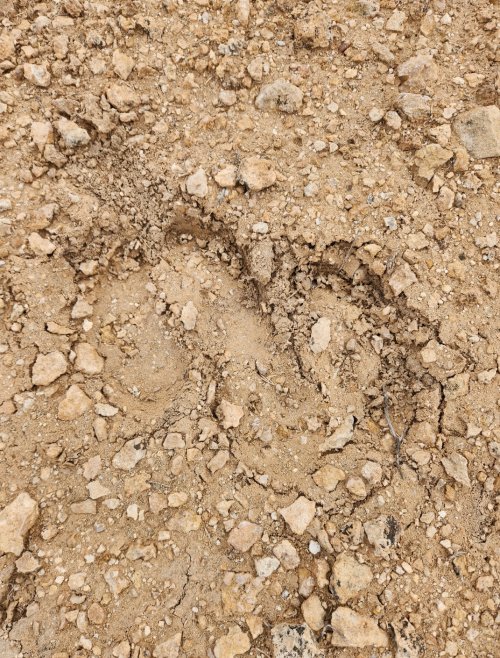
It isn't particularly tough walking with a light pack. I'm able to pick my way through the burned timber, rocks, and junipers fairly quietly. There are tracks and droppings all over, from both deer and bison.
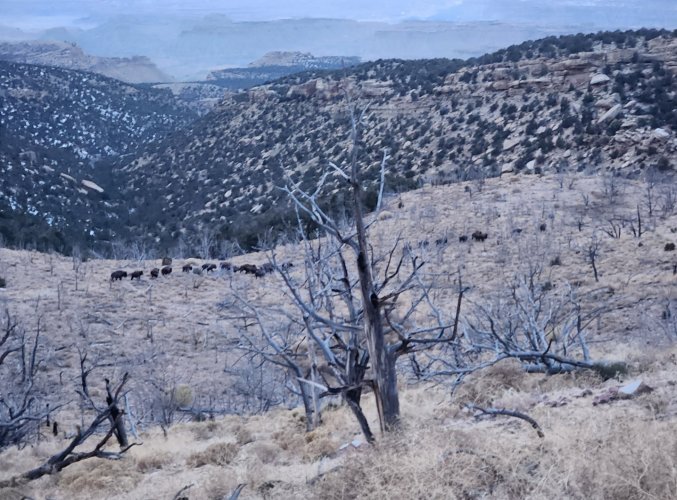
Really just an hour into my walk, I find what I feel like I've finally earned, a herd of bison.
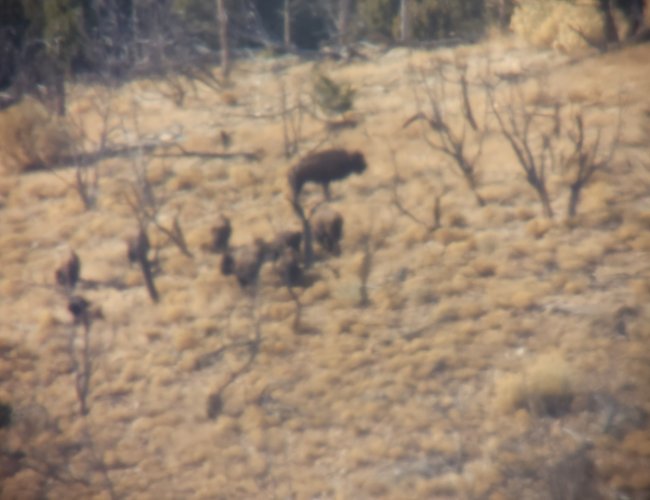
They're a mile away across a couple deep canyons, and after a few pictures to mark their location, I'm down into canyon number one. It's 200 feet deep with cliffy battlements, and only a few spots for entrance and exit. I mark my route because I can already tell this one is going to be difficult in the dark. Up the other side and back into another, I'm following tracks and still warm bison chips. The wind is an uphill thermal, so I circle high to keep the advantage. I reach the top of their ridgeline just 90 yards from where the first bison fleetingly graced my binocular field from 4 miles away about one week earlier. The wind is a bit swirly, and if they kept moving, they would be close. I hear and see nothing. I tiptoe between crusty snow drifts and clanking flat rocks from prominence to knob down the ridge until I see a chocolate brown shape bedded in the trees below me. They had gone just a few yards from the last place I saw them, and had hunkered down behind a hill and in the thick junipers and pines. I'm about 400 yards away, and I think I can get closer. Closer is better for cow identification and shot placement. At 150 yards, I crawl out onto a flatter rock jutting away from the hill. I set up my spotter, rifle, and pack. I can see one animal clearly and several others through the limbs.
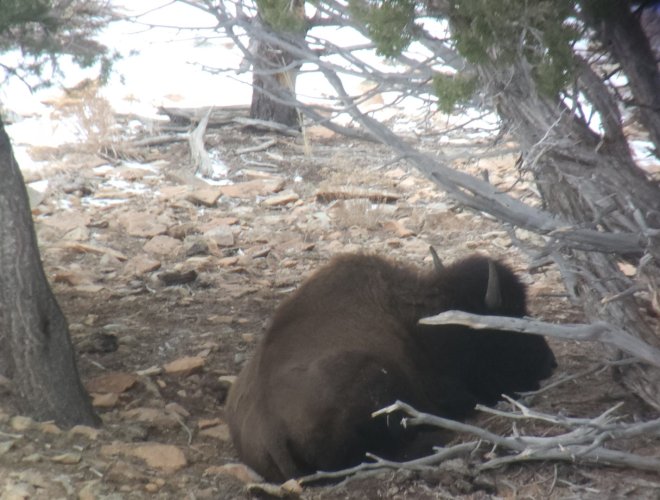
The animal in the open appears to be a young bull, and although I'm fairly confident that at least 2 or 3 in the trees are cows, they don't give me any shot at all, so I wait, and wait, and wait. An hour goes by and one animal I'm 95% certain is a cow shows me her neck, but it never looks quite right, and there are several other bison around her, making the shot a no go.
Then for no reason, all the bison stand and trot to the top of the ridge and over. I can't pick out a definite cow in the chaos of horns and fur. How many ARE there? I had counted 8 or 9 when I saw them first. I am crestfallen, for about 5 seconds, then I load my pack, hand carry my rifle, and sidle left around the semi-circular bowl that separates us as quickly and quietly as I can, all the way to the spot they crested the ridge.
The burn across from me is wide open, and there are no bison, but the burned trees on my slope are dense, blocking my view. I get an upclose tutorial on seconds-old bison droppings, but perhaps too late in the game, and too brief, to matter. I scan back and forth and see the animals off to the left, miraculously calm for how they started their stampede such a short while before. I'm shaking bad enough that it's hard to identify any cows. They move farther towards the truck, and I hurry to the next knob. As I arrive there, the evening thermals finally switch, and the wind is blowing right to them. Within a few seconds the thundering roar of hooves rattles the ground. I can feel it in my feet and in my chest, and my heart is now racing. There is dust and fur with grass stalks flying, all moving enmasse like an avalanch towards the gully below me, I trot to follow and get to a dead juniper with clear view to the bottom and the other side, leaning into the dead trunk, with my pack in front, round finally in the chamber, binos scanning. There's confusion, one animal goes left, taking a few others, but a big bull starts right, the herd is split, and they all stop running and look around. They slowly organize on the lone bull and the lead animal going left is by itself. Narrow face, curved horns, and when it turns its body to follow the bull at a walk, the last confirmation is made, and I'm down on my rifle. Aim low. Aim low. Aim low.
I follow her front leg up to her elbow with the crosshairs and move them just into her chest and squeeze the trigger.
I was told by a packer I tried to employ that the Henry's bison were athletic. This cow proves him right with a 4-legged launch of 3-4 feet straight up in the air. I rechamber, and, not to let a good heart shot be enough, put one into the center of mass. And soon she collapses. I stand to take in the moment. The herd of 25 remaining bison trails out to the west, slowly gaining speed as they make for the cover of the trees.
It's getting dark, and there is work to be done. I take few minutes to reflect, and then a few seconds to send some messages (sometimes they go through).
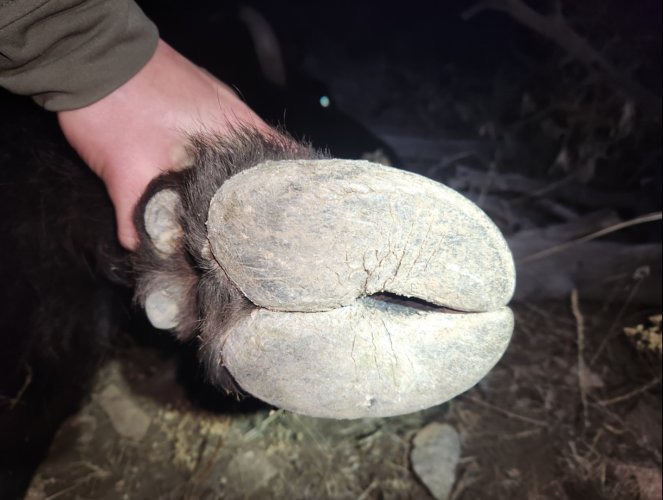
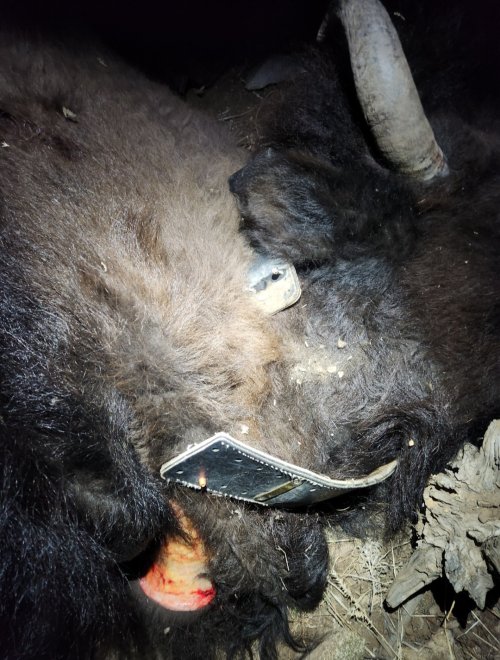
What a beautiful and majestic animal. A fully mature cow, 5+ years old based on incisor replacment. Not a bohemoth pasture or park animal, but compact and heavy-boned, solidly built to maneuver the steep country they roam freely here in Utah. I marvel at all the pieces that make up this iconic animal. The fur is soft like sheeps wool, the hooves are large and curved, the horns jut out, then curl up, then back, the massive hump prevents a single person from being able to roll it over. And this one has a necklace and an earring. Every bit of her is stout.
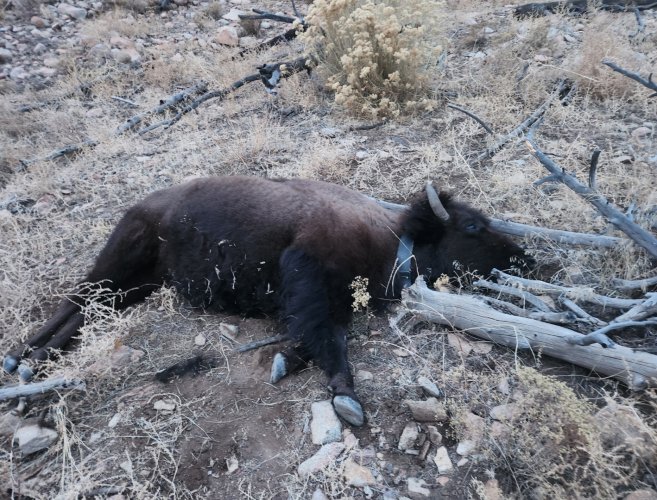
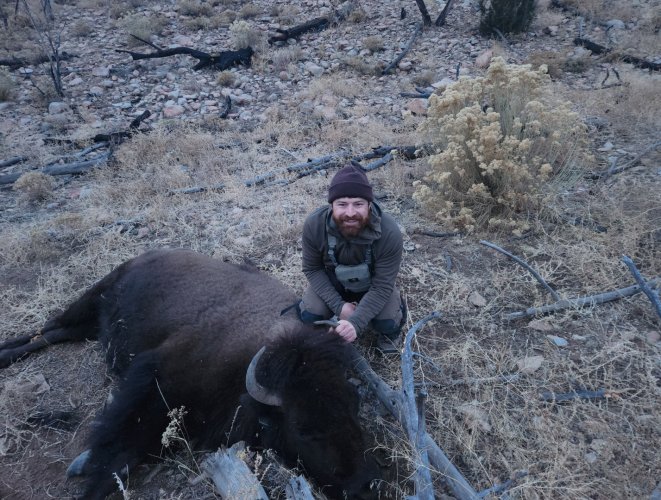
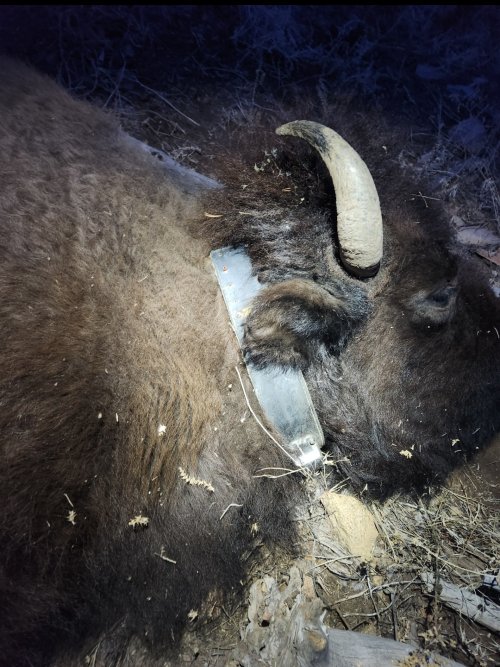
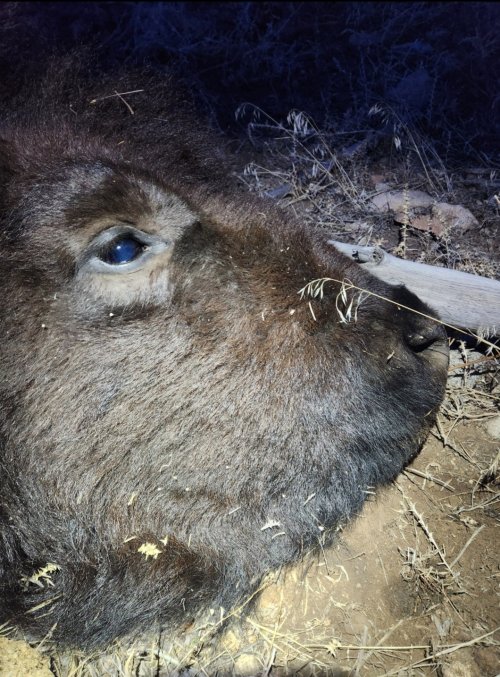
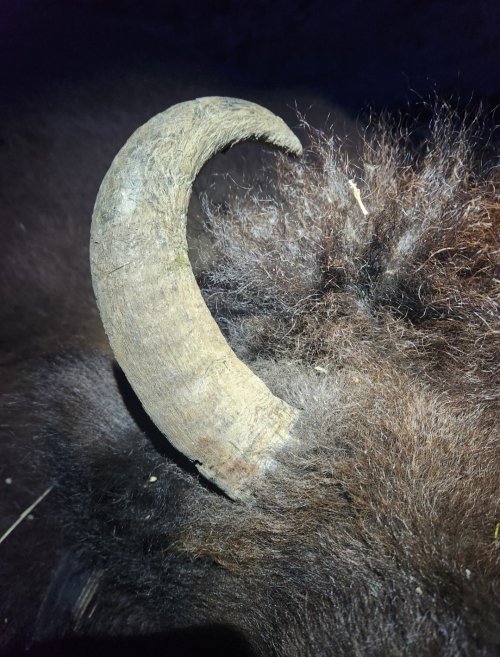
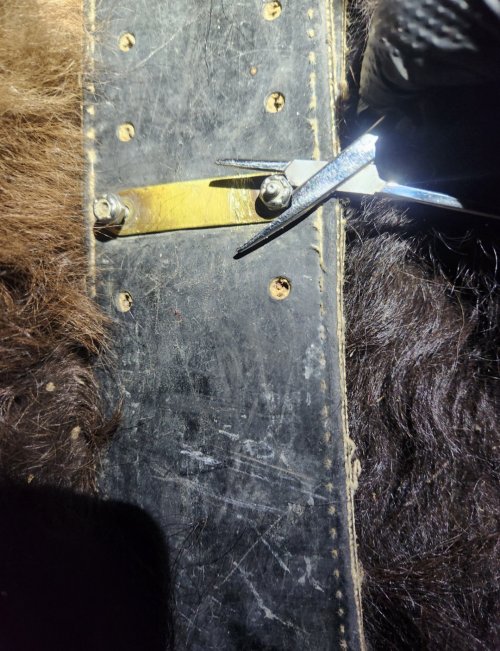
It takes some digging through my pack, but the needle drivers I keep to sew gear and me up works just well enough to remove the gps collar. I wasn't looking forward to skinning around it, and I'm too considerate of the money that goes into these to cut it off.
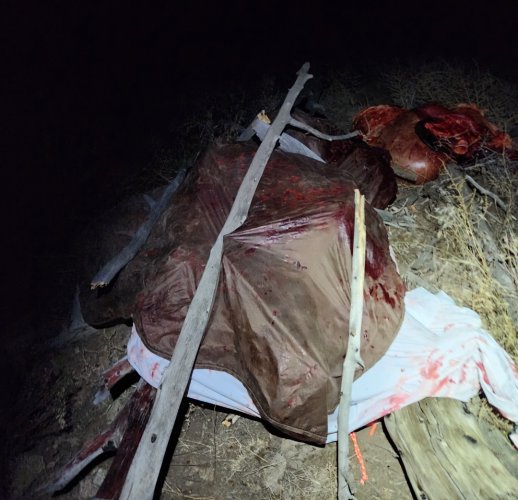
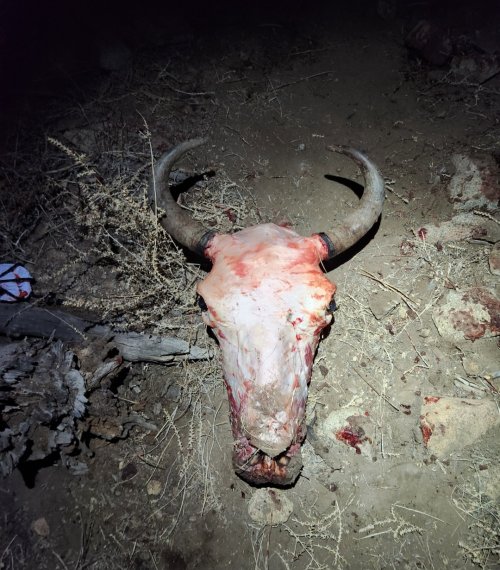
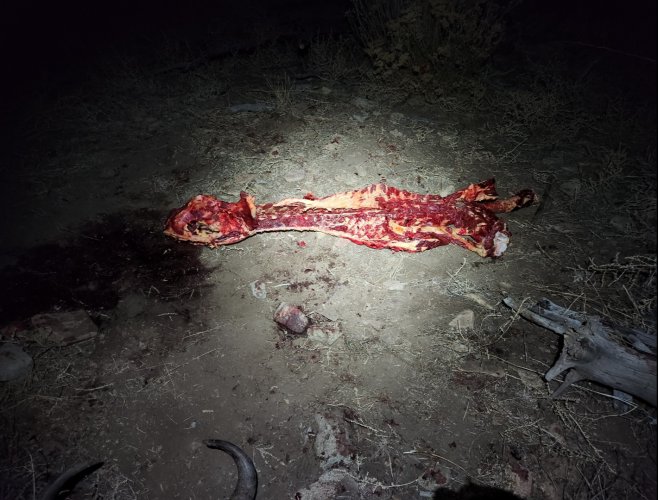
It's 7 hours later, around half passed midnight when I stack up all the meat and cover it with a tarp to ward of the snow and cold. There's just a spine and pelvis, and a pile of guts left out. With few if any bears (the difference between solo bison and 2-man AK elk
@BAKPAKR !!!), I feel pretty good about leaving it on the ground. The coyotes will go for the easy bits. The hide is full including face, the meat is all on the bone as able, including the ribs. It's 303lbs of meat with bone, 7lbs of haggis makings (heart with it's hole, liver, and lungs), 46lb hide, and 17lb head, right at 373lbs of stuff to pack, from a 600-650lb animal.
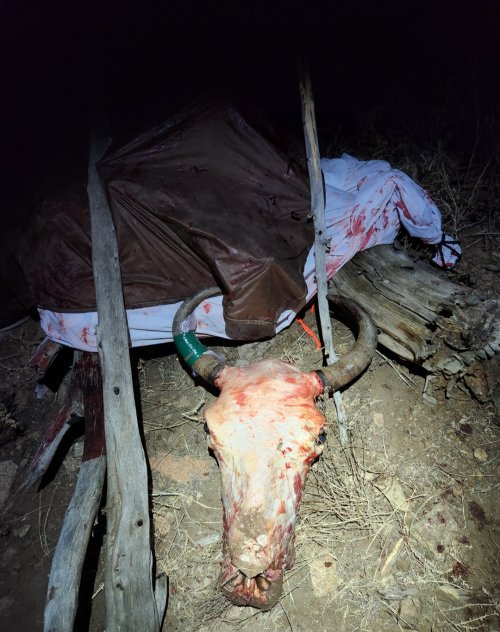
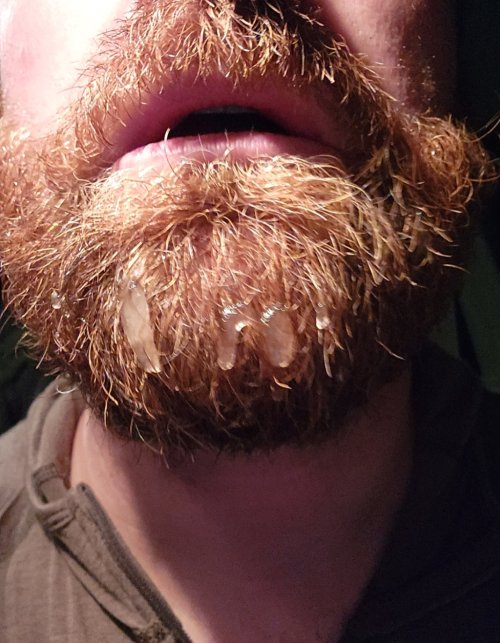
The route back is only 2.5 miles as the crow flies, but I turn that into almost 4 over the next 3.5 hours. The snow and wind start shortly after I started hiking and added an extra bit of fun. I decide against taking anything except the GPS collar from the bison out that night in the dark to improve my chances of making the trek without incident. Halfway back, in the dark, I find a few sets of eyes, wondering how many deer were in the group, I suddenly realize that it's another herd of bison, camouflaged by the accumulating snow on their backs. I don't want to be trampled, so I scurry down hill and away, talking at them all the while. They eventually break and head uphill away from me. Potential catastrophe avoided, I zig and zag and climb and descend my way to the truck, finally getting there around 4am. I eat some snacks and zip myself into my sleeping bag. The icicles in my beard are just the beginning of things to come.