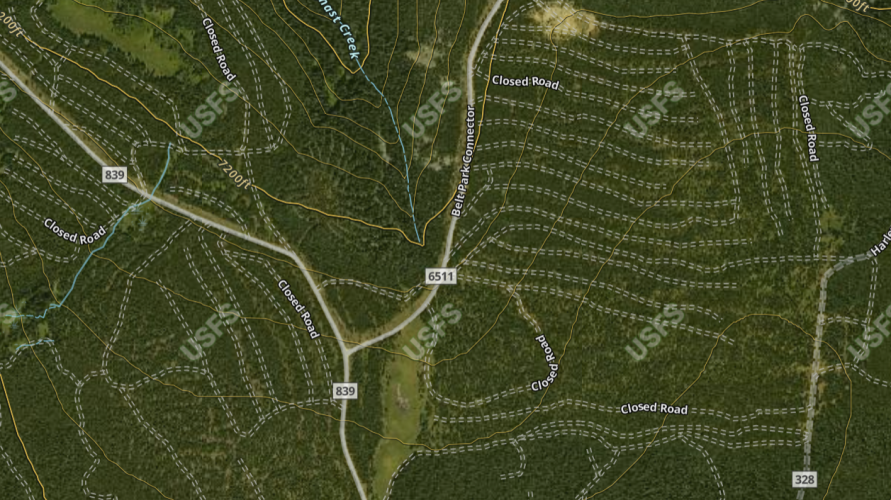
E- scouting question: are these logging roads?

TexanSam

Well-known member
Joined
Mar 21, 2018
Messages
377
I see a lot of spots that look like this in the National Forests near me, and when I walk them, they look like they were once cleared for something. Are the roads that are indicated by two track dotted lines on onX "logging roads" that people always say to check for springtime bears?1767972073954.png
 
I have had OnX and other mapping services show "roads" that don't check out in person. May at one time been a road, but not now, can't even see where it was other than indications of past road grade. Definitely need to truth check in person.

Had my hunting partner with his eyes glued to his phone insist that the road turned across the drainage right up ahead, "uh, look out the window, no way", you could make out the 60 year old road cut is all, totally impassable with a vehicle.
 
Last edited:
My experience is they will mostly be skidroads, the frequency of those kinda confirms that. My guess is the area you are looking at was commercial thinning some time ago as it looks like the crowns have grown back in.
Depending on where you are there, regionally, those may not even be recognizable at this point. As others have said, it depends.
 
My guess is the area you are looking at was commercial thinning some time ago as it looks like the crowns have grown in.
Thanks! And yes this is in the LB mountains near GF MT. (All abbreviated to thwart of google searches).

From my limited experience in here, it seems that most of the forest is pretty overgrown. The place needs more thinning, burning etc.

All that said, when scouting for roads that bears might frequent, are you simply looking for an opening in the canopy where light gets through and fresh grasses grow? Does aspect come into play as much when hunting logging roads?
 
Having been in that area this past Fall, some of those are passable and will show that on recent imagery and some are just trails now. There are a lot you can't even tell they were there due to all the natural thinning that has occurred over time. That seems to be a guarantee, if a tree falls in the woods close to a trail it's going to fall across it.
 
All that said, when scouting for roads that bears might frequent, are you simply looking for an opening in the canopy where light gets through and fresh grasses grow? Does aspect come into play as much when hunting logging roads?
That's what most people are talking about. Closed roads that are still somewhat passable with grass and clover growing along the sides seems to be a good place to look for bears in the spring. Growing up that's pretty much how we hunted bears, just walking quietly along closed logging roads looking for bears on the sides of the roads.

Might not be the best way to hunt them especially if looking for a big boar, but we were relatively successful doing it that way in areas with high bear density.
 
Depending how fast the reprod grows, they could have been used for logging, ie skid trails that have grown over. You should see remnants of stumps if they logged in there.
 
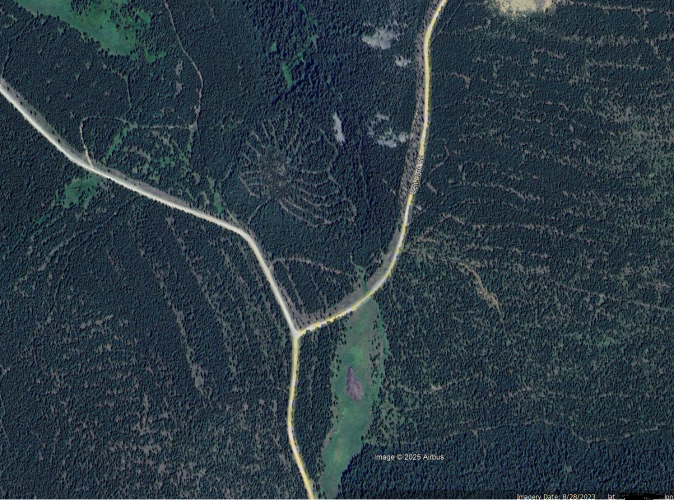
You need to vet roads with satellite imagery. Winter with leaf off can often reveal the best options.
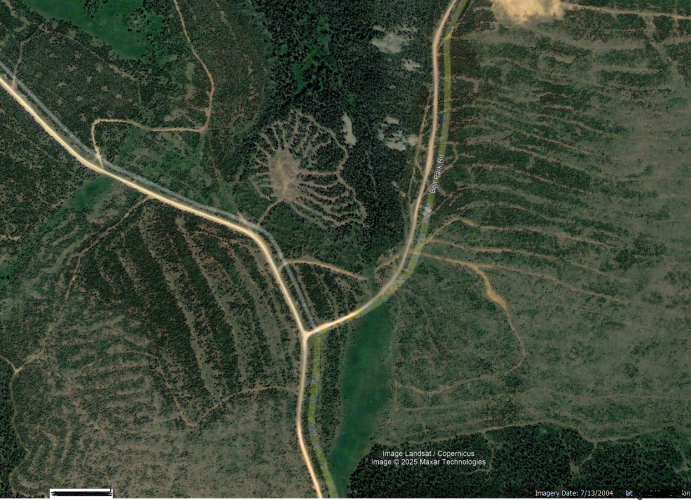
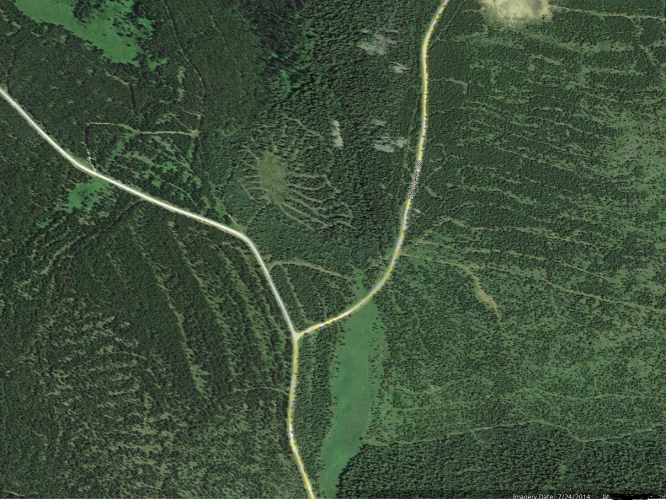
This....another trick us to look at older imagery. Google maps is one example. Roads are more visible shortly after the are created than years later when things grow over and above them.

I've never seen that, if older row thinning they arent roads in the sense most think around here. Certainly not permanent.
 
This....another trick us to look at older imagery. Google maps is one example. Roads are more visible shortly after the are created than years later when things grow over and above them.

I've never seen that, if older row thinning they arent roads in the sense most think around here. Certainly not permanent.
Very good advice here. Basic scouting for me. Those are probably old logging roads but only history will give an idea of what they look like now. You can also look up when the logging was down. Going expecting to glass those roads may end up in disappointment.
 
This....another trick us to look at older imagery. Google maps is one example. Roads are more visible shortly after the are created than years later when things grow over and above them.
Do you have a recommendation on where to find recent satellite imagery? I have just been using OnX with the default settings.

I've never seen that, if older row thinning they arent roads in the sense most think around here. Certainly not permanent.
I never expected to be able to get a vehicle down one of these roads, I always assumed "logging road" meant that it was once upon a time cleared to harvest the trees, and the only things transporting on the roads were logging equipment. What is the sense that most think of in terms of logging roads?
 
Do you have a recommendation on where to find recent satellite imagery? I have just been using OnX with the default settings.


I never expected to be able to get a vehicle down one of these roads, I always assumed "logging road" meant that it was once upon a time cleared to harvest the trees, and the only things transporting on the roads were logging equipment. What is the sense that most think of in terms of logging roads?
I need to get up to speed on imagery options outside of the info I had access to before I retired (used GIS frequently in my work).

Ideally all sources would list the date their imagery was taken, but AFAIK of the widely available options, only Google maps does that. With it....looking at the same place on earth...you can look at their most current image and multiple older images...all with dates...which often helps ID roads or trails that are still there but become less visible from the air over time.

Most public agencies will have some road and trail coverage that Onx and others have access to. Temporary roads or trails are not on them by design...they dont want people using them, or dont want people assuming they are drivable, etc.

Road and trails are often intended to be closed after use in logging...doing so helps minimize spread of invasive species, damage from vehicles, and is often beneficial to wildlife.

Take an intensively managed by periodic thinning stand for example. What you showed implies every access route during the logging operation was marked.

The norm I see is only the main route into and (if present) through that stand...and then only if the agency intends to maintain and or reuse that some route often over time...is mapped.

So I am really curious what was going on there. A long term research project? Prep for future home development?

 
Last edited:

Latest posts

Forum statistics

Threads
118,026
Messages
2,177,393
Members
38,420
Latest member
goose25
Back
Top