What a bummer! Good on you for the help you put in!View attachment 157030View attachment 157031View attachment 157032
280” bull, 4 cows, and 4 calves across canyon 220 yards. They’re bedded just above 2-track. Last post on elk for me. Carson is a fine young man, although his family is leery of me. I’m out before something boils over. Good luck, kid.



Navigation
Install the app
How to install the app on iOS
Follow along with the video below to see how to install our site as a web app on your home screen.
Note: This feature may not be available in some browsers.
More options

You are using an out of date browser. It may not display this or other websites correctly.
You should upgrade or use an alternative browser.
You should upgrade or use an alternative browser.
Cow Elk Hunt WY-31
- Thread starter CarsonSmithElkHunter
- Start date

Pucky Freak
Well-known member
Understanding complex networks of relationships is something that comes with age and maturity. Managing them is a skill acquired through a lifetime of missteps. While it’s uncomfortable to experience that, we all have to go through it. Zero regrets on my behalf.What a bummer! Good on you for the help you put in!
@CarsonSmithElkHunter i look forward to your pics and story. You’ve got at least a couple dozen HT’ers cheering for you.

Good on you to TRY and help a young hunter be successful. Circumstances that are beyond your control make it tough. Hopefully he learned enough to score on his own and his family can discover the joy of breaking one down and packing it out!  We'll wait for future posts.
We'll wait for future posts.
CUElk
Well-known member
Dang, that stinks. You are a good dude for stepping up and trying. Hope you get your lope. Looks like Carson has plenty of help. Good luck to both of you.

MTGamecock
Well-known member
Um, what unit is this again? (As I scramble for a pen and notepad) 
Great read. Good luck to you both.
Great read. Good luck to you both.
Um, what unit is this again? (As I scramble for a pen and notepad)
Great read. Good luck to you both.
lol I was thinking the same thing.
Interesting enough it made me go back and look hard again at these anterless tags. I had done some research when I starting building points in WY just last year and this unit popped up on my list. It takes something like 12+ points to pull a Type 1 tag. The Type 4 anterless tag can be pulled much earlier and it appears to be a good hunt from what I'm seeing here. I need to go back and dig again for other high point Type 1 units which have a lower point Type 4 tag. It might be a good way to have a good time hunting elk more regularly, even if it means you can't kill a bull.

MTLabrador
Well-known member
That’s the story in a whole bunch of areas, since most nonresidents choose to hunt the much lower priced type 6 licenses for cows.lol I was thinking the same thing.
Interesting enough it made me go back and look hard again at these anterless tags. I had done some research when I starting building points in WY just last year and this unit popped up on my list. It takes something like 12+ points to pull a Type 1 tag. The Type 4 anterless tag can be pulled much earlier and it appears to be a good hunt from what I'm seeing here. I need to go back and dig again for other high point Type 1 units which have a lower point Type 4 tag. It might be a good way to have a good time hunting elk more regularly, even if it means you can't kill a bull.

That’s true, but as odds tank for decent Type 6 tags and general and LE tags take longer to draw, I suspect these Type 4 tags will follow suit in a hurry.That’s the story in a whole bunch of areas, since most nonresidents choose to hunt the much lower priced type 6 licenses for cows.
That’s the story in a whole bunch of areas, since most nonresidents choose to hunt the much lower priced type 6 licenses for cows.
And considering that you can generally pull a deer only non-resident combo in MT with only 1 point every year (for now), a general MT deer/Type 4/6 WY elk hunt could be a lot of fun . . . Hmm lol
MTLabrador
Well-known member
Agreed, I’m sure that’s coming soon.That’s true, but as odds tank for decent Type 6 tags and general and LE tags take longer to draw, I suspect these Type 4 tags will follow suit in a hurry.
Pucky Freak
Well-known member
Some of the Type 4 harvest odds are north of 80% whereas Type 6 odds are sometimes lower. Type 4 is almost x3 as expensive when you factor in points, but more predictable when you draw because of the points. Tons of other factors on which is the “best.” Many state’s cow tags are fairly equitable to WY Type 4.
Personally, there are many other cow tags I’d prefer over this one, despite being able to just show up and find them quickly.
By far the most valuable thing I learned about elk on this hunt is a MUCH better understanding of how to apply elk’s 4 basic needs to a particular herd and unit, based on things like pressure, nutrition, human impact and interactions, water variability, etc. I asked the biologist: “I expect to see cows in places A, B, and C for reasons A-E. How close am I?” He graciously explained how I was mostly wrong, and then told me I’d be likely to find them in places D, E, F and rattled off many reasons WHY they are there, and then went on to explain many reasons why they were not elsewhere in the unit. This conversation was invaluable to understanding elk a whole lot better than I did before. 5 hours of e-scouting, one 10-minute conversation with the biologist, and then a half day with boots on the ground probably advanced my elk knowledge from 5/100 to 15/100.
There are about 500 post hunt cow elk in units 30-32, which is roughly 1400 miles sq, or one cow every 2.8 miles sq. Helps to know where to look and why.
For comparison, there are 25 WT does per square mile where I live. I think a lot of Eastern WT hunters kind of have a paradigm shift when they discover the differences.
Personally, there are many other cow tags I’d prefer over this one, despite being able to just show up and find them quickly.
By far the most valuable thing I learned about elk on this hunt is a MUCH better understanding of how to apply elk’s 4 basic needs to a particular herd and unit, based on things like pressure, nutrition, human impact and interactions, water variability, etc. I asked the biologist: “I expect to see cows in places A, B, and C for reasons A-E. How close am I?” He graciously explained how I was mostly wrong, and then told me I’d be likely to find them in places D, E, F and rattled off many reasons WHY they are there, and then went on to explain many reasons why they were not elsewhere in the unit. This conversation was invaluable to understanding elk a whole lot better than I did before. 5 hours of e-scouting, one 10-minute conversation with the biologist, and then a half day with boots on the ground probably advanced my elk knowledge from 5/100 to 15/100.
There are about 500 post hunt cow elk in units 30-32, which is roughly 1400 miles sq, or one cow every 2.8 miles sq. Helps to know where to look and why.
For comparison, there are 25 WT does per square mile where I live. I think a lot of Eastern WT hunters kind of have a paradigm shift when they discover the differences.
D
Deleted member 40728
Guest
The whitetail doe per square mile where I’m from is even higher than 25. When I first started hunting out west it was definitely an eye opener like you described how spaced out the elk were. I was expecting to run into cows around every corner like I do WT doe at home. Boy was I wrong!There are about 500 post hunt cow elk in units 30-32, which is roughly 1400 miles sq, or one cow every 2.8 miles sq. Helps to know where to look and why.
For comparison, there are 25 WT does per square mile where I live. I think a lot of Eastern WT hunters kind of have a paradigm shift when they discover the differences.

CarsonSmithElkHunter
Active member
- Joined
- Jan 15, 2020
- Messages
- 66
Hello all. Sorry, didn't have time to post while in the mountains. My family shot 4 elk opening night, all in the same herd. 2 cows, 2 calves. My brother took out the lead cow, which disoriented them. They ran down, my brother and I ambushed them, and we pushed them up to my Dad and Grandpa. Thanks @ElkFever2 for coming to camp, and glad you got your antelope. Glad to get my first elk.
Here are the pics
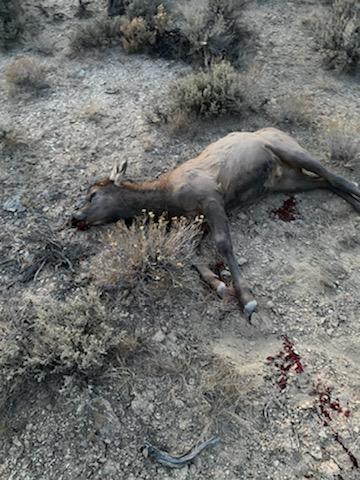
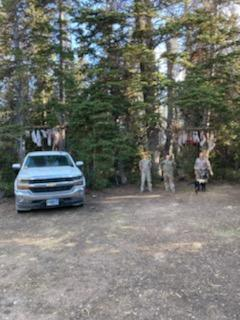
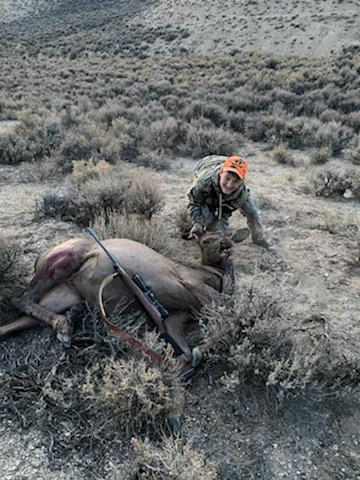
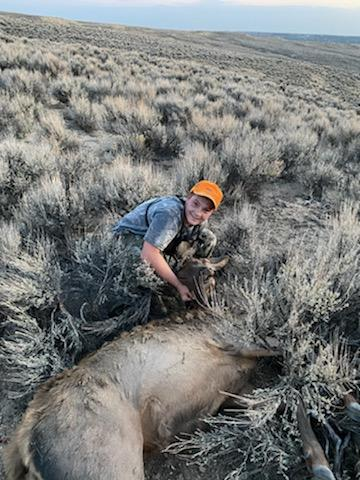
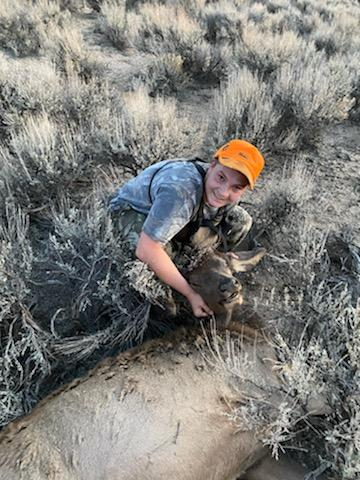
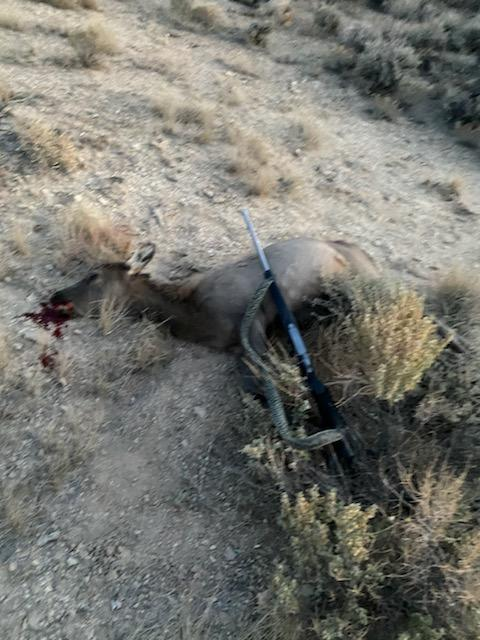
Here are the pics
Pucky Freak
Well-known member
Heck yeah man! Way to get it done

Pahoundsman
Well-known member
Way to fill up your freezer! Congrats
CUElk
Well-known member
Congrats. That's awesome

mdeerjunkie
Well-known member
Congrats!