Jamen
Well-known member
I would check with some chemical dealers we paid about $1,200 per gallon.



Follow along with the video below to see how to install our site as a web app on your home screen.
Note: This feature may not be available in some browsers.



 wyofile.com
 wyofile.com
Best answerOr county extension.

2nd that. Dogs nest friend lolGoats?

Do you have a minimum cover target for perennial grasses, forbs, shrubs that you feel makes an area ideal for rejuvra treatment? My understanding is you need some existing perennial cover since rejuvra prevents germination of all types. Do perennial species begin germinating sooner than annuals as the residual effect of rejuvra wears off? Just trying to understand how you can increase perennial cover after applying rejuvra due to the long period where nothing is germinating. ThanksI've been using Rejuvra for years. We've sprayed several thousand acres via helicopter and tractor on the properties I work on. Cheatgrass is a winter annual that reproduces by seed. The trick is to control cheatgrass seed production for 4 to 5 years which is the life-span of its seed in the soil.
Mowing is an option but it must be done several times/year. Obviously if your pasture is rocky and/or steep it may be tough to mow. Cheatgrass often re-grows short after mowing and it may be tough to totally eliminate seed production.
We've had mixed results with Plateau. If you get more than 2 year's control with Plateau you are super lucky. Milestone may mention cheatgrass on it's label but believe me (I've conducted cheatgrass research for 35+ years), it doesn't work long-term. Milestone would be a great option for thistles and knapweed though.
There is a good chance you will get 4+ year's control with Rejuvra if everything is done correctly. We are still getting 89% cheatgrass control 8 to 9 years after treatment here in Colorado on sites where native grass, forbs, and shrubs have increased and compete with cheatgrass re-invading areas. If you don't have any perennial grass competition and if there are skips the control won't last as long.
A buddy of mine sprayed his 5 acre pasture that was loaded with cheatgrass with Rejuvra around 4 years ago. They run dogs on the property and didn't want to deal with vet bills. I was on his place last weekend and didn't see one blade of cheatgrass.
If you are starting from scratch and don't have remnant perennial grass there are other options I can share with you if you need to seed. I've been using Rejuvra since 2010 when it first was tested in range and pastures. If you have any questions, please sent me a PM. I would be glad to share with you before and after photos from multiple years and properties.
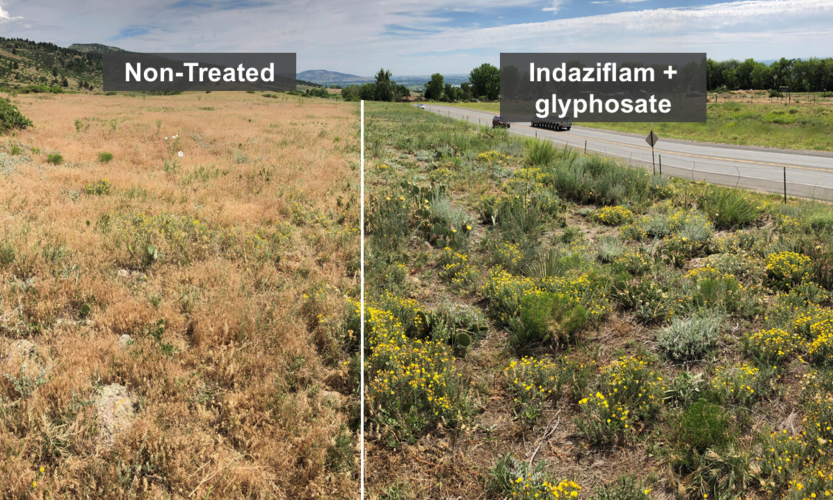
I was on a ranch over the summer that uses this product. It was truly impressive.We have been doing some trials for foxtail with a fairly new product called Rejuvra. We have had really good success with it. They are using it alot for control of ventenata. It is a pre emergent product. so you will want to apply it before the grass grows in the spring, can do fall application to. Cheat grass is on the label and if it works like it has for us and others on other grasses you should have good luck. They say it will last 2-4 years which is good because it runs about $60/acre. I would also look into good surfactants. We used one called grounded it hold the herbicides in the soil a lot longer.
Hope this helps
super cool. thanks for sharingBelow is a link to the cheatgrass publication that we recently published in the Ecology Restoration Journal. This was an 8-year study with treatments conducted on 12 sites.
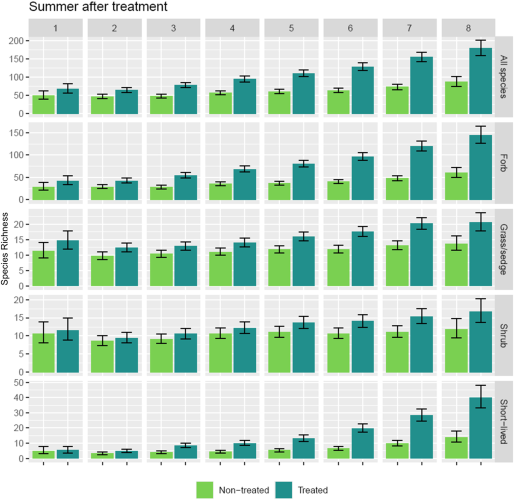
The Colorado Natural Heritage Program (CNHP) ranks all 12 study locations as having “outstanding” or “very high” biodiversity, the highest rankings possible to describe the significance of the biological diversity. There were only around 70 native species across the 12 Rejuvra treated sites in year 1 and this increased to 175 species by 8 years after treatment.
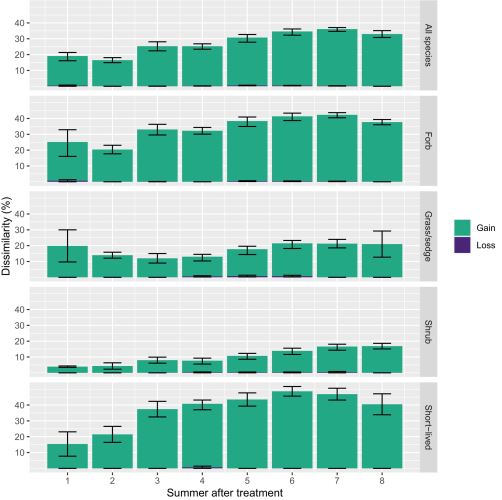
Each of these sites originally had dense cheatgrass with remnant native species (and seed) still present. Once cheatgrass was controlled the diversity of all functional groups (including native short-lived species) increased every year after treatment.
These diversity results are supported by Schroeder et al. (2023) who reported a diverse native seed bank in cheatgrass-invaded rangeland. In fact, they concluded that the soil seed bank of their study site was resilient, and a targeted approach to specifically deplete the seed bank of nonnative annuals could facilitate restoration by the in situ native seed bank.
We found that many of these species either had seed laying in the soil waiting for the right conditions to germinate and other seed may have possibly been brought in from outside sources (wind, birds, etc). There was a fairly abrupt increase in species richness 6 to 8 years after treatment likely due to drought in earlier years and significant winter and spring moisture. Notice that richness in checks was low and stagnant through the entire 8-year time period.
We have discovered that annual grass species are highly susceptible to extremely low concentrations of indaziflam (Rejuvra). Indaziflam stays in the top few centimeters of the soil. Some of the broadleaf species may germinate below this layer. There were native short-lived species that germinated the first spring after Rejuvra treatments that may have germinated below the Rejuvra layer or were resistant to Rejuvra. The list of native annuals increased in richness and densities every year after treatment.
In no case did we see an elimination of native short-lived or other species. We can't say this won't happen in your area, but we didn't see this in our long-term study. The short-lived species in the tables below include annuals, biennials, monocarpic, and short-lived perennial species. From year 1 on there was higher native short-lived species richness in all 12 Rejuvra sprayed sites compared to non-sprayed checks. This demonstrates the competitiveness of cheatgrass with these species. We had similar results with rare species. One other exciting discovery that wasn't included in this publication was the increase in rare native species on these same sites.
View attachment 397601
View attachment 397600
View attachment 397602
Thanks for sharing, getting ready to analyze adding Indaziflam to our local integrated weed management plan so I'll be digging in over the next few weeks.Hopefully my above post answers some of your questions. From year one in our study, we had native species germinate through all 12 sites that were sprayed in different years in this long-term study. The reports I've read about seed germination problems have been greenhouse trials where seed is set in mixed soil, then sprayed, and then watered daily. Greenhouse work is completely different than what actually happens in the field. Other work I've seen was conducted on small, disturbed sites with little native forb and subshrub species richness and where perennial grass competition that increased after control impacted results.
I strongly agree that it is important to rest areas after cheatgrass control to encourage recovery.
Do you have a minimum cover target for perennial grasses, forbs, shrubs that you feel makes an area ideal for rejuvra treatment? This is a tough question without knowing details about species composition, soils, slope, moisture events, etc. Some species may dramatically increase after cheatgrass control (tillering grass species such as Western wheatgrass and blue grama as examples). Other bunch grass species may not fill in gaps between plants. A pre-spray inventory is definitely an important consideration before spraying. In areas where we don't have any remnant species or seedbanks present, we use an entirely different scenario.
I was on a ranch over the summer that uses this product. It was truly impressive. I don’t know much about this topic but the rancher sure did and seeing where it had been applied vs the sections it hadn’t was very impressive. We often start with around 1,000 lb/A of cheatgrass and 200 lb/A of perennial grass on dense cheatgrass sites. Depending upon the perennial grass species, we often switch to over 1,000 lb/A of perennial grass with 0 cheatgrass.
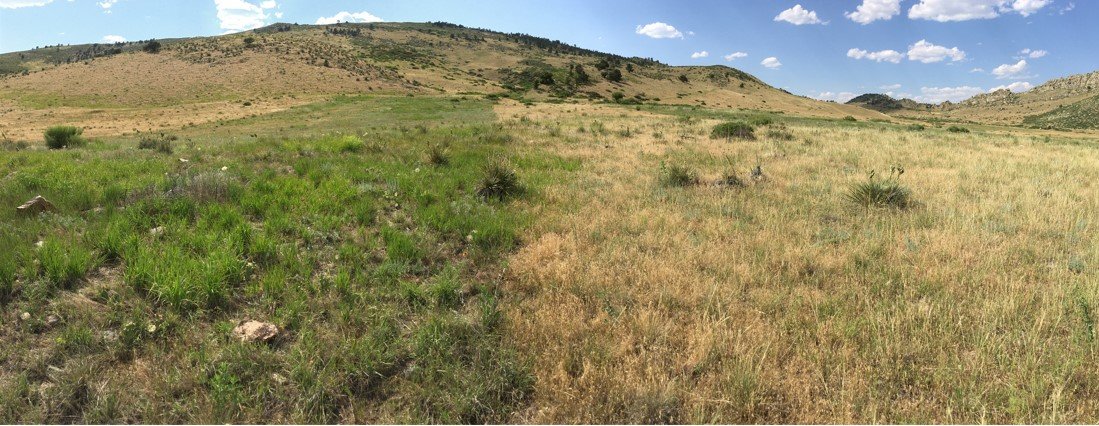
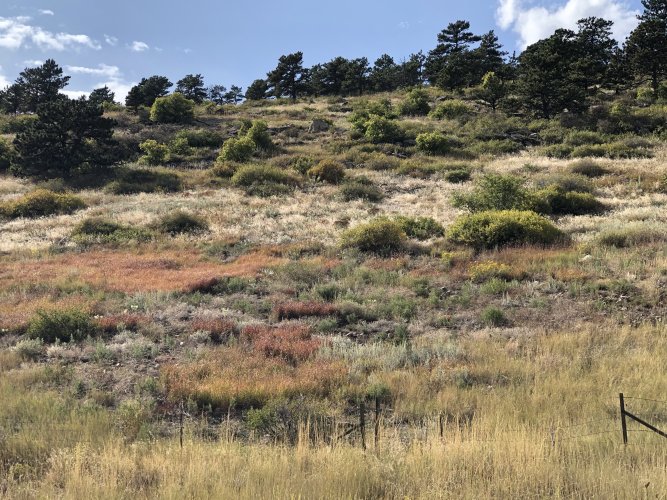
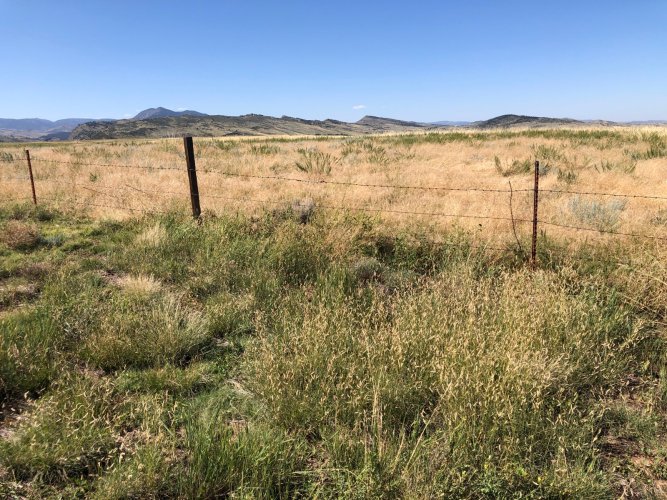
Here are few grass response photos. The top photo was one of the first large-scale demo plots we sprayed with Rejuvra to figure out rates and timings. It was taken the first summer after treatment. If you have any doubt, try a demo strip! I think you can see the lines.
View attachment 397610
View attachment 397612
View attachment 397611
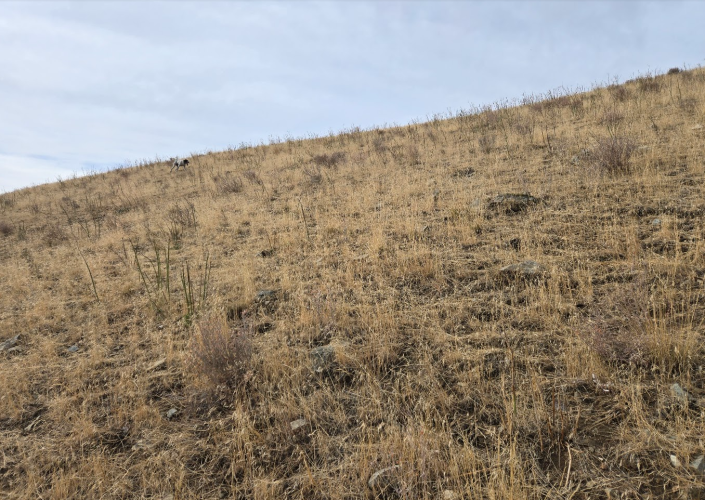
This is a tough situation when it gets to this point, difficult to get native perennials established on steep slopes once they're gone. WDFW has done a lot of good restoration work in different areas, but it is difficult and expensive, and can take many retreatments. Chelan butte is a good example, they've restored abandoned ag fields there that were full of every combination of weeds you can think of. Some fields look better than others now but definitely made significant progress.We have areas that are completely nuked of native veg, just cheatgrass and Toadflax.
View attachment 397609
I would love to see WDFW do something about this.
They have, sort of. They did some bio control of the toadflax that worked, but it's back thicker than I've ever seen it. I've never seen them do anything serious on cheatgrass outside of ag fields. I unsuccessfully tried to find another pic of even worse areas, but there are places between Wenatchee and Entiat that simply don't have anything anymore. It's bare dirt and a sprinkling of cheat grass. Honestly, I think it's being overgrazed by bighorns too, but I doubt they'll increase the tags. It's just incredibly sad that we create wildlife areas that progressively offer less and less habitat value every year. I guess I would still rather lock the land up now before it develops, but I would really like to see some effort put into the quality of the forage.This is a tough situation when it gets to this point, difficult to get native perennials established on steep slopes once they're gone. WDFW has done a lot of good restoration work in different areas, but it is difficult and expensive, and can take many retreatments. Chelan butte is a good example, they've restored abandoned ag fields there that were full of every combination of weeds you can think of. Some fields look better than others now but definitely made significant progress.