Labman
Well-known member
- Joined
- Jun 21, 2015
- Messages
- 614
Gotcha. I thought their role was to manage the game, not the level of difficulty of a hunt. If that’s the case make it 15 Aug - 15 Sept.They want to keep it a backcountry hunt.



Follow along with the video below to see how to install our site as a web app on your home screen.
Note: This feature may not be available in some browsers.

Gotcha. I thought their role was to manage the game, not the level of difficulty of a hunt. If that’s the case make it 15 Aug - 15 Sept.They want to keep it a backcountry hunt.

It's all sunshine and rainbows when you're loading all of your elk whole in the pickup and stacking gophers by the hundreds with collector's rifles.What rainbow you looking at shrap? In 2006 Montana issued 332 sheep tags in 2025 105.

What was the mortality rate from lung related issues and other causes of death other than hunting?What rainbow you looking at shrap? In 2006 Montana issued 332 sheep tags in 2025 105.
From a disease related mortality standpoint you’re right. There are things we all can be doing though. I have an agreement with my Houndsman buddy, if we catch any legal lion in, or reasonably close to, sheep country it dies. He’s the typical Houndsman that just likes to see lions in a tree and can’t fathom shooting an 80 lb female, but that’s the deal we have or I don’t help him look for tracks in other areas.I can't do anything about the deterioration of sheep.

Having a positive outlook is nice but I think we need to be realists about what is happening. Unless people stop encroaching bighorn sheep range with their domestic flocks especially small hobby flocks than I just don’t see the trend changing. I think Nevada might be the only state in the west with continued positive trends. Maybe ColoradoWhat was the mortality rate from lung related issues and other causes of death other than hunting?
I had a permit in 214 in 1990 and there were 12 permits available by drawing, and I do believe the numbers of sheep were high enough to support even more permits given that year.
2 years later, they almost shut that area down due to die off. Sheep are a fragile species and I think their numbers are subject to more than just hunting for their stability in population.
That is not good news for sheep or sportsman, but I am more likely to look to the areas that still have huntable numbers and be positive, because I can't do anything about the deterioration of sheep.


I mean, difficulty of the hunt directly affects success rate which directly affects tag allocations....some would call that management.Gotcha. I thought their role was to manage the game, not the level of difficulty of a hunt. If that’s the case make it 15 Aug - 15 Sept.
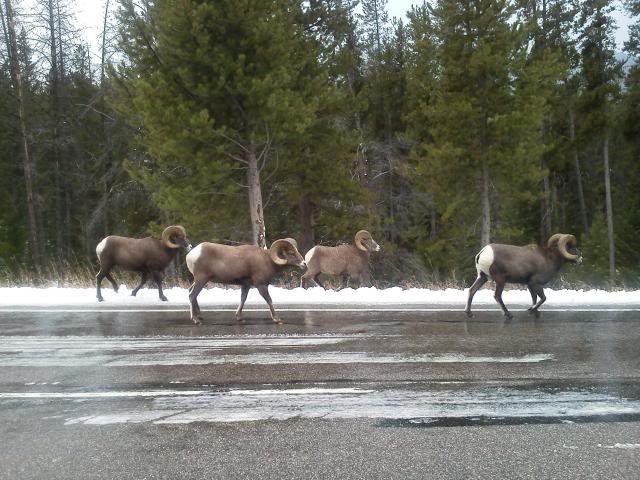

My guess: Die-way 191, Gallatin Canyon ... or the BS spur.Norris Road, area ???
Nope! Near Quake Lake. I was going to try for a truck tag, but after all the BS about the guy running over the wolf with a snowmobile, I decided not to…My guess: Die-way 191, Gallatin Canyon ... or the BS spur.
So those are the ones that take a lot of work to get during the season.Nope! Near Quake Lake. I was going to try for a truck tag, but after all the BS about the guy running over the wolf with a snowmobile, I decided not to…
Sheep management is a conundrum. On the one hand, you have a species in which there are generally high expectations from hunters who draw to harvest a large ram. Depending on the area, “large” can mean 175”, 180”, 185”, 190”, etc. I’m most familiar with the breaks so it’s definitely that 185-190” expectation (5-10” over book; where else does that happen?)A real giant out of 302 last year. I’m sure glad they shave a month off that season to save the breeding stock.
I wish I could come to grips with how a 3.5 yr old sub 24” ram is legal, or why such a sheep is legal.
Letting game reach even sexual maturity seems to be a problem in this place.

Always fun to take a drive down to Slide Inn in the winter and take a peek.Nope! Near Quake Lake. I was going to try for a truck tag, but after all the BS about the guy running over the wolf with a snowmobile, I decided not to…
I know I was always surprised seeing some of the collar data for breaks units. Some of those young rams disperse a long freaking way.Sheep management is a conundrum. On the one hand, you have a species in which there are generally high expectations from hunters who draw to harvest a large ram. Depending on the area, “large” can mean 175”, 180”, 185”, 190”, etc. I’m most familiar with the breaks so it’s definitely that 185-190” expectation (5-10” over book; where else does that happen?)
Compared to deer and elk, it tends to be the biggest, oldest rams taken out of a district every year. Age/antler class of bucks and bulls tends to be more distributed across the age classes, even if harvest is also skewed towards larger individuals there.
If the quota is 5, then typically taking the 5 oldest/biggest isn’t as big a deal. But 5 rams out of 350 sheep isn’t really “management,” either. Especially since it’s repeatedly documented that when a population gets above a certain size/density, they are more likely to get pneumonia. R2 die offs and RMF die off back around 2009-2010 happened right around the time those populations were at big highs. And yeah, of course population management = harvesting/moving ewes, but it tends to be the rams (especially when ram numbers are high) moving around and getting into intermingling trouble so they need to be considered, too.
That issue, and more responsible sheep management, calls for higher ram quotas. But, after years of a quota at 15-20, and most of those rams are those years ‘big fellas’ (not to mention extras here and there due to Gov/Supertag), well, you don’t need to be a biologist to see what will happen there.
So on the one hand, there is immense social pressure to provide successful applicants the opportunity for these larger rams, but there are serious management implications to trying to stockpile a bunch of big rams. To have lots of big rams means you have to have even more total rams then that and that requires lots more (read: too many) sheep.
(And if there’s angst/frustration about buck or bull ‘quality,’ there’s a lot more when it comes to sheep.) Not an easy line for managers to waltz.
Just curious what your thoughts are on how big of a buffer ie how far would domestics need to be from bighorn sheep range to ensure no intermingling? 70 miles?Sheep management is a conundrum. On the one hand, you have a species in which there are generally high expectations from hunters who draw to harvest a large ram. Depending on the area, “large” can mean 175”, 180”, 185”, 190”, etc. I’m most familiar with the breaks so it’s definitely that 185-190” expectation (5-10” over book; where else does that happen?)
Compared to deer and elk, it tends to be the biggest, oldest rams taken out of a district every year. Age/antler class of bucks and bulls tends to be more distributed across the age classes, even if harvest is also skewed towards larger individuals there.
If the quota is 5, then typically taking the 5 oldest/biggest isn’t as big a deal. But 5 rams out of 350 sheep isn’t really “management,” either. Especially since it’s repeatedly documented that when a population gets above a certain size/density, they are more likely to get pneumonia. R2 die offs and RMF die off back around 2009-2010 happened right around the time those populations were at big highs. And yeah, of course population management = harvesting/moving ewes, but it tends to be the rams (especially when ram numbers are high) moving around and getting into intermingling trouble so they need to be considered, too.
That issue, and more responsible sheep management, calls for higher ram quotas. But, after years of a quota at 15-20, and most of those rams are those years ‘big fellas’ (not to mention extras here and there due to Gov/Supertag), well, you don’t need to be a biologist to see what will happen there.
So on the one hand, there is immense social pressure to provide successful applicants the opportunity for these larger rams, but there are serious management implications to trying to stockpile a bunch of big rams. To have lots of big rams means you have to have even more total rams then that and that requires lots more (read: too many) sheep.
(And if there’s angst/frustration about buck or bull ‘quality,’ there’s a lot more when it comes to sheep.) Not an easy line for managers to waltz.
The current(?) guidelines recommend 9 miles between an established bighorn herd and domestics; but they also note that this distance doesn’t account for long-distance wanderers. One of the reasons it’s so difficult to find adequate reintroduction sites that meet all the other criteria, plus this one.Just curious what your thoughts are on how big of a buffer ie how far would domestics need to be from bighorn sheep range to ensure no intermingling? 70 miles?
I think that’s the problem we are having. 9 miles is way too close. What would be a better distance to address the wandering love sick young rams I guess is what I was asking? That’s why I threw out the 70 miles. Talking to a buddy and he said no domestics allowed in the state if he is in charge lol!! Just curious what a more reasonable number could be that safe guards our wild sheep herds from someone with some knowledge vs just wag like I threw out.The current(?) recommendations or guidelines recommend 9 miles between an established bighorn herd and domestics; but they also note that this distance doesn’t account for long-distance wanderers. One of the reasons it’s so difficult to find adequate reintroduction sites that meet all the other criteria, plus this one.
There are domestic sheep well within 9 miles of wild breaks sheep on both sides of the river.