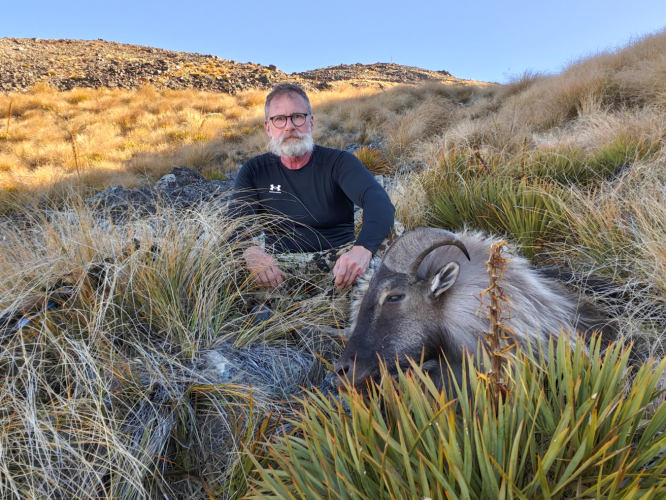
Had a great time in New Zealand and definably planning on going back.
So, to answer the question that I started this post with I'll try to break down what I did to get the cape and horns back home.
I skinned the head out the day after packing him home. I cut the skull plate off a boiled it for about 40 minutes. Scraped everything off the best I could. We had a wood stove in the house we rented so it was easy to get it completely dry. I then fleshed the cape, split the lips and cleaned up the eye areas. I gave it a good coat of salt and folded it up for the night. Then next day I scraped off the salt and dried the hide the best I could. That night I put into a garbage back and into the freezer. The next day I put into a foam cooler and we left the house for a hotel in Christchurch where I picked up some dry ice. I should have arranged the dry ice ahead of time but got lucky was able to get 5 kilos. This was on Friday and we flew out on Monday. The dry ice was gone by then but the hide was still frozen. I put the horns in the cooler with the cape before leaving as well.
Before leaving New Zealand I was sure to print off the Non-CITES declaration from New Zealand, the USFWS Form 3-177 with I had filled out (the instructions for this make it pretty easy), and the certificate from the Ministry for Primary Industries that I had picked up in Christchurch on that Friday.
Our port of entry was San Francisco. The US Fish and Wildlife inspector looked at the skull plate and cape and approved everything. The cape was partially thawed out by the but that didn't seem to matter. A customs officer was there and commented that the hides they usually see are drier than mine but that it didn't matter. Mine wasn't wet, just not dry. I'll probably try drying the hide more on the next trip. I asked the inspector what she was typically looking for during her inspections. She said it was mainly a check for bugs and seeds in the fur. Disease isn't a concern when things are coming from New Zealand.
I hope this helps anyone else thinking of making a DIY trip like this. Hunting on your own in New Zealand is totally doable with some research and preparation.