lastlight
Well-known member
Never go full buzz
Going full retard comes right before going full buzz.
But hey the Lolo, Selway, Frank, and Bob sure don’t have any wolf problems.



Follow along with the video below to see how to install our site as a web app on your home screen.
Note: This feature may not be available in some browsers.

Never go full buzz
I typically hunt a few days of our 16 day rifle season for bulls. I don't think I've ever hunted more than 4-5 days and usually have passed lots of legal elk when it takes that long.First off your gratuitous response is expected. But I tag out better than average, despite less than 10% success rate for a 5 day spike season in Oregon. A lot of times by fall any herd you see has hardly any calves keft, meaning fewer spikes next year.
You ever hunt one a 5 day spike only season, or do you stick to your month long seasons? Do you know why the success rate is so low? No, you don’t. What you do know is how to use a keyboard and take half a** pot shots at others.
I’ve also tagged out 2 out of 2 in Idaho on five days to bull hunt. I wouldnt have gone to Idaho if Oregon had a better handle on the predator problem (including wolves) and elk management.
Second, your comment to another poster about them wearing a lot of red was hilarious, because you literally look like the real life Elmer Fudd.
Lolo and Selway...habitat issues, well documented longgg before wolves were reintroduced. Frank Church, same deal. Bob, pounding on elk with a rifle Sept. 15-end of November, yep it's the wolves fault.Going full retard comes right before going full buzz.
But hey the Lolo, Selway, Frank, and Bob sure don’t have any wolf problems.

Good one Buzz. I thought you were being serious for a second.Lolo and Selway...habitat issues, well documented longgg before wolves were reintroduced. Frank Church, same deal.
There's a ton of info on the elk population swings in Yellowstone, long before wolves. In the 60's elk numbers were way lower than at any time since. Also, when the elk peaked after the '88 fires those elk were way over objective. Lots of older cows in that herd as well.You under the impression that those elk were from somewhere other than yellowstone? You're smart enough to see those populations and the pummelling that herd took, mysteriously after 1995.
Facts matter? It just boggles the mind that there is literally a mountain of science at your fingertips and yet, there's a refusal to do an ounce of research.Good one Buzz. I thought you were being serious for a second.


 www.spokesman.com
 www.thewildlifenews.com

So blast em there. Right?Facts matter? It just boggles the mind that there is literally a mountain of science at your fingertips and yet, there's a refusal to do an ounce of research.
Proposed burning aims to bolster elk habitat
Idaho Fish and Game is fired up about increasing elk populations in its Lolo Elk Zone in the headwaters of the Clearwater River. Through a cooperative effort with Forest Servicewww.idahocountyfreepress.com
“Fires are what made the Clearwater elk herd in the first place,” Hansen said. “Turn-of-the-century fires are what created millions of acres of shrub fields. Those have grown into second-story trees, and now it's prescribed fire, along with some wildland fires, that are helping open those places up and create lush fields that elk need.”
Years in making, Idaho elk research project nears completion
A multiyear research project aiming to measure the quality of elk habitat across the vast Clearwater region in Idaho is in its final stages.
Elk in some areas of the Clearwater Basin, most notably the Lolo and Selway zones, have been struggling for more than two decades. In the Lolo Zone, changing habitat conditions like the conversion of open forests and young brush fields into older and denser vegetation types has reduced the availability of summer feed for elk.
Idaho Fish and Game completes Lolo zone elk survey
No surprise. Elk numbers decline further. No surprise Fish and Game says it's almost all due to wolves- News Release- Idaho Fish and Game. Here is a graph the department did. Let's analyze the graph. This decline was predicted, but not its depth. Wolves were reintroduced in 1995, but their...
My view is that no single factor can explain the collapse of the Lolo Zone elk herd, although a big decline was predicted as early as the 1970s due to habitat changes that were obviously going to happen (the confer forest maturing to a condition similar to when Lewis and Clark came through the area and almost starved).
More data is promised and might already be out there. Wolves might well play a role here, but the huge drop from 1989 to 1998 is logically impossible to pin on wolves.
Facts do matter. For instance the Lolo elk herd was around 18,000 prior to wolves, also with over 1000 moose. IDFG numbers, not mine.Facts matter? It just boggles the mind that there is literally a mountain of science at your fingertips and yet, there's a refusal to do an ounce of research.
Proposed burning aims to bolster elk habitat
Idaho Fish and Game is fired up about increasing elk populations in its Lolo Elk Zone in the headwaters of the Clearwater River. Through a cooperative effort with Forest Service
“Fires are what made the Clearwater elk herd in the first place,” Hansen said. “Turn-of-the-century fires are what created millions of acres of shrub fields. Those have grown into second-story trees, and now it's prescribed fire, along with some wildland fires, that are helping open those places up and create lush fields that elk need.”
Years in making, Idaho elk research project nears completion
A multiyear research project aiming to measure the quality of elk habitat across the vast Clearwater region in Idaho is in its final stages.
Elk in some areas of the Clearwater Basin, most notably the Lolo and Selway zones, have been struggling for more than two decades. In the Lolo Zone, changing habitat conditions like the conversion of open forests and young brush fields into older and denser vegetation types has reduced the availability of summer feed for elk.

I typically hunt a few days of our 16 day rifle season for bulls. I don't think I've ever hunted more than 4-5 days and usually have passed lots of legal elk when it takes that long.
Regardless, I don't blame wolves for my woes. Matter of fact, with some of the hunter behavior I see regarding elk, I would rather root for the wolves.
Sure, but on here he gets his jollies insulting othersDepends if you want to gain corner crossing and protect public lands.
Impacts are additive and nobody is denying wolves kill elk, deer, rabbits, grouse, mice, etc.Facts do matter. For instance the Lolo elk herd was around 18,000 prior to wolves, also with over 1000 moose. IDFG numbers, not mine.
Now they are estimating 1000 elk and they don’t have numbers for how few moose are left.
You can pin it on habitat all day long but at some point even you have to admit the wolves have devastated the herds.
When they get a solid foothold in Colorado it too will be devastating there. Good luck trying to blame habitat issues when the elk and mule deer in CO get reduced to a fraction.
It’s mind boggling to me how people refuse to acknowledge the impact the wolves are having. I guarantee if it happened in your backyard, to your herds, you’d have a different view.
I too have been around long enough to see the ebb and flow of habitat changes and hard winters, etc. and know the legitimate effects that has. I’m not discounting that there’s an impact from those things as well.
Sure regions with shit habitat, predation, including hunting can have an impact.Except you go a lot farther than not blaming wolves. You refuse to acknowledge wolves can, along with other poorly-managed predators, materially impact big game populations in certain regions, and you continually deride hunters in other states facing different circumstances than you.
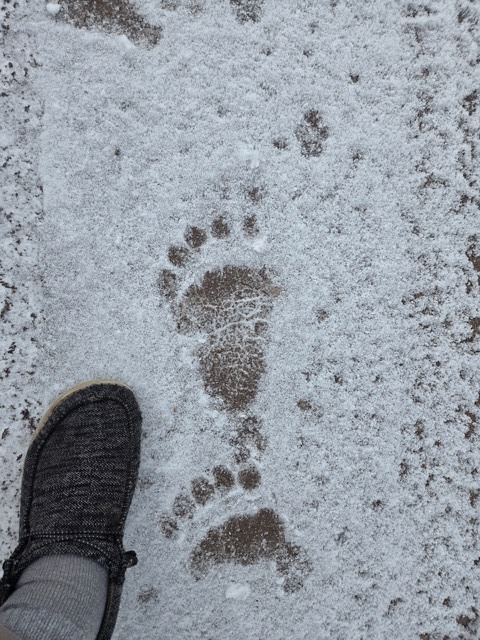
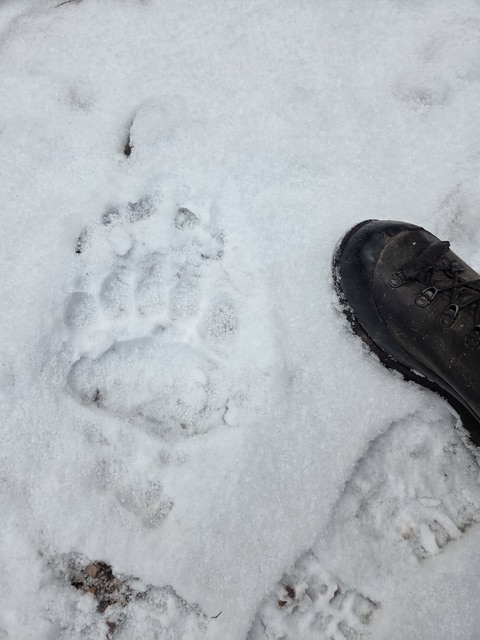
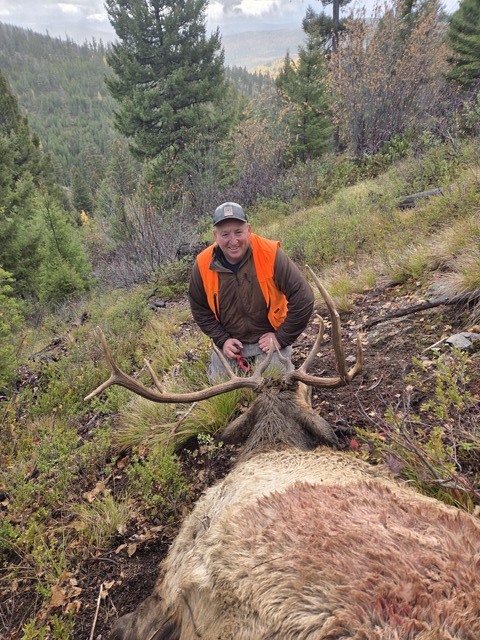
Impacts are additive and nobody is denying wolves kill elk, deer, rabbits, grouse, mice, etc.
Wolves are in my back yard that I have hunted every year since 1979 and every year since wolves were reintroduced. Grizzlies are in no short supply either.
Not one time have I blamed wolves for not being able to find game to kill, or the even close to the main reasons I've seen for deer and elk population swings. What I have seen happen is general seasons with high cow tags and OTC deer b tags, combined with either sex general tags, literally crush both.
Remove every predator from the Lolo and Selway, without the habitat there won't be the elk there were following the 1910 and 1919 burns, never, and that's not open for debate. Habitat is THE number 1 issue, and its not just winter range either. I also doubt you've been alive long enough to personally see what happened between 1910 and the early 2000's.
When predators have the biggest impact is when prey species are low in number. If you have large amounts of quality habitat and robust herds, predators, including human hunting, have very little impact on prey species.
Have a great day BuzzImpacts are additive and nobody is denying wolves kill elk, deer, rabbits, grouse, mice, etc.
Wolves are in my back yard that I have hunted every year since 1979 and every year since wolves were reintroduced. Grizzlies are in no short supply either.
Not one time have I blamed wolves for not being able to find game to kill, or the even close to the main reasons I've seen for deer and elk population swings. What I have seen happen is general seasons with high cow tags and OTC deer b tags, combined with either sex general tags, literally crush both.
Remove every predator from the Lolo and Selway, without the habitat there won't be the elk there were following the 1910 and 1919 burns, never, and that's not open for debate. Habitat is THE number 1 issue, and its not just winter range either. I also doubt you've been alive long enough to personally see what happened between 1910 and the early 2000's.
When predators have the biggest impact is when prey species are low in number. If you have large amounts of quality habitat and robust herds, predators, including human hunting, have very little impact on prey species.
Sure regions with shit habitat, predation, including hunting can have an impact.
Regions with quality habitat, not even a blip and not worth discussing.
You're about as enlightened as a 14th century astronomer. I'm not talking about hunting units that have bad habitat. I'm talking about some of the most popular elk hunting units I've hunted for years (where there used to be a lot more elk), including what used to be the most popular elk hunting unit in the state. Another one took the lead, I think in part because elk moved away from ground zero wolf territory, and down to lower elevations/private land.
The day I bitch about and blame another predator that has to catch the same prey with tooth and claw, while I'm toting a high powered rifle, is the same day I hang it up.
I like having wolves, lions, grizzlies, etc. on the landscape. They're here and you may as well learn to live with them.

Wolves have had such an impact on the part of western Wyoming that I live in, that you can only kill three elk a year now. Wolves are exactly what Buzz says they are: an excuse for hunters and a reason to complain.You're about as enlightened as a 14th century astronomer. I'm not talking about hunting units that have bad habitat. I'm talking about some of the most popular elk hunting units I've hunted for years (where there used to be a lot more elk), including what used to be the most popular elk hunting unit in the state. Another one took the lead, I think in part because elk moved away from ground zero wolf territory, and down to lower elevations/private land.

Do you not believe that wolf introductions are heavily supported and funded by the anti-hunting groups in efforts to end hunting based management of Ungulates? Sure states like Wyoming, Idaho and Montana have implemented a very aggressive management program on wolves after seeing the effects of what it does to a Shiraz moose, elk, so forth herd. The problem with Colorado is the R&D has already been done by other states much less densely populated by humans than Colorado. Clearly it’s not so much the the elk herds in Colorado that are feeling the affects, but more so livestock. I’m sure you’ve spent enough time south of the border of lara-dise to know you can’t swing a dead cat around in a national forest in Cali-rado and not hit a cow or domestic sheep. Ultimately in my opinion it’s a disservice to the transplant wolves as much as it is the rancher and taxpayers of the state to dump wolves on a land scape that is heavily populated by both agriculture and recreation. Why would a wolf go chase an elk around when there’s 10’s of thousands of moo cows running aroundThe day I bitch about and blame another predator that has to catch the same prey with tooth and claw, while I'm toting a high powered rifle, is the same day I hang it up.
I like having wolves, lions, grizzlies, etc. on the landscape. They're here and you may as well learn to live with them.