Contrary to statements on this thread...
1. Not "virtually everyone" is in favor of the proposal. Once people understand the issue, they overwhelmingly the become opposed. They realize trading away two legal public trails for one trail is not win for public access. The result of the proposal will be one trail in the entire east crazies. Once folks see they are being asked to trade away legal quick access to the best elk-hunting in the east crazies (Sweetgrass) for a 22 mile walk into the same area, they understand this is not a win for the public.
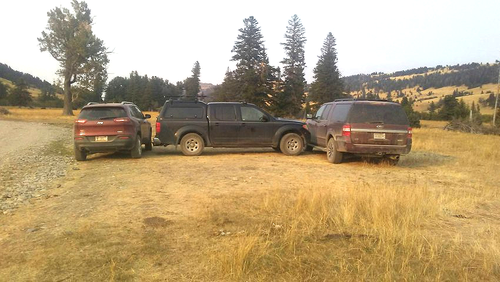
2. The problem in the crazies isn't the checkerboard land, the problem is the landowners have decided to start blocking the public's legal access to trails and this swap does nothing to solve that. This swap trades public low-country (including the last few public parcels on Sweetgrass Creek) for high-country and forces the public to walk around the ranchers. It is a huge win for those blocking legal public access.
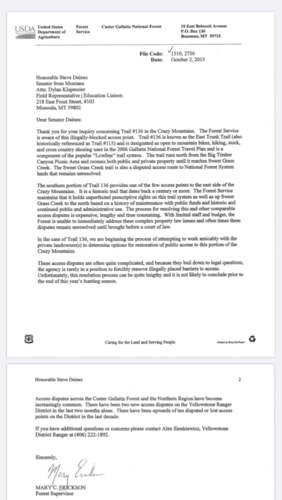
3. Trails can't be both "public" and private at the same time. You can't have it both ways. The trail can't be public and also subject to the landowners permission, which is how it currently sits. Without a guarantee in the proposal, the public should assume the status quo and access into Sweetgrass Creek given by permission only. See the attached letter from the Forest Supervisor to Sen Daines asserting the USFS maintains that it holds unperfected prescriptive rights on this trail system [East-Trunk] as well as Sweet Grass Creek up to the north based on a history of maintenance with public funds and historic and continued public and administrative use." This big land swap proposal it the perfect time for reasonable landowners to work with the public to restore the public's rightful access along the historic Sweetgrass Trail. Unfortunately these landowners have been given cover by MWF and PCEC and feel no obligation to work with the public.
4. The issue is actually being litigated in spite of a statement to the contrary on this thread and this swap potentially undermines that litigation and as such, is harmful to public access. Don't be fooled by statements that say, "no change" is a good thing. The status quo is that a private landowner has blocked a public trail. No change to that is a bad outcome.
5. Don't be fooled by statements that say "being able to litigate is specifically left on the table." Being able to litigate is not a gift from the landowners and those providing them with cover to keep illegal gates up. Litigation is a right that can be used by the public at anytime and any half-way decent attorney will tell you this swap undermines the potential to win litigation and as such, public access. This negation is the perfect time to demand what is rightfully ours and we can negotiate relocation of trails only after our public trails are open.
5. The absolute worst place to get information is the "public open houses" hosted by those who are shoving this into the public. Ive attended and that is where you should go if you want to get "sold".
6. Lots of people believe the litigation will be successful in spite of statements to the contrary. I would simply point out that after roughly 100 years of no progress on this issue, there have been 3 land swap proposals since the lawsuit was filed. One could easily conclude that it is precisely the possibility of a victory that has all this activity after a century of inactivity.








 . ]
. ]