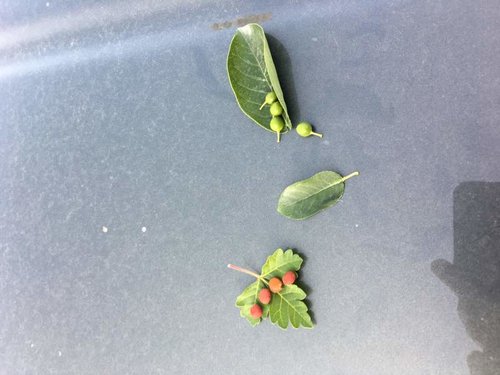



Central Montana brush identification

SteveE

New member
Joined
Jan 25, 2016
Messages
434
Location
Montana
Spent the weekend scouting and the grass is looking great with all this moisture. This area has mainly two types of bush. Does any one know the names of these two plants? The green berry bush is about 10-12 feet tall and the red berry bush averages about 6-8 feet tall.
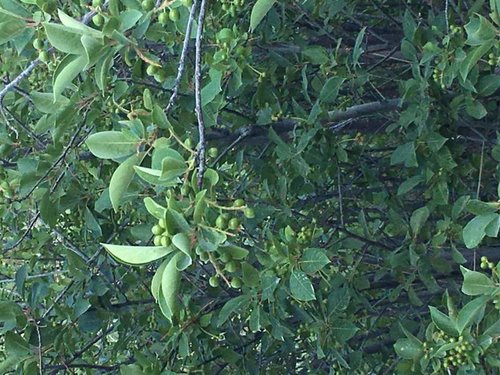
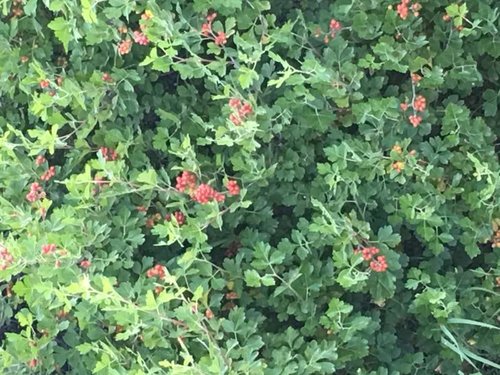
image.jpg

image.jpg

image.jpg

Thanks for the help
 
Yup. First one looks to be a common chokecherry (Prunus virginiana) from what I can see. Second one is an alpine currant (Ribes alpine). Both make excellent jams.
 
First one is chokecherry. You can tell because the berry bunch radiate around a single stem, sort of like grapes. Second one looks like a currant but it is not. Currants have pigtails on the berry. We used to call that particular berry a squawberry but I'm not sure it's proper name. Perhaps skunk bush. It was not a good one to eat. http://northernbushcraft.com/topic.php?name=skunkbush+berry&region=ab&ctgy=edible_berries

These squawberries will grow right next to currants and the leaves look similar but the berry is opaque, unlike the translucent current.
 
Last edited:
No question on the first one. The second also looks like currant to me, though it is hard to tell from your shrub photo.

Skunkbush is a sumac - Rhus aromatica. Very hard to see arrangement of leaflets in your photo, but it's a possibility. However, we have 15 species of currant in Montana according to the "plant bible" by Peter Lesica. Leaves look similar to what you have posted, and berries range from black to pink, tiny to relatively large, fuzzy to smooth, edible to not. A couple grow to the size of the shrubs you describe, so those may be a possibility too.
Either way, good forage for browsers, bears, and grouse!
 
If you are the type of person who views dichotomous keys as a choose your own adventure book, you will LOVE it!!! ;)
Hmmm, I was thinking it was something more browsable based on the cover. My MIL is a botanist and she gave me "Vascular plants of Montana" which is similar and not particularly engaging to say the least.
 
Hmmm, I was thinking it was something more browsable based on the cover. My MIL is a botanist and she gave me "Vascular plants of Montana" which is similar and not particularly engaging to say the least.

Yeah the Lesica book is mostly a key with a few drawings of some of the plants. If you're a smartphone user without plant ID skills then the plant apps from High Country Apps (these cost $5-10 each), Virginia Tech Tree ID (free), Idaho Wildflowers (free), Wildflowers of Washington (free), Oregon Wildflowers (free). Most of these have very basic visual keys to get you pared down to a handful of species that may be present and typically have plenty of pictures. If you're into grasses then "A Field Guide to Wyoming Grasses" is for you.
 
Last edited:
Yeah the Lesica book is mostly a key with a few drawings of some of the plants. If you're a smartphone user without plant ID skills then be better off the plant apps from High Country Apps (these cost $5-10 each), Virginia Tech Tree ID (free), Idaho Wildflowers (free), Wildflowers of Washington (free), Oregon Wildflowers (free). Most of these have very basic visual keys to get you pared down to a handful of species that may be present and typically have plenty of pictures. If you're into grasses then "A Field Guide to Wyoming Grasses" is for you.

I'm going to try some of these apps. I'm curious about learning more about western plant life. I have a pretty good knowledge of plant life here in the southeast. I wish I had that same knowledge about western plant life.
 

This is a great book. It lives in my pack as well.

Lesica is definitely not a nice, browsable book. A few illustrations, but mostly just keys. It is much more comprehensive than anything else you will find though.

There's another good app called Montana Grasses that MSU and High Country Apps put out. Pretty easy to use with great photos and descriptions.

If it's trees and shrubs you are after, this one is free and downloadable from MSU Extension. It has some gaps, but covers most of the common things you'll see in Montana: http://store.msuextension.org/publications/OutdoorsEnvironmentandWildlife/2B0323.pdf
 
Thanks HW, I just ordered the SD Grasslands book. I have Dorn's book if I want to key something out, but I've had it for years and have used it exactly zero times. The jargon was too much. I just checked out my wife's Montana flower ID app and it is really easy to use.
 

Latest posts

Forum statistics

Threads
117,875
Messages
2,172,583
Members
38,375
Latest member
togic8
Back
Top