

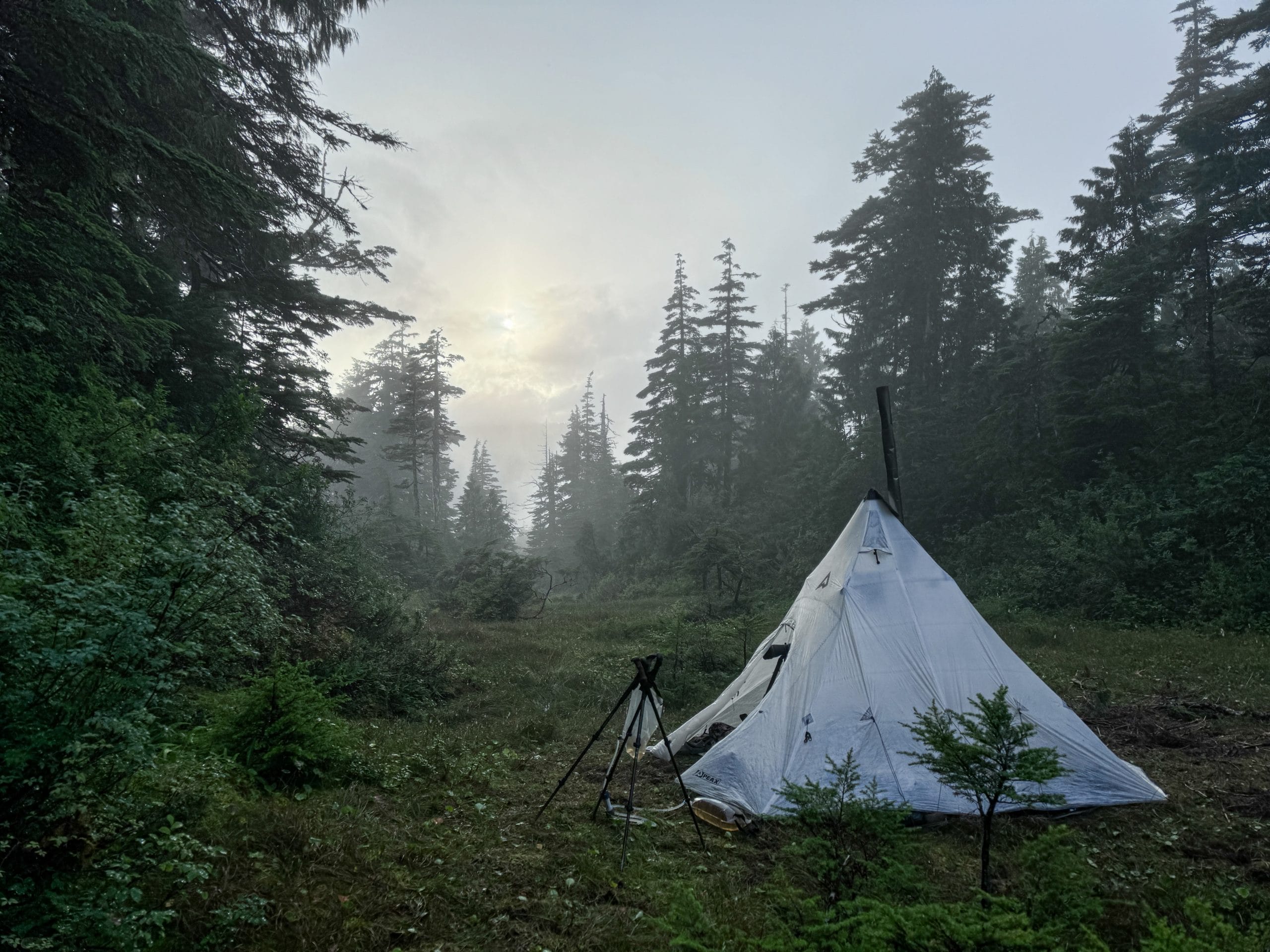
Choosing a heat source for your tent is the difference between a miserable, shivering night and a cozy “home away from home” experience. But with the rise of affordable diesel heaters and the classic appeal of a wood stove, the choice isn’t always obvious.
We put both to the test—running a head-to-head comparison in both canvas wall tents and lightweight nylon tipis, like the PEAX Solitude 4. Here is the breakdown of how they stack up in setup time, heat output, and overall convenience.
1. Setup & Speed: The “Easy Button”
If you arrive at camp late, tired, and cold, the diesel heater wins every time.
Diesel Heater: In our tests, we had hot air pumping into the tent in as little as 1 minute and 20 seconds. It requires a power source (battery) and some simple ducting, but once you hit the button, the heat is instant.
Wood Stove: Even for a pro, you’re looking at 11 to 15 minutes just to assemble the stove, chop kindling, and get a sustainable flame going. If your wood is wet, that time can double.
The Verdict: The diesel heater is the “convenience king.” The wood stove is a labor of love.
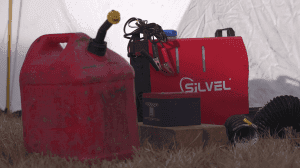
Diesel heater require a few additional items, like a diesel can and lithium battery source.
2. Maximum Heat: The “Sweat Shack” Factor
If your goal is to be so warm you have to take your shirt off in a snowstorm, the wood stove is the undisputed champion.
Wood Stove: We easily pushed temperatures inside the tent to over 120°F, with the peak of the tent hitting 160°F. This “dry heat” is intense and powerful enough to heat even large, drafty tents.
Diesel Heater: While effective, the diesel heater peaked at a comfortable 65–70°F at the pillow level. It’s plenty warm for sleeping, but it won’t turn your tent into a sauna.
3. Drying Gear
This is where the wood stove proves its worth for hunters and backcountry explorers.
| Feature | Wood Stove | Diesel Heater |
| Drying Power | High. Intense dry heat evaporates moisture from heavy coats in minutes. | Low. While it blows warm air, it lacks the ambient intensity to dry wet gear quickly. |
| Heat Consistency | High (if fed), but drops fast once the fire dies. | Extremely consistent; stays at the exact temp you set. |

4. Sleeping Through the Night
One of the biggest downsides to a wood stove—especially the lightweight titanium models—is that they don’t hold coals for long. If you want heat at 3:00 AM, you have to get out of your sleeping bag and stoke the fire.
With a diesel heater, you get a remote control. You can stay tucked in your bag, adjust the temperature, or set it to run on low all night. A single gallon of diesel can easily last 8–12 hours.

5. Cost & Portability
The Budget Option: You can find a diesel heater setup for around $100–$200 (plus the cost of a battery). It’s an affordable way to stay warm if you are car camping.
The Premium Option: A high-end titanium wood stove can cost upwards of $475. Why the price hike? Weight. A titanium stove is light enough to carry in a backpack for miles, whereas a diesel heater requires a heavy battery and a fuel tank, keeping it tethered to your truck.
Summary: Which Should You Buy?
Go with the Wood Stove if…
You need to dry out gear: Wood stoves provide a “dry” heat, but more importantly, the exterior of the stove and the chimney pipe get hot enough to act as a drying rack for socks and gloves (carefully!).
You enjoy the ritual: There is a specific satisfaction in foraging for wood and tending a flame. If you find the crackle of a fire therapeutic rather than a chore, this is for you.
Fuel is everywhere: As long as there are trees, you have an infinite fuel supply without carrying extra weight in your pack.
Weight is the enemy: If you’re trekking miles into the backcountry, a titanium wood stove is your best friend. They fold down to the size of a laptop and weigh just a few pounds.
Go with the Diesel Heater if…
Convenience is king: You can set a thermostat to 70°F and sleep through the night without waking up every two hours to “feed the beast.”
Safety is a priority: Because the combustion happens in a sealed chamber and exhausts outside, there is significantly less risk of smoke or embers inside your tent or van.
Condensation is a concern: Diesel heaters pump in dry, hot air from the outside, which is incredibly effective at keeping the “walls” of your vehicle or tent from dripping with moisture in the morning.
You have the “Overland” setup: These units require a 12V power source (like a Jackery or EcoFlow) to run the fan and fuel pump. If you’re already powered up, it’s a seamless addition.
Gear List
- Lithium Batteries
- Dakota Lithium 12V 10Ah – $109
- Dakota Lithium 12V 7Ah – $90
- PEAX Torrid Hot Tent Stove
- PEAX Solitude 4 Tipi Tent
- Wilderness Ridge Divide Series Tents
- Diesel Heaters. we like!
Some of the links in this article are affiliate links. If you purchase through them, we may earn a commission at no extra cost to you